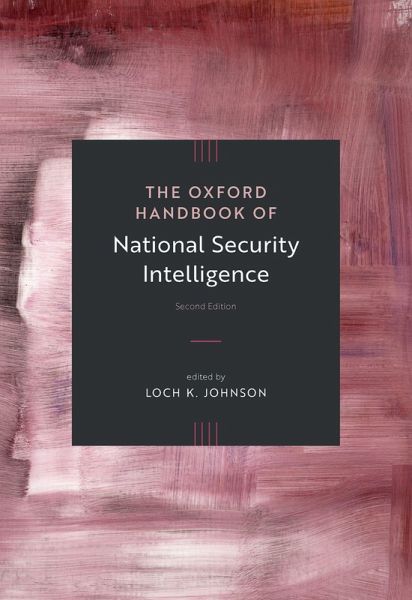
The second edition of The Oxford Handbook of National Security Intelligence is a thoroughly updated state-of-the-art work on the role of secret agencies in defending the democracies and intelligence activities in authoritarian regimes. Edited by Loch Johnson, one of the world's leading authorities on the subject, the handbook examines the topic in full, beginning with an examination of the major theories of intelligence. It then shifts its focus to how intelligence agencies operate, how they collect information from around the world, and the difficulties in disseminating intelligence to…mehr
The second edition of The Oxford Handbook of National Security Intelligence is a thoroughly updated state-of-the-art work on the role of secret agencies in defending the democracies and intelligence activities in authoritarian regimes. Edited by Loch Johnson, one of the world's leading authorities on the subject, the handbook examines the topic in full, beginning with an examination of the major theories of intelligence. It then shifts its focus to how intelligence agencies operate, how they collect information from around the world, and the difficulties in disseminating intelligence to policymakers. It also considers the balance between secrecy and public accountability, and the ethical dilemmas that covert and counterintelligence operations routinely present to intelligence agencies. Throughout, contributors factor in broader historical and political contexts that are integral to understanding how intelligence agencies function in our information-dominated age.
Loch K. Johnson is Regents Professor Emeritus of International Affairs, University of Georgia. His books include National Security Intelligence (Polity, 2024); The Third Option: Covert Action and American Foreign Policy (Oxford, 2024); and Intelligence: The Secret World of Spies, with James J. Wirtz (Oxford, 2023). He assisted the chairmen of the Church Committee on Intelligence and the Aspin-Brown Commission on Intelligence. In 2012, the Southeast Conference selected him as its inaugural "Professor of the Year." At the University of Georgia, he led the founding of the School of Public and International Affairs and is a recipient of its Presidential Medal.
Inhaltsangabe
* National Security Intelligence (NSI): A Roadmap * Loch K. Johnson * Part I: Views from the Top * Chapter 1: National Security: Reassessment in a Period of Growing Instability * Sir Richard Dearlove * Chapter 2: The UK-US Intelligence Partnership * Sir David Omand * Part II: Theory and Method * Chapter 3: The Sources and Methods of Intelligence Studies * James J. Wirtz * Chapter 4: Theories of Security Intelligence * Peter Gill * Chapter 5: Assessing Intelligence Performance * John A. Gentry * Part III: The Evolution of Modern Intelligence * Chapter 6: British Strategic Intelligence and the Cold War * Len Scott * Chapter 7: CIA Relationships with the Media * David P. Hadley * Chapter 8: Law and Intelligence Enforcement * Frederic F. Manget * Chapter 9: Of Politics and Intelligence: The FBI since 9/11 * Rhodri Jeffreys-Jones * Chapter 10: J. Edgar Hoover and the FBI * Beverly Gage * Chapter 11: Evolution of Humint * Kyle S. Cunliffe * Chapter 12: United Nations Peacekeeping Intelligence * A. Walter Dorn * Chapter 13: Intelligence in and through Cyberspace * Michael Warner * Part IV: Intelligence Collection and Processing * Chapter 14: The Increasing Value of OSINT within and beyond the IC * Aaron F. Brantly * Chapter 15: Signals Intelligence in War and Power Politics, 1914-2024 * John R. Ferris * Chapter 16: Geospatial Intelligence: Imagery, Mapping, Analysis * Joseph W. Caddell, Jr. * Chapter 17: Human Intelligence * Joseph W. Wippl * Chapter 18: The Changing Nature of Intelligence Collection * Robert M. Clark * Part V: Intelligence Analysis and Production * Chapter 19: The National Intelligence Council * Gregory F. Treverton * Chapter 20: Analysis in an Environment of Permanent Impermanence * William M. Nolte * Chapter 21: Early Warning for Environmental and Disaster Intelligence * Chad Briggs and Miriam Matejova * Chapter 22: AI and Traditional Intelligence * Kathleen M. Vogel * Part VI: Intelligence Dissemination * Chapter 23: Leadership in an Intelligence Organization: The Directors of Central Intelligence and the * CIA * David Robarge * Chapter 24: The Policymaker-Intelligence Relationship * Mark M. Lowenthal * Chapter 25: On Uncertainty and the Limits of Intelligence * Peter Jackson and Fraser McGowan * Chapter 26: The Five Eyes Intelligence Alliance: History, Evolution, and Prospects * Patrick F. Walsh * Part VII: Counterintelligence and Counterterrorism * Chapter 27: Federal Bureau of Investigation: A Study of Reform and New Challenges in the Twenty- * First Century * Raymond J. Batvinis * Chapter 28: FBI and Spy-Catching * Darren E. Tromblay * Chapter 29: Soviet Atomic Espionage in World War II * John Haynes and Harvey Klehr * Chapter 30: The State of Counterintelligence at the Department of Energy, Early 21st Century---Plus Ça Change * Paul J. Redmond and W. Alan Messer * Chapter 31: The Intelligence War on Terrorism * Daniel L. Byman and Ines Oulamine * Chapter 32: Guarding the Border: Intelligence and Law Enforcement in Canada's Immigration System since 9/11 * Arne Kislenko * Part VIII: Covert Action * Chapter 33: Covert Action and Unacknowledged Interference * Richard J. Aldrich and Rory Cormac * Chapter 34: The Causes and Consequences of U.S. Covert Action * Michael Poznansky * Chapter 35: U.S. Covert Action in the Aftermath of the Cold War, 1989-2017 * Magda Long * Chapter 36: Counterinsurgency and Intelligence * Barbara Elias * Chapter 37: Extraordinary Renditions * William G. Weaver and Robert M. Pallitto * Part IX: Intelligence Accountability * Chapter 38: Watergate, Operation CHAOS, and the Dawning of Intelligence Accountability in the United States * Loch K. Johnson * Chapter 39: The Politics of Intelligence Accountability in the United States * Glenn P. Hastedt * Chapter 40: Congressional Oversight of Covert Action * Stephen R. Weissman * Chapter 41: The Intelligence and Security Committee and Legislative Oversight of Intelligence in the UK since 2013: Taking Up the Invitation to Struggle * Mark Phythian * Chapter 42: The State Secrets Privilege: Judicial Misconceptions * Louis Fisher * Chapter 43: Intelligence and International Law * Asaf Lubin and Russell Buchan * Chapter 44: Ethical Intelligence: A Framework within Professionalism * Jan Goldman * Part X: Intelligence in Other Lands * Chapter 45: The Canadian Intelligence System * Wesley Wark * Chapter 46: "Secret Line, Open Line": Inside China's Ministry of State Security * James Mulvenon * Chapter 47: The French Direction Générale de la Sécurité Extérieure (DGSE) * Damien Van Puyvelde * Chapter 48: The German Bundesnachrichtendienst (BND): A "Toothless Tiger" by Design * Wolfgang Krieger * Chapter 49: Pakistan's Inter-Services Intelligence Directorate and Its Covert Proxy Wars in Afghanistan * Owen L. Sirrs * Chapter 50: Russian Intelligence under Vladimir Putin * David Gioe * Acknowledgements * Appendix * Glossary * Index
* National Security Intelligence (NSI): A Roadmap * Loch K. Johnson * Part I: Views from the Top * Chapter 1: National Security: Reassessment in a Period of Growing Instability * Sir Richard Dearlove * Chapter 2: The UK-US Intelligence Partnership * Sir David Omand * Part II: Theory and Method * Chapter 3: The Sources and Methods of Intelligence Studies * James J. Wirtz * Chapter 4: Theories of Security Intelligence * Peter Gill * Chapter 5: Assessing Intelligence Performance * John A. Gentry * Part III: The Evolution of Modern Intelligence * Chapter 6: British Strategic Intelligence and the Cold War * Len Scott * Chapter 7: CIA Relationships with the Media * David P. Hadley * Chapter 8: Law and Intelligence Enforcement * Frederic F. Manget * Chapter 9: Of Politics and Intelligence: The FBI since 9/11 * Rhodri Jeffreys-Jones * Chapter 10: J. Edgar Hoover and the FBI * Beverly Gage * Chapter 11: Evolution of Humint * Kyle S. Cunliffe * Chapter 12: United Nations Peacekeeping Intelligence * A. Walter Dorn * Chapter 13: Intelligence in and through Cyberspace * Michael Warner * Part IV: Intelligence Collection and Processing * Chapter 14: The Increasing Value of OSINT within and beyond the IC * Aaron F. Brantly * Chapter 15: Signals Intelligence in War and Power Politics, 1914-2024 * John R. Ferris * Chapter 16: Geospatial Intelligence: Imagery, Mapping, Analysis * Joseph W. Caddell, Jr. * Chapter 17: Human Intelligence * Joseph W. Wippl * Chapter 18: The Changing Nature of Intelligence Collection * Robert M. Clark * Part V: Intelligence Analysis and Production * Chapter 19: The National Intelligence Council * Gregory F. Treverton * Chapter 20: Analysis in an Environment of Permanent Impermanence * William M. Nolte * Chapter 21: Early Warning for Environmental and Disaster Intelligence * Chad Briggs and Miriam Matejova * Chapter 22: AI and Traditional Intelligence * Kathleen M. Vogel * Part VI: Intelligence Dissemination * Chapter 23: Leadership in an Intelligence Organization: The Directors of Central Intelligence and the * CIA * David Robarge * Chapter 24: The Policymaker-Intelligence Relationship * Mark M. Lowenthal * Chapter 25: On Uncertainty and the Limits of Intelligence * Peter Jackson and Fraser McGowan * Chapter 26: The Five Eyes Intelligence Alliance: History, Evolution, and Prospects * Patrick F. Walsh * Part VII: Counterintelligence and Counterterrorism * Chapter 27: Federal Bureau of Investigation: A Study of Reform and New Challenges in the Twenty- * First Century * Raymond J. Batvinis * Chapter 28: FBI and Spy-Catching * Darren E. Tromblay * Chapter 29: Soviet Atomic Espionage in World War II * John Haynes and Harvey Klehr * Chapter 30: The State of Counterintelligence at the Department of Energy, Early 21st Century---Plus Ça Change * Paul J. Redmond and W. Alan Messer * Chapter 31: The Intelligence War on Terrorism * Daniel L. Byman and Ines Oulamine * Chapter 32: Guarding the Border: Intelligence and Law Enforcement in Canada's Immigration System since 9/11 * Arne Kislenko * Part VIII: Covert Action * Chapter 33: Covert Action and Unacknowledged Interference * Richard J. Aldrich and Rory Cormac * Chapter 34: The Causes and Consequences of U.S. Covert Action * Michael Poznansky * Chapter 35: U.S. Covert Action in the Aftermath of the Cold War, 1989-2017 * Magda Long * Chapter 36: Counterinsurgency and Intelligence * Barbara Elias * Chapter 37: Extraordinary Renditions * William G. Weaver and Robert M. Pallitto * Part IX: Intelligence Accountability * Chapter 38: Watergate, Operation CHAOS, and the Dawning of Intelligence Accountability in the United States * Loch K. Johnson * Chapter 39: The Politics of Intelligence Accountability in the United States * Glenn P. Hastedt * Chapter 40: Congressional Oversight of Covert Action * Stephen R. Weissman * Chapter 41: The Intelligence and Security Committee and Legislative Oversight of Intelligence in the UK since 2013: Taking Up the Invitation to Struggle * Mark Phythian * Chapter 42: The State Secrets Privilege: Judicial Misconceptions * Louis Fisher * Chapter 43: Intelligence and International Law * Asaf Lubin and Russell Buchan * Chapter 44: Ethical Intelligence: A Framework within Professionalism * Jan Goldman * Part X: Intelligence in Other Lands * Chapter 45: The Canadian Intelligence System * Wesley Wark * Chapter 46: "Secret Line, Open Line": Inside China's Ministry of State Security * James Mulvenon * Chapter 47: The French Direction Générale de la Sécurité Extérieure (DGSE) * Damien Van Puyvelde * Chapter 48: The German Bundesnachrichtendienst (BND): A "Toothless Tiger" by Design * Wolfgang Krieger * Chapter 49: Pakistan's Inter-Services Intelligence Directorate and Its Covert Proxy Wars in Afghanistan * Owen L. Sirrs * Chapter 50: Russian Intelligence under Vladimir Putin * David Gioe * Acknowledgements * Appendix * Glossary * Index
Es gelten unsere Allgemeinen Geschäftsbedingungen: www.buecher.de/agb
Impressum
www.buecher.de ist ein Internetauftritt der buecher.de internetstores GmbH
Geschäftsführung: Monica Sawhney | Roland Kölbl | Günter Hilger
Sitz der Gesellschaft: Batheyer Straße 115 - 117, 58099 Hagen
Postanschrift: Bürgermeister-Wegele-Str. 12, 86167 Augsburg
Amtsgericht Hagen HRB 13257
Steuernummer: 321/5800/1497
USt-IdNr: DE450055826