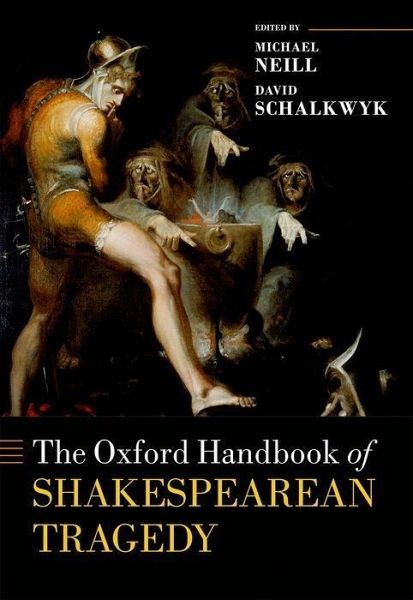
The Oxford Handbook of Shakespearean Tragedy is a collection of fifty-four essays by a range of scholars from all parts of the world, bringing together some of the best-known writers in the field with a strong selection of younger Shakespeareans. Together these essays offer readers a fresh and comprehensive understanding of Shakespeare tragedies as both works of literature and as performance texts written by a playwright who was himself an experienced actor. The collection is organised in five sections. The substantial opening section introduces the plays by placing them in a variety of…mehr
The Oxford Handbook of Shakespearean Tragedy is a collection of fifty-four essays by a range of scholars from all parts of the world, bringing together some of the best-known writers in the field with a strong selection of younger Shakespeareans. Together these essays offer readers a fresh and comprehensive understanding of Shakespeare tragedies as both works of literature and as performance texts written by a playwright who was himself an experienced actor. The collection is organised in five sections. The substantial opening section introduces the plays by placing them in a variety of illuminating contexts: as well looking at ways in which later generations of critics have shaped our idea of 'Shakespearean' tragedy, it addresses questions of genre by examining the playwright's inheritance from the classical and medieval past, by considering tragedy's relationship to other genres (including history plays, tragicomedy, and satiric drama), and by showing how Shakespeare's tragedies respond to the pressures of early modern politics, religion, and ideas about humanity and the natural world. The second section is devoted to current textual issues; while the third offers new critical readings of each of the tragedies, from Titus Andronicus to Coriolanus. This is set beside a group of essays that deal with performance history, with screen productions, and with versions devised for the operatic stage, as well as with the extraordinary diversity of twentieth and twenty-first century re-workings of Shakespearean tragedy. The thirteen essays of the book's final section seek to expand readers' awareness of Shakespeare's global reach, tracing histories of criticism and performance across Europe, the Americas, Australasia, the Middle East, Africa, India, and East Asia. Offering the richest and most diverse collection of approaches to Shakespearean tragedy currently available, the Handbook will be an indispensable resource for students both undergraduate and graduate levels, while the lively and provocative character of its essays make will it required reading for teachers of Shakespeare everywhere.
Michael Neill is Professor in Early Modern Literature at the University of Kent and Emeritus Professor of English at the University of Auckland. He is the author of Issues of Death (1997) and Putting History to the Question (2000). He has edited Anthony and Cleopatra (1994) and Othello (2006) for the Oxford Shakespeare. David Schalkwyk is currently Academic Director of Global Shakespeare, a joint venture between Queen Mary and the University of Warwick. He was formerly Director of Research at the Folger Shakespeare Library in Washington D.C. and editor of the Shakespeare Quarterly. Before that he was Professor of English at the University of Cape Town, where he held the positions of Head of Department and Deputy Dean in the faculty of the Humanities. His books include Speech and Performance in Shakespeare's Sonnets and Plays (Cambridge, 2002), Literature and the Touch of the Real (Delaware, 2004), and Shakespeare, Love and Service (Cambridge, 2008). His most recent book is Hamlet's Dreams: The Robben Island Shakespeare, published in 2013 by the Arden Shakespeare. He has just completed a monograph on love in Shakespeare.
Inhaltsangabe
* I. Genre * What is Shakespearean Tragedy? * The Classical Inheritance * The Medieval Inheritance * The Romantic Inheritance * Ethics and Shakespearean Tragedy * Character in Shakespearean Tragedy * Preposterous Nature * Shakespearean Tragedy and the Language of Lament * The Pity of It: Shakespearean Tragedy and Affect * 'Do You See This?' The Politics of Attention in Shakespearean Tragedy * Tragedy and Religion: Religion and Revenge in Titus Andronicus and Hamlet * Shakespeare's Anatomies of Death * 'Minded Like the Weather': the Tragic Body and its Passions * Shakespeare's Tragedy and English History * Shakespeare's Tragedy and Roman History * Tragedy and the Satiric Voice * 'The action of my life': tragedy, tragicomedy, and Shakespeare's mimetic experiments * Queer Tragedy, or Two Meditations on Cause * II. Textual Issues * Authorial Revision in the Tragedies * 1. Digital Approaches to the Language of Shakespearean Tragedy * III. Reading the tragedies * 'Romaine Tragedie': The Designs of Titus Andronicus * Romeo and Juliet as Event * Julius Caesar: Making History * The Question of Hamlet * Seeing Blackness, Reading Race in Othello * King Lear and the Death of the World * 'O horror! horror! horror!' Macbeth and the Gothic * Antony and Cleopatra * Coriolanus: A Tragedy of Language * IV: Stage and Screen * Early Modern Tragedy and Performance * Performing Shakespearean Tragedy, 1660-1780 * Staging Shakespearean Tragedy: the Nineteenth Century * Tragedy in Twentieth and Twenty-first Century Theatre Production: Hamlet, Lear, and the Politics of Intimacy * Ontological Shivers: The Cinematic Afterlives of Romeo and Juliet * Hamlet: Tragedy and Film Adaptation * Intermediated Bodies and Bodies of Media: Screen Othellos * Screening the Tragedies King Lear * Macbeth on Changing Screens * The Roman Plays on Screen: Autonomy, Serialization, Conflation * 'The Bowe of Ulysses': Reworking the Tragedies of Shakespeare * Shakespeare's Tragedies on the Operatic Stage * V. The Tragedies Worldwide * i. European Responses * The Tragedies in Italy * The Tragedies in Germany * French Receptions of Shakespearean Tragedy: Between Liberty And Memory * Eastern Europe * In equal scale weighing delight and dole: Shakespearean Tragedy in Russia * ii. The Wider World * Shakespearean Tragedy in the Nineteenth Century United States: the case of Julius Caesar * Unsettling the Bard: Australasia and the Pacific * Shakespeare's Tragedies in Southern Africa * In Blood Stepped in: Tragedy and the Modern Israelites * Shakespeare's Tragedies in North Africa and the Arab World * Shakespearean Tragedy in Latin America and the Caribbean * Shakespearean Tragedy in India: politics of genre / or how newness entered Indian literary culture * 'It is the east': Shakespearean Tragedies in East Asia
* I. Genre * What is Shakespearean Tragedy? * The Classical Inheritance * The Medieval Inheritance * The Romantic Inheritance * Ethics and Shakespearean Tragedy * Character in Shakespearean Tragedy * Preposterous Nature * Shakespearean Tragedy and the Language of Lament * The Pity of It: Shakespearean Tragedy and Affect * 'Do You See This?' The Politics of Attention in Shakespearean Tragedy * Tragedy and Religion: Religion and Revenge in Titus Andronicus and Hamlet * Shakespeare's Anatomies of Death * 'Minded Like the Weather': the Tragic Body and its Passions * Shakespeare's Tragedy and English History * Shakespeare's Tragedy and Roman History * Tragedy and the Satiric Voice * 'The action of my life': tragedy, tragicomedy, and Shakespeare's mimetic experiments * Queer Tragedy, or Two Meditations on Cause * II. Textual Issues * Authorial Revision in the Tragedies * 1. Digital Approaches to the Language of Shakespearean Tragedy * III. Reading the tragedies * 'Romaine Tragedie': The Designs of Titus Andronicus * Romeo and Juliet as Event * Julius Caesar: Making History * The Question of Hamlet * Seeing Blackness, Reading Race in Othello * King Lear and the Death of the World * 'O horror! horror! horror!' Macbeth and the Gothic * Antony and Cleopatra * Coriolanus: A Tragedy of Language * IV: Stage and Screen * Early Modern Tragedy and Performance * Performing Shakespearean Tragedy, 1660-1780 * Staging Shakespearean Tragedy: the Nineteenth Century * Tragedy in Twentieth and Twenty-first Century Theatre Production: Hamlet, Lear, and the Politics of Intimacy * Ontological Shivers: The Cinematic Afterlives of Romeo and Juliet * Hamlet: Tragedy and Film Adaptation * Intermediated Bodies and Bodies of Media: Screen Othellos * Screening the Tragedies King Lear * Macbeth on Changing Screens * The Roman Plays on Screen: Autonomy, Serialization, Conflation * 'The Bowe of Ulysses': Reworking the Tragedies of Shakespeare * Shakespeare's Tragedies on the Operatic Stage * V. The Tragedies Worldwide * i. European Responses * The Tragedies in Italy * The Tragedies in Germany * French Receptions of Shakespearean Tragedy: Between Liberty And Memory * Eastern Europe * In equal scale weighing delight and dole: Shakespearean Tragedy in Russia * ii. The Wider World * Shakespearean Tragedy in the Nineteenth Century United States: the case of Julius Caesar * Unsettling the Bard: Australasia and the Pacific * Shakespeare's Tragedies in Southern Africa * In Blood Stepped in: Tragedy and the Modern Israelites * Shakespeare's Tragedies in North Africa and the Arab World * Shakespearean Tragedy in Latin America and the Caribbean * Shakespearean Tragedy in India: politics of genre / or how newness entered Indian literary culture * 'It is the east': Shakespearean Tragedies in East Asia
Es gelten unsere Allgemeinen Geschäftsbedingungen: www.buecher.de/agb
Impressum
www.buecher.de ist ein Internetauftritt der buecher.de internetstores GmbH
Geschäftsführung: Monica Sawhney | Roland Kölbl | Günter Hilger
Sitz der Gesellschaft: Batheyer Straße 115 - 117, 58099 Hagen
Postanschrift: Bürgermeister-Wegele-Str. 12, 86167 Augsburg
Amtsgericht Hagen HRB 13257
Steuernummer: 321/5800/1497
USt-IdNr: DE450055826