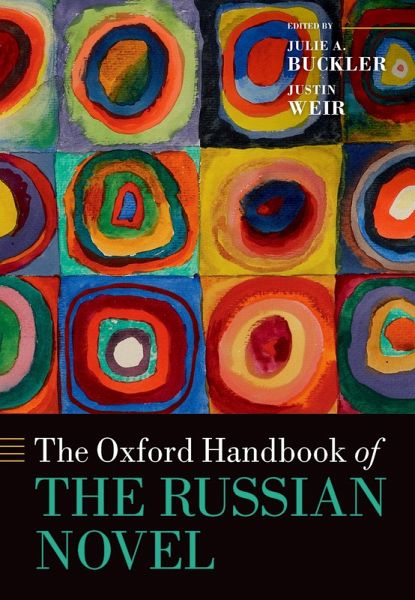
The Russian novel remains a subject of enduring interest for scholars, students, and general audiences. Russian novels were initially influenced by the parallel traditions of novel-writing in Britain, France, and Germany, but the Russian novel exists as its own tradition and asserts its own identity as a literary form. To read a Russian novel often requires the fortitude to traverse many hundreds of pages and to consider profound political, philosophical, and metaphysical questions. The best-known Russian novels are also compulsively readable, providing a fascinating window into Russian…mehr
The Russian novel remains a subject of enduring interest for scholars, students, and general audiences. Russian novels were initially influenced by the parallel traditions of novel-writing in Britain, France, and Germany, but the Russian novel exists as its own tradition and asserts its own identity as a literary form. To read a Russian novel often requires the fortitude to traverse many hundreds of pages and to consider profound political, philosophical, and metaphysical questions. The best-known Russian novels are also compulsively readable, providing a fascinating window into Russian culture and society at different historical periods. Readers of Russian novels marvel at the fictional world-building of innovative writers who created compelling characters and settings, realized through brilliant storytelling and stylistic virtuosity. Major Russian novelists such as Dostoevsky, Tolstoy, and Nabokov continue to be popular and to carry intellectual prestige. But the tradition of the Russian novel extends well beyond these familiar authors and their works. This Oxford Handbook draws from a valuable tradition of critical commentary dating back to the nineteenth and early twentieth centuries and builds upon important earlier scholarship but significantly updates our understanding of the Russian novel: showcasing newer interpretive paradigms, considering works outside the canon, and extending the story of the Russian novel through Soviet times and up to the varied literary landscape of the present. The chapters also explore an increasingly expansive view of what constitutes a Russian novel, part of ongoing efforts to communicate our evolving understanding of the tradition.
Julie Buckler has spent her academic career at Harvard. She works on nineteenth-century Russian literature, performing arts, and urban cultures. Buckler is the author of two award-winning books: The Literary Lorgnette: Attending Opera in Imperial Russia (Stanford, 2000) and Mapping St. Petersburg: Imperial Text and Cityscape (Princeton, 2005). In addition to The Oxford Handbook of the Russian Novel, Buckler has also co-edited two other collection of essays: Rites of Place: Public Commemoration in Russia and Eastern Europe (Northwestern, 2013) and Russian Performances: Word, Object, Action (Wisconsin, 2018). Justin Weir has been a professor of Slavic Languages and Literatures at Harvard University since 2000. His research focuses on 19th- and 20th-century Russian novels, literary theory, and Soviet film. His publications include a volume of translations edited and translated with Timothy Langen (Eight Russian Plays, Northwestern UP, 2000), and two monographs devoted to Russian novelists: The Author as Hero: Self and Tradition in Nabokov, Pasternak, and Bulgakov (Northwestern UP, 2002), and Leo Tolstoy and the Alibi of Narrative (Yale UP, 2011). A Russian translation of The Author as Hero was published by Academic Studies Press in 2022.
Inhaltsangabe
* Contents * About the Editors * List of Contributors * Introduction by co-editors Julie A. Buckler and Justin Weir * Part I. The History of the Russian Novel * 1. First Novels, First Publics - Luba Golburt and Bella Grigoryan * 2. Russian Novelists and the Mind of Europe - Lina Steiner * 3. The Noncanonical Status of the Nineteenth-Century Russian Novel - William Mills Todd III * 4. The Russian Novel in the Age of Modernism - Julie Curtis * 5. The Soviet Novel as a Work of Grief - Evgeny Dobrenko * 6. The Postmodernist Russian Novel: An Attempt at Typology - Mark Lipovetsky * 7. The Contemporary Russian Novel - Jacob Emery * 8. Svetlana Alexievich and the Novel Tradition - Justin Weir * Part II. Theories of the Novel and the Russian Tradition * 9. Russian Formalism and the Novel - Thomas Seifrid * 10. The Word about the Word: Mikhail Bakhtin's Theory of the Novel - Alexander Spektor * 11. Mind Games: On Psychology in the Russian Novel - Angela Brintlinger * 12. An Uneasy Compact: The Russian Novel as Philosophy - Jeff Love * 13. Ethics and the Russian Novel - Gary Saul Morson * Part III. Geographies and Cultural Spaces in the Russian Novel * 14. Empire and the Russian Novel - Edyta M. Bojanowska * 15. Nature in the Russian Novel - Jane Costlow * 16. Siberia and the Queerness of the Russian Novel - Ani Kokobobo * 17. Escape Vehicles: Yiddish and the Russian Novel - Gabriella Safran * 18. Race, Ethnicity, and the Russian Novel - Michael Kunichika * Part IV. Modes of Understanding and Experience in the Russian Novel * 19. Seeing the (Russian) Novel -- Molly Brunson * 20. The Haunted House: Spiritualism and the Realist Novel -- Ilya Vinitsky * 21. Bodily Expression, Gesture, and Knowledge in the Russian Novel - Timothy Langen * 22. Turgenev, Dostoevsky, Tolstoy, and Their Smalls: Children and Animals - Robin Miller * 23. Coping with Matter in the Russian Novel: Anatomists, Alchemists, Geologists, and Collectors - Michal Oklot * 24. Dostoevsky's Depth Theology - Yuri Corrigan * 25. Grotesque Fictions: Posthumanism and the Novel - Julia Vaingurt * Part V. Ideologies in Novel Form * 26. Why Don't We Read Them? The Underwater Corpus of Nineteenth-Century Russian Realist Novels - Julie A. Buckler * 27. The Woman Question: Learned Noblewomen Writers - Hilde Hoogenboom * 28. Crime and Terrorism in the Russian Novel - Julia Chadaga * 29. Seriousness, Humor and the Contradictions of Late Socialism - Ann Komaromi * Part VI. Worlding the Russian Novel * 30. The Russian Novel in English Translation - Catherine McAteer * 31. Russian Novels of the Émigré Everyday - Tatyana Gershkovich * 32. Global Cooling: From the Fluid Transnationalism of Ada to the Frigid Poetics of Transparent Things - Eric Naiman * 33. First as Comedy, then as Nationalism: The Immigrant Post-Soviet Novel between America and Israel - Alex Moshkin and Sasha Senderovich * 34. The Russophone Novel: Past, Present, and Uncertain Future - Nathan Goldstone * Index
* Contents * About the Editors * List of Contributors * Introduction by co-editors Julie A. Buckler and Justin Weir * Part I. The History of the Russian Novel * 1. First Novels, First Publics - Luba Golburt and Bella Grigoryan * 2. Russian Novelists and the Mind of Europe - Lina Steiner * 3. The Noncanonical Status of the Nineteenth-Century Russian Novel - William Mills Todd III * 4. The Russian Novel in the Age of Modernism - Julie Curtis * 5. The Soviet Novel as a Work of Grief - Evgeny Dobrenko * 6. The Postmodernist Russian Novel: An Attempt at Typology - Mark Lipovetsky * 7. The Contemporary Russian Novel - Jacob Emery * 8. Svetlana Alexievich and the Novel Tradition - Justin Weir * Part II. Theories of the Novel and the Russian Tradition * 9. Russian Formalism and the Novel - Thomas Seifrid * 10. The Word about the Word: Mikhail Bakhtin's Theory of the Novel - Alexander Spektor * 11. Mind Games: On Psychology in the Russian Novel - Angela Brintlinger * 12. An Uneasy Compact: The Russian Novel as Philosophy - Jeff Love * 13. Ethics and the Russian Novel - Gary Saul Morson * Part III. Geographies and Cultural Spaces in the Russian Novel * 14. Empire and the Russian Novel - Edyta M. Bojanowska * 15. Nature in the Russian Novel - Jane Costlow * 16. Siberia and the Queerness of the Russian Novel - Ani Kokobobo * 17. Escape Vehicles: Yiddish and the Russian Novel - Gabriella Safran * 18. Race, Ethnicity, and the Russian Novel - Michael Kunichika * Part IV. Modes of Understanding and Experience in the Russian Novel * 19. Seeing the (Russian) Novel -- Molly Brunson * 20. The Haunted House: Spiritualism and the Realist Novel -- Ilya Vinitsky * 21. Bodily Expression, Gesture, and Knowledge in the Russian Novel - Timothy Langen * 22. Turgenev, Dostoevsky, Tolstoy, and Their Smalls: Children and Animals - Robin Miller * 23. Coping with Matter in the Russian Novel: Anatomists, Alchemists, Geologists, and Collectors - Michal Oklot * 24. Dostoevsky's Depth Theology - Yuri Corrigan * 25. Grotesque Fictions: Posthumanism and the Novel - Julia Vaingurt * Part V. Ideologies in Novel Form * 26. Why Don't We Read Them? The Underwater Corpus of Nineteenth-Century Russian Realist Novels - Julie A. Buckler * 27. The Woman Question: Learned Noblewomen Writers - Hilde Hoogenboom * 28. Crime and Terrorism in the Russian Novel - Julia Chadaga * 29. Seriousness, Humor and the Contradictions of Late Socialism - Ann Komaromi * Part VI. Worlding the Russian Novel * 30. The Russian Novel in English Translation - Catherine McAteer * 31. Russian Novels of the Émigré Everyday - Tatyana Gershkovich * 32. Global Cooling: From the Fluid Transnationalism of Ada to the Frigid Poetics of Transparent Things - Eric Naiman * 33. First as Comedy, then as Nationalism: The Immigrant Post-Soviet Novel between America and Israel - Alex Moshkin and Sasha Senderovich * 34. The Russophone Novel: Past, Present, and Uncertain Future - Nathan Goldstone * Index
Es gelten unsere Allgemeinen Geschäftsbedingungen: www.buecher.de/agb
Impressum
www.buecher.de ist ein Internetauftritt der buecher.de internetstores GmbH
Geschäftsführung: Monica Sawhney | Roland Kölbl | Günter Hilger
Sitz der Gesellschaft: Batheyer Straße 115 - 117, 58099 Hagen
Postanschrift: Bürgermeister-Wegele-Str. 12, 86167 Augsburg
Amtsgericht Hagen HRB 13257
Steuernummer: 321/5800/1497
USt-IdNr: DE450055826