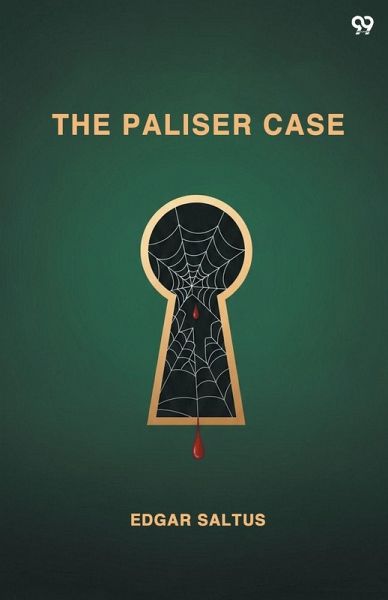
The paliser case explores the fallout of a murder that shocks the upper tiers of New York society, using the incident to dissect the privileges and illusions within elite circles. The sudden death of a wealthy figure sends ripples through a world defined by reputation and affluence, where lineage and influence shape identity. The story draws attention to the way social stature conceals emotional conflict and moral uncertainty. At the center of this world, figures from different backgrounds are drawn together not only by personal ties but also by the disruptive force of scandal. The contrast…mehr
The paliser case explores the fallout of a murder that shocks the upper tiers of New York society, using the incident to dissect the privileges and illusions within elite circles. The sudden death of a wealthy figure sends ripples through a world defined by reputation and affluence, where lineage and influence shape identity. The story draws attention to the way social stature conceals emotional conflict and moral uncertainty. At the center of this world, figures from different backgrounds are drawn together not only by personal ties but also by the disruptive force of scandal. The contrast between extravagant lives and quieter, more modest existences builds a tension that grows with each unfolding revelation. Early in the narrative, the emotional reflections of a father mourning not just a son but a legacy provide insight into generational ambition and regret. As connections between the murdered man and others emerge, the structure of high society begins to crack under the weight of suspicion and introspection. The novel constructs a portrait of lives bound by expectation, unraveling through grief, ambition, and the hidden cost of status.
Edgar Evertson Saltus was born on October 8, 1855, in New York City to parents Francis Henry Saltus and Julia Ida Evertson Saltus. Known for his elaborate and elegant prose, he became a distinctive voice in American literature during the late 19th and early 20th centuries. His writing style was often compared to that of European decadent authors such as Joris-Karl Huysmans, Gabriele D'Annunzio, and Oscar Wilde, with whom he shared a fascination for aestheticism, moral ambiguity, and philosophical pessimism. Saltus began his career in law but turned to literature, where his refined diction and interest in metaphysical questions garnered both attention and controversy. His work spanned fiction, essays, and philosophical treatises, often exploring the limits of morality, beauty, and human desire. Among his notable writings are The Philosophy of Disenchantment and The Anatomy of Negation, which reflect his engagement with skepticism and nihilism. He lived much of his life in New York, where he was a known figure in intellectual and literary circles. He married Marie Saltus in 1911 and remained with her until his death on July 31, 1921, in Manhattan, at the age of 65.
Es gelten unsere Allgemeinen Geschäftsbedingungen: www.buecher.de/agb
Impressum
www.buecher.de ist ein Internetauftritt der buecher.de internetstores GmbH
Geschäftsführung: Monica Sawhney | Roland Kölbl | Günter Hilger
Sitz der Gesellschaft: Batheyer Straße 115 - 117, 58099 Hagen
Postanschrift: Bürgermeister-Wegele-Str. 12, 86167 Augsburg
Amtsgericht Hagen HRB 13257
Steuernummer: 321/5800/1497
USt-IdNr: DE450055826