
Andere Kunden interessierten sich auch für
 The Epistles Of St. Ignatius28,99 €
 Tertullien39,99 €
 Diálogos De La Pintura...37,99 €
 Athanasius: His Life and Life-Work29,99 €
 Faults on Both Sides. Part the Second, or, An Essay Upon the Original Cause, Progress and Mischevous Consequences of the Factions in the Church ... Faithfully Produced From the Most Eminent Authorities ... by Way of Letter to a New Member of Parliament25,99 €
 Remarks on the Rev. Dr. Worcester's Letter to Mr. Channing: On the "Review of American Unitarianism" in a Late Panoplist25,99 €
 Reply to the Charges of Robert Adair, Esq. Against the Bishop of Winchester, in Consequence of a Passage Contained in His Lordship's Memoirs of the Ri27,99 €







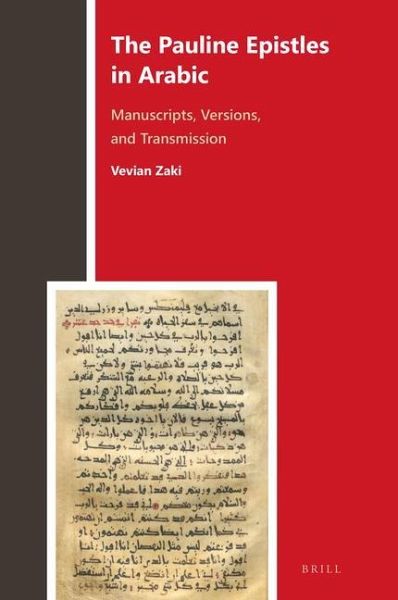
In this study, Vevian Zaki places the Arabic versions of the Pauline Epistles in their historical context, exploring when, where, and how they were produced, transmitted, understood, and adapted among Eastern Christian communities across the centuries. She also considers the transmission and use of these texts among Muslim polemicists, as well as European missionaries and scholars. Underpinning the study is a close investigation of the manuscripts and a critical examination of their variant readings. The work concludes with a case study: an edition and translation of the Epistle to the Philippians from manuscripts London, BL, Or. 8612 and Vatican, BAV, Ar. 13; a comparison of the translation strategies employed in these two versions; and an investigation of the possible relations between them.