34,99 €
inkl. MwSt.
Versandkostenfrei*
Versandfertig in 1-2 Wochen
payback
17 °P sammeln
  • Broschiertes Buch

The book is the eighth novel by Charles Dickens. It was first published as a serial in 1849–50, and as a book in 1850. Many elements of the novel follow events in Dickens’ own life, and it is probably the most autobiographical of his novels. The story traces the life of David Copperfield from childhood to maturity. David was born in Blunderstone, Suffolk, near Great Yarmouth, Norfolk, England, in 1820, six months after the death of his father. David spends his early years in relative happiness with his loving but frail mother and their kindly housekeeper, Peggotty. When he is seven years old…mehr

Produktbeschreibung
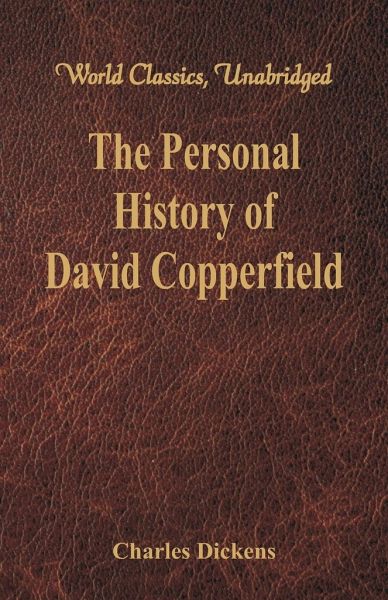
The book is the eighth novel by Charles Dickens. It was first published as a serial in 1849–50, and as a book in 1850. Many elements of the novel follow events in Dickens’ own life, and it is probably the most autobiographical of his novels. The story traces the life of David Copperfield from childhood to maturity. David was born in Blunderstone, Suffolk, near Great Yarmouth, Norfolk, England, in 1820, six months after the death of his father. David spends his early years in relative happiness with his loving but frail mother and their kindly housekeeper, Peggotty. When he is seven years old his mother marries Edward Murdstone. David is given good reason to dislike his stepfather and has similar feelings for Murdstone’s sister Jane, who moves into the house soon afterwards. Murdstone attempts to thrash David for falling behind in his studies. David bites him and soon afterwards is sent away to a boarding school, Salem House, with a ruthless headmaster, Mr. Creakle. There he befriends James Steerforth and Tommy Traddles. David returns home for the holidays only to learn that his mother has given birth to a baby boy. Shortly after David returns to Salem House, his mother and her baby die, and David returns home immediately. Peggotty marries a man named Mr Barkis. Murdstone sends David to work for a wine merchant in London – a business of which Murdstone is a joint owner. Copperfield’s landlord, Wilkins Micawber, is sent to debtors’ prison (the King’s Bench Prison) and remains there for several months before being released and moving to Plymouth. No one remains to care for David in London, so he decides to run away.
Autorenporträt
Charles Dickens (7 February 1812 - 9 June 1870) was an English writer and social critic. He created some of the world's best-known fictional characters and is regarded by many as the greatest novelist of the Victorian era.[1] His works enjoyed unprecedented popularity during his lifetime, and by the 20th century, critics and scholars had recognised him as a literary genius. His novels and short stories are still widely read today. Born in Portsmouth, Dickens left school to work in a factory when his father was incarcerated in a debtors' prison. Despite his lack of formal education, he edited a weekly journal for 20 years, wrote 15 novels, five novellas, hundreds of short stories and non-fiction articles, lectured and performed readings extensively, was an indefatigable letter writer, and campaigned vigorously for children's rights, education, and other social reforms. Dickens's literary success began with the 1836 serial publication of The Pickwick Papers. Within a few years he had become an international literary celebrity, famous for his humour, satire, and keen observation of character and society. His novels, most published in monthly or weekly instalments, pioneered the serial publication of narrative fiction, which became the dominant Victorian mode for novel publication.[4][5] Cliffhanger endings in his serial publications kept readers in suspense.[6] The installment format allowed Dickens to evaluate his audience's reaction, and he often modified his plot and character development based on such feedback.[5] For example, when his wife's chiropodist expressed distress at the way Miss Mowcher in David Copperfield seemed to reflect her disabilities, Dickens improved the character with positive features.[7] His plots were carefully constructed, and he often wove elements from topical events into his narratives.[8] Masses of the illiterate poor chipped in ha'pennies to have each new monthly episode read to them, opening up and inspiring a new class of readers.[9] His 1843 novella A Christmas Carol remains especially popular and continues to inspire adaptations in every artistic genre. Oliver Twist and Great Expectations are also frequently adapted and, like many of his novels, evoke images of early Victorian London. His 1859 novel A Tale of Two Cities (set in London and Paris) is his best-known work of historical fiction. The most famous celebrity of his era, he undertook, in response to public demand, a series of public reading tours in the later part of his career.[10] Dickens has been praised by many of his fellow writers-from Leo Tolstoy to George Orwell, G. K. Chesterton, and Tom Wolfe-for his realism, comedy, prose style, unique characterisations, and social criticism. However, Oscar Wilde, Henry James, and Virginia Woolf complained of a lack of psychological depth, loose writing, and a vein of sentimentalism.