

Andere Kunden interessierten sich auch für
 The Phenomenology of the Second-Person Plural137,99 €
 Phenomenology of Broken Habits137,99 €
 Political Phenomenology137,99 €
 Merleau-Ponty and Contemporary Philosophy of Perception38,99 €
 The Ontological Maze52,95 €
 Healthy Embodiment137,99 €
") British Empirical Philosophers (Routledge Revivals)43,99 €
British Empirical Philosophers (Routledge Revivals)43,99 €




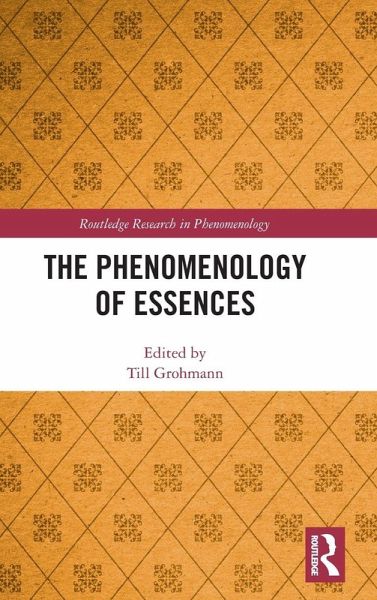
This volume explores the phenomenological notion of essence and related concepts. It discusses the role of essences in epistemology, philosophy of language, sociology, philosophical anthropology, transcendental phenomenology, phenomenological realism and idealism, imagination, metaphysics, and mathematics.
Due to widespread nominalist tendencies in philosophical approaches to language, anthropology, and sociology, contemporary philosophy has developed a growing aversion against the thinking of essences. Phenomenology, on the other hand, stresses the importance of essences from a methodological and thematic perspective. This volume identifies the centrality of essences in Husserl's transcendental phenomenology and traces their influence from the early phenomenological movement to contemporary debates.
The Phenomenology of Essences will appeal to researchers and advanced students working in phenomenology and history of philosophy.
Due to widespread nominalist tendencies in philosophical approaches to language, anthropology, and sociology, contemporary philosophy has developed a growing aversion against the thinking of essences. Phenomenology, on the other hand, stresses the importance of essences from a methodological and thematic perspective. This volume identifies the centrality of essences in Husserl's transcendental phenomenology and traces their influence from the early phenomenological movement to contemporary debates.
The Phenomenology of Essences will appeal to researchers and advanced students working in phenomenology and history of philosophy.
"An important book that elucidates one of the pillars of phenomenological thinking not seldom forgotten today: the question of 'essence' and its challenging complexity."
Philipp Schmidt, University of Würzburg, Germany
"This volume explores the nuances and subtleties of phenomenological re-interpretations of classical notions of essences in a way that can engage contemporary criticisms of a broad range of essentialisms. Essences are more complicated than they might first appear. Grohmann brings together leading and emerging scholars to investigate the philosophical relevance of phenomenological notions of essences and to engage contemporary criticisms of this persistent classical term."
Adam Konopka, Xavier University, USA
Philipp Schmidt, University of Würzburg, Germany
"This volume explores the nuances and subtleties of phenomenological re-interpretations of classical notions of essences in a way that can engage contemporary criticisms of a broad range of essentialisms. Essences are more complicated than they might first appear. Grohmann brings together leading and emerging scholars to investigate the philosophical relevance of phenomenological notions of essences and to engage contemporary criticisms of this persistent classical term."
Adam Konopka, Xavier University, USA