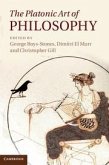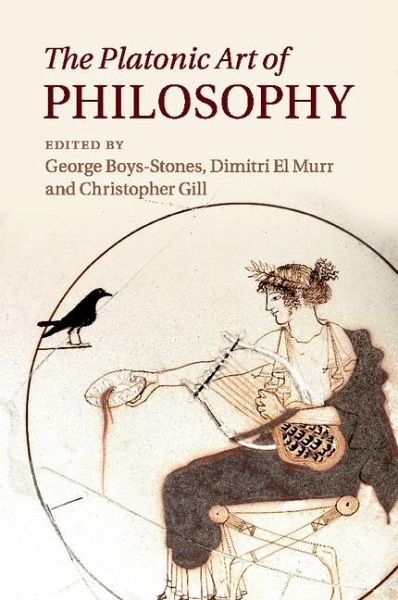
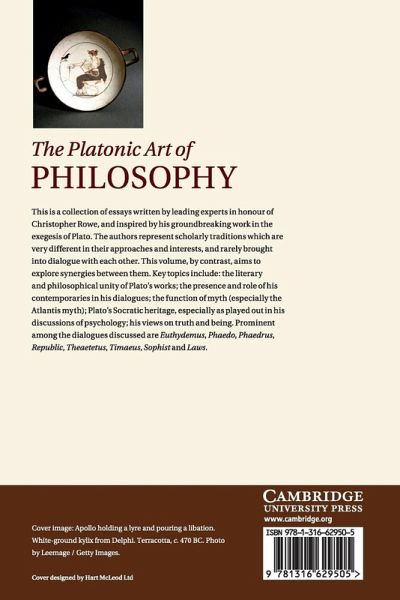
This is a collection of essays written by leading experts in honour of Christopher Rowe, and inspired by his groundbreaking work in the exegesis of Plato. The authors represent scholarly traditions which are sometimes very different in their approaches and interests, and so rarely brought into dialogue with each other. This volume, by contrast, aims to explore synergies between them. Key topics include: the literary unity of Plato's works; the presence and role of his contemporaries in his dialogues; the function of myth (especially the Atlantis myth); Plato's Socratic heritage, especially as…mehr
This is a collection of essays written by leading experts in honour of Christopher Rowe, and inspired by his groundbreaking work in the exegesis of Plato. The authors represent scholarly traditions which are sometimes very different in their approaches and interests, and so rarely brought into dialogue with each other. This volume, by contrast, aims to explore synergies between them. Key topics include: the literary unity of Plato's works; the presence and role of his contemporaries in his dialogues; the function of myth (especially the Atlantis myth); Plato's Socratic heritage, especially as played out in his discussions of psychology; and his views of truth and being. Prominent among the dialogues discussed are Euthydemus, Phaedo, Phaedrus, Republic, Theaetetus, Timaeus, Sophist and Laws.
Introduction George Boys-Stones 1. Macrology and digression Monique Dixsaut 2. Two conceptions of the body in Plato's Phaedrus María Angélica Fierro 3. Socrates in the Phaedo Noburu Notomi 4. Socratic intellectualism in the Republic's central digression David Sedley 5. Timaeus in the cave Thomas Johansen 6. Reflective commentary (1): 'Socratic' psychology in the Republic Christopher Gill 7. Reflective commentary (2): appearance, reality and the desire for the good Dimitri El Murr 8. Waving or drowning? Socrates and the sophists on self-knowledge in the Euthydemus M. M. McCabe 9. Why was the Theaetetus written by Euclides? Michel Narcy 10. The wooden horse: the Cyrenaics in the Theaetetus Ugo Zilioli 11. The wax tablet, logic and Protagoreanism Terry Penner 12. A form that 'is' of what 'is not': existential einai in Plato's Sophist Denis O'Brien 13. Truth and story in the Timaeus-Critias Sarah Broadie 14. The Atlantis-poem in the Timaeus-Critias Mauro Tulli 15. Friendship and justice in the Laws Malcolm Schofield.
Es gelten unsere Allgemeinen Geschäftsbedingungen: www.buecher.de/agb
Impressum
www.buecher.de ist ein Internetauftritt der buecher.de internetstores GmbH
Geschäftsführung: Monica Sawhney | Roland Kölbl | Günter Hilger
Sitz der Gesellschaft: Batheyer Straße 115 - 117, 58099 Hagen
Postanschrift: Bürgermeister-Wegele-Str. 12, 86167 Augsburg
Amtsgericht Hagen HRB 13257
Steuernummer: 321/5800/1497
USt-IdNr: DE450055826