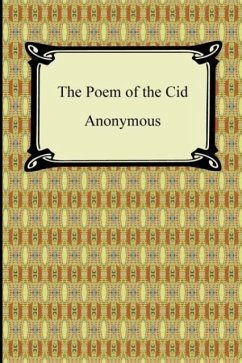
"El Poema de Mio Cid", or "The Poem of the Cid", is the oldest preserved Spanish epic poem, thought to date to before the thirteenth century. The author of the poem is unknown, and there is some debate as to whether it can be attributed to one or many individuals. The story probably began as an oral tradition passed down by generation, recounting the exploits of an exiled soldier during the Spanish Reconquista who regained his honor in battle against the Moorish armies and in conquest of Valencia. The realist tone of the story is unusual for European medieval tales, but lends to an excellent…mehr
"El Poema de Mio Cid", or "The Poem of the Cid", is the oldest preserved Spanish epic poem, thought to date to before the thirteenth century. The author of the poem is unknown, and there is some debate as to whether it can be attributed to one or many individuals. The story probably began as an oral tradition passed down by generation, recounting the exploits of an exiled soldier during the Spanish Reconquista who regained his honor in battle against the Moorish armies and in conquest of Valencia. The realist tone of the story is unusual for European medieval tales, but lends to an excellent depiction of the politics and conflict between the Moors, Jews and Spanish Christians of the 11th century. "The Poem of the Cid" has been a beloved work of Spanish literature for centuries, and its timeless themes of national and religious identity, honor, and personal gallantry make it a popular classic today.
The author of Nanny Merry remains anonymous, with little known about their personal life or background. The novel, written in the early 1870s, offers a glimpse into the moral and spiritual values of the time, particularly focusing on childhood innocence, family relationships, and faith. While the specific identity of the author is unclear, the themes explored in the book suggest a deep understanding of the emotional and spiritual development of children. The book's emphasis on kindness, love, forgiveness, and reliance on God reflects the prevailing religious and moral values of the period, especially in children's literature. The story's portrayal of the main character s growth and lessons learned from life events suggests that the author aimed to instill important virtues in young readers. Despite the anonymity of the author, Nanny Merry continues to be valued for its timeless messages about faith, family, and the power of kindness in shaping one s character.
Es gelten unsere Allgemeinen Geschäftsbedingungen: www.buecher.de/agb
Impressum
www.buecher.de ist ein Internetauftritt der buecher.de internetstores GmbH
Geschäftsführung: Monica Sawhney | Roland Kölbl | Günter Hilger
Sitz der Gesellschaft: Batheyer Straße 115 - 117, 58099 Hagen
Postanschrift: Bürgermeister-Wegele-Str. 12, 86167 Augsburg
Amtsgericht Hagen HRB 13257
Steuernummer: 321/5800/1497
USt-IdNr: DE450055826