
Andere Kunden interessierten sich auch für
 The Poetics of Melancholy in Early Modern England109,99 €
 The Poetics and Politics of Youth in Milton's England109,99 €
 The Poetics of English Nationhood, 1590 1612103,99 €
 Joyce, Dante, and the Poetics of Literary Relations109,99 €
 The Poetry of Robert Browning101,99 €
 Poetry and Politics in the Cockney School110,99 €
 The Cambridge Companion to D. H. Lawrence45,99 €
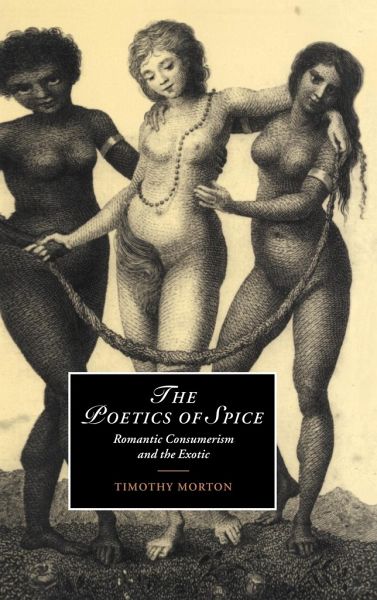
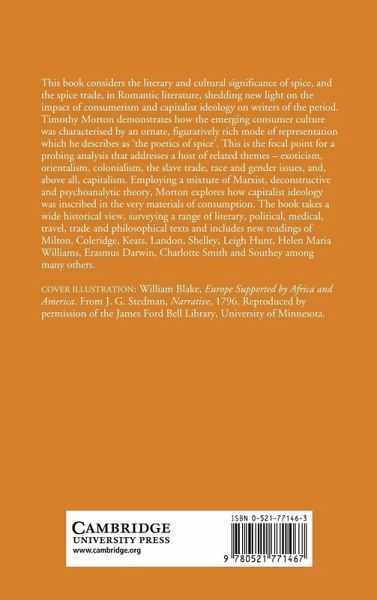
This 2000 book considers the literary and cultural significance of spice, and the spice trade, in Romantic literature, shedding new light on the impact of consumerism and capitalist ideology on writers of the period. Timothy Morton demonstrates how the emerging consumer culture was characterized by an ornate, figuratively rich mode of representation which he describes as 'the poetics of spice'. This is the focal point for a probing analysis that addresses a host of related themes - exoticism, orientalism, colonialism, the slave trade, race and gender issues, and, above all, capitalism. Employing a mixture of Marxist, deconstructive and psychoanalytic theory, Morton explores how capitalist ideology was inscribed in the very materials of consumption. The book takes a wide historical perspective, surveying a range of literary, political, medical, travel, trade and philosophical texts, and includes readings of Milton, Coleridge, Keats, Shelley, Leigh Hunt, Charlotte Smith and Southey among many others.