Interdisciplinary Perspectives for an Inclusive and Forward-Looking Evaluation Herausgegeben:Petrakis, Panagiotis E.; Boufounou, Paraskevi V.; Kostis, Pantelis C.
Interdisciplinary Perspectives for an Inclusive and Forward-Looking Evaluation Herausgegeben:Petrakis, Panagiotis E.; Boufounou, Paraskevi V.; Kostis, Pantelis C.
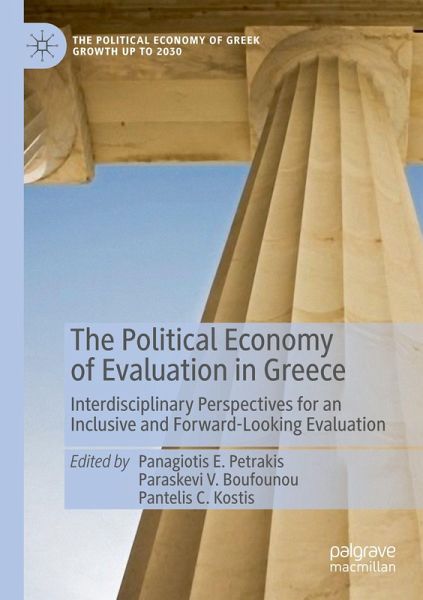
This contributed volume explores the relationships between politics, economics, and evaluation. With a special focus on Greece, it addresses how evaluations within different sectors impact policymaking and explains what this means for sustainable development. Featuring interdisciplinary perspectives on economic policy evaluation for inclusive and future-forward public policy, the chapters rethink and reform evaluation to meet modern economic challenges. The book outlines the concept and principles of resource allocation in evaluation, offering a framework for economic transformation. It…mehr
This contributed volume explores the relationships between politics, economics, and evaluation. With a special focus on Greece, it addresses how evaluations within different sectors impact policymaking and explains what this means for sustainable development.
Featuring interdisciplinary perspectives on economic policy evaluation for inclusive and future-forward public policy, the chapters rethink and reform evaluation to meet modern economic challenges.
The book outlines the concept and principles of resource allocation in evaluation, offering a framework for economic transformation. It highlights the role of evaluation in achieving sustainable development.
It provides a new way to measure the quality of public policy, governance, and economic policy.
Panagiotis E. Petrakis is Emeritus Professor at the National and Kapodistrian University of Athens (NKUA). He is Scientific Coordinator of Distance Education Training Programs and the series editor for two Palgrave book series: "Futures of European Societies and Economies" and "The Political Economy of Greek Growth up to 2030." Paraskevi V. Boufounou is Assistant Professor at the NKUA. She was Chair of the Network of Evaluation Societies in Europe (NESE) from 2021 to 2023. She held top positions in private and public sector institutions and was Chair of the Board of Invest in Greece. Pantelis C. Kostis is Assistant Professor at the NKUA. He is the series editor for the Palgrave book series "The Future of European Societies and Economies" and serves as associate editor in several journals.
Inhaltsangabe
Chapter 1: Navigating the New Era: Interdisciplinary Insights into Greece's Political Economy of Evaluation.- Part A. Policy Evaluation in Times of Change.- Chapter 2: Evaluation in the Polycrisis Epoche.- Chapter 3: The Key Horizontal Principles in the Evaluation Practice: From Necessity to Culture.- Chapter 4: Developing a Culture of Evaluation as a Prerequisite for Sustainable Economic Development.- Chapter 5: Scrutiny of legislation: securing effectiveness and legislative quality.- Chapter 6: Mainstreaming inclusive principles and strategic approaches in regulatory policy evaluation: The case of the EU and the Greek central government.- Chapter 7: How sustainable and inclusive is economic growth in Greece.- Chapter 8: Evaluation for people or with people? The role of participatory and empowering approaches to social inclusion.- Part B. Evaluating Policy Implementation During Economic Crises.- Chapter 9: Evaluating the Internal Devaluation Policies Implemented in Greece - Analytical Insights and Empirical Evidence.- Chapter 10. A comparative evaluation of alternative methods for assessing corporate creative accounting in Greece: Empirical Evidence during the Financial Crisis.- Chapter 11: Evaluating factors that strengthened the informal economy in the global financial crisis: a case study in selected countries of the European Union.- Chapter 12: An Econometric Policy Evaluation of Fiscal Management in PIGS Economies.- Part C. Policy Evaluation of Specific Sectors and Policies.- Chapter 13: Inclination towards Applying Different Evaluation Approaches to Provide Inputs for Evidence-Based Policy Design.- Chapter 14: Evaluation as a Tool to Increase the Competitiveness and Economic Development of SMEs.- Chapter 15: Greek SMEs and Sustainable Development: An Evaluation of Sustainable Development Goals (SDGs).- Chapter 16: The Link Between ESG, Corporate Governance and Stock Performance of European Financial Institutions.- Chapter 17: Evaluation processes in all aspects of EKDDA's open innovation project.- Chapter 18: Evaluating Internal Audit's importance and value-added in Corporate Governance and Risk Management: An Empirical Investigation.- Chapter 19: Policy Recommendations for Greece to Provide Energy Independence.- Chapter 20: The political economy of redistribution of income support to Greek farms: the case of Greece's CAP Strategic Plan 2023-2027.
Chapter 1: Navigating the New Era: Interdisciplinary Insights into Greece's Political Economy of Evaluation.- Part A. Policy Evaluation in Times of Change.- Chapter 2: Evaluation in the Polycrisis Epoche.- Chapter 3: The Key Horizontal Principles in the Evaluation Practice: From Necessity to Culture.- Chapter 4: Developing a Culture of Evaluation as a Prerequisite for Sustainable Economic Development.- Chapter 5: Scrutiny of legislation: securing effectiveness and legislative quality.- Chapter 6: Mainstreaming inclusive principles and strategic approaches in regulatory policy evaluation: The case of the EU and the Greek central government.- Chapter 7: How sustainable and inclusive is economic growth in Greece.- Chapter 8: Evaluation for people or with people? The role of participatory and empowering approaches to social inclusion.- Part B. Evaluating Policy Implementation During Economic Crises.- Chapter 9: Evaluating the Internal Devaluation Policies Implemented in Greece - Analytical Insights and Empirical Evidence.- Chapter 10. A comparative evaluation of alternative methods for assessing corporate creative accounting in Greece: Empirical Evidence during the Financial Crisis.- Chapter 11: Evaluating factors that strengthened the informal economy in the global financial crisis: a case study in selected countries of the European Union.- Chapter 12: An Econometric Policy Evaluation of Fiscal Management in PIGS Economies.- Part C. Policy Evaluation of Specific Sectors and Policies.- Chapter 13: Inclination towards Applying Different Evaluation Approaches to Provide Inputs for Evidence-Based Policy Design.- Chapter 14: Evaluation as a Tool to Increase the Competitiveness and Economic Development of SMEs.- Chapter 15: Greek SMEs and Sustainable Development: An Evaluation of Sustainable Development Goals (SDGs).- Chapter 16: The Link Between ESG, Corporate Governance and Stock Performance of European Financial Institutions.- Chapter 17: Evaluation processes in all aspects of EKDDA's open innovation project.- Chapter 18: Evaluating Internal Audit's importance and value-added in Corporate Governance and Risk Management: An Empirical Investigation.- Chapter 19: Policy Recommendations for Greece to Provide Energy Independence.- Chapter 20: The political economy of redistribution of income support to Greek farms: the case of Greece's CAP Strategic Plan 2023-2027.
Es gelten unsere Allgemeinen Geschäftsbedingungen: www.buecher.de/agb
Impressum
www.buecher.de ist ein Internetauftritt der buecher.de internetstores GmbH
Geschäftsführung: Monica Sawhney | Roland Kölbl | Günter Hilger
Sitz der Gesellschaft: Batheyer Straße 115 - 117, 58099 Hagen
Postanschrift: Bürgermeister-Wegele-Str. 12, 86167 Augsburg
Amtsgericht Hagen HRB 13257
Steuernummer: 321/5800/1497
USt-IdNr: DE450055826