
Andere Kunden interessierten sich auch für
 Fiscal Federalism and the Political Economy of Eurozone Integration36,99 €
 Towards a Resilient Eurozone71,90 €
 European Monetary Policy. Focusing on the Aim of Price Stability10,99 €
 The International Monetary Fund, the European Central Bank and the Federal Reserve and their Role in the Economic Crisis15,95 €
 The Political Economy of the Eurozone's Rollercoaster91,99 €
 The European Union199,99 €
 The Political Economy of the Eurozone's Rollercoaster91,99 €

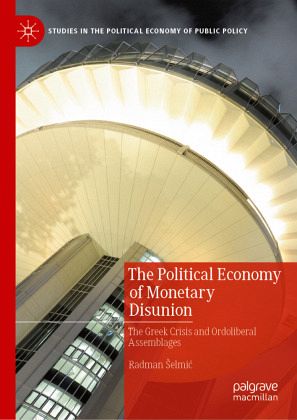
This book reassesses the Eurozone financial crisis of the 2010s, and critically compares EU strategies for addressing it with those adopted during the Covid-19 and economic crises of the 2020s. Whilst it has been broadly accepted amongst academics and policymakers that the Eurozone turmoil originated in the banking sector and then deterritorialized towards peripheral Economic and Monetary Union countries, the mechanisms implemented for this transformation remain understudied. Using a non-performative reading of Deleuze and Guattari's concept of the assemblage, the book analyses the mechanisms used in Greece and the Economic and Monetary Union to transfer the financial and moral responsibility of the crisis from the private to the public sector. Combining insights from political economy, economics and social studies of finance, this investigation critiques the austerity policies imposed by European institutions, and identifies the green and just transformation as the best way forward to address the ongoing Eurozone problems. The book will appeal to students and scholars of political economy, public administration, economics, and European politics.