
Andere Kunden interessierten sich auch für
 Environmental Water Footprints68,99 €
 Made in China 2025 - The Grand Initiative24,90 €
 Made in China 2025 - The Grand Initiative30,90 €
 Adapting to Climate Change38,99 €
 WHY WE HATE THE OIL COMPANIES19,99 €
 Oil and Gas Pipeline Infrastructure Insecurity119,99 €
 Oil and Gas Pipeline Infrastructure Insecurity113,99 €


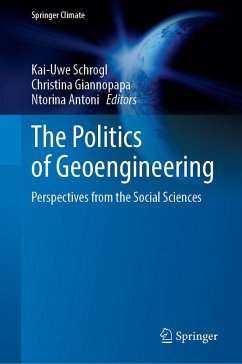
This book offers the first comprehensive social science perspective on geoengineering technologies that deliberately intervene in Earth s systems to counter climate change. It examines the political, legal, economic, and societal dimensions of Carbon Dioxide Removal (CDR) and Solar Radiation Modification (SRM), combining SWOT analyses with regional perspectives from Africa and the Asia-Pacific.
Contributors illuminate the urgent governance, ethical, and geopolitical challenges that arise when states and societies confront the risk versus risk dilemma: unchecked climate change versus potentially disruptive interventions.
Offering clear insights into emerging regulatory debates and global power dynamics, the volume provides scholars, policymakers, and practitioners with tools to engage in informed and responsible decision-making.
A timely guide to one of the 21st century s most controversial climate strategies, it helps readers navigate the politics of turning Earth s thermostat down.
Contributors illuminate the urgent governance, ethical, and geopolitical challenges that arise when states and societies confront the risk versus risk dilemma: unchecked climate change versus potentially disruptive interventions.
Offering clear insights into emerging regulatory debates and global power dynamics, the volume provides scholars, policymakers, and practitioners with tools to engage in informed and responsible decision-making.
A timely guide to one of the 21st century s most controversial climate strategies, it helps readers navigate the politics of turning Earth s thermostat down.