Provocative and original, The Politics of Indigeneity explores the concept of indigeneity across the world - from the Americas to New Zealand, Africa to Asia - and the ways in which it intersects with local, national and international social and political realities. Taking on the role of critical interlocutors, the authors engage in extended dialogue with indigenous spokespersons and activists, as well as between each other. In doing so, they explore the possibilities of a 'second-wave indigeneity' - one that is alert to the challenges posed to indigenous aspirations by the neo-liberal agenda…mehr
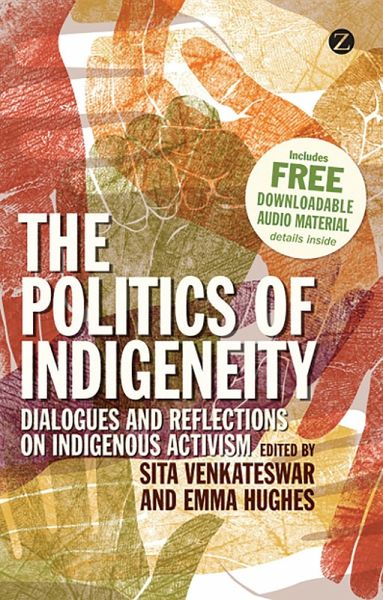
Provocative and original, The Politics of Indigeneity explores the concept of indigeneity across the world - from the Americas to New Zealand, Africa to Asia - and the ways in which it intersects with local, national and international social and political realities. Taking on the role of critical interlocutors, the authors engage in extended dialogue with indigenous spokespersons and activists, as well as between each other. In doing so, they explore the possibilities of a 'second-wave indigeneity' - one that is alert to the challenges posed to indigenous aspirations by the neo-liberal agenda of nation-states and their concerns with sovereignty. Timely and topical in its focus on global indigenous politics, and featuring a variety of first-hand indigenous voices - including those of indigenous activists, scholars, leaders and interviewees - this is a vital contribution to an often contentious topic.
Sita Venkateswar is Director, International in the College of Humanities and Social Sciences and Senior Lecturer in the Social Anthropology programme at Massey University. Her ethnography Development and Ethnocide: Colonial Practices in the Andaman Islands is based on her PhD fieldwork in the Andaman Islands from 1989-1992. She has since been involved in research on child labour in Nepal and poverty and grassroots democracy in Kolkata, India. She is currently involved in exploring indigenous politics related to climate change as well as questions of displacement and belonging in relation to refugee resettlement in New Zealand and Europe. Emma Hughes spent several years living in Egypt and working with women's rights groups in Egypt and East Africa where she was involved with development and advocacy projects addressing women's rights issues. In New Zealand she worked firstly for the Centre for Indigenous Governance and Development at Massey University, and currently as a research adviser. As a visiting research scholar at the American University in Cairo in 2008 she returned to Egypt to document the Nubian case.
Inhaltsangabe
Author biographies Introduction - Sita Venkateswar, Emma Hughes, Chris Kidd, Justin Kenrick, Benno Glauser, Hine Waitere, Katherine McKinnon, Simron Jit Singh Invocation: What the spirit said to Ibegua Chiqueñoro - translated by Benno Glauser Section One: Settler South America 1. Being indigenous. An inquiry into the concept of indigeneity, surging from a conversation with two Ayoreo leaders - Benno Glauser New Zealand 2. Beyond indigenous civilities: indigenous matters - Hine Waitere and Elizabeth Allen Section Two: Postcolonial Africa 3. Mapping Everyday Practices as Rights of Resistance: Indigenous peoples in Central Africa - Christopher Kidd and Justin Kenrick 4. Displacement and indigenous rights: the Nubian Case - Emma Hughes Asia 5. Being indigenous in northern Thailand - Katharine McKinnon 6. Chupon's dilemma. A dialogue - Simron Jit Singh Section Three: The International Arena 7. Indigeneity and International Indigenous Rights Organisations and Fora - Sita Venkateswar Conclusion: Naming and Claiming Second-Wave Indigeneity: a dialogue and reflections - Sita Venkateswar, Hine Waitere, Chris Kidd, Avril Bell, Benno Glauser, Katherine Mackinnon, Emma Hughes, Simron Jit Singh
Author biographies Introduction - Sita Venkateswar, Emma Hughes, Chris Kidd, Justin Kenrick, Benno Glauser, Hine Waitere, Katherine McKinnon, Simron Jit Singh Invocation: What the spirit said to Ibegua Chiqueñoro - translated by Benno Glauser Section One: Settler South America 1. Being indigenous. An inquiry into the concept of indigeneity, surging from a conversation with two Ayoreo leaders - Benno Glauser New Zealand 2. Beyond indigenous civilities: indigenous matters - Hine Waitere and Elizabeth Allen Section Two: Postcolonial Africa 3. Mapping Everyday Practices as Rights of Resistance: Indigenous peoples in Central Africa - Christopher Kidd and Justin Kenrick 4. Displacement and indigenous rights: the Nubian Case - Emma Hughes Asia 5. Being indigenous in northern Thailand - Katharine McKinnon 6. Chupon's dilemma. A dialogue - Simron Jit Singh Section Three: The International Arena 7. Indigeneity and International Indigenous Rights Organisations and Fora - Sita Venkateswar Conclusion: Naming and Claiming Second-Wave Indigeneity: a dialogue and reflections - Sita Venkateswar, Hine Waitere, Chris Kidd, Avril Bell, Benno Glauser, Katherine Mackinnon, Emma Hughes, Simron Jit Singh
Es gelten unsere Allgemeinen Geschäftsbedingungen: www.buecher.de/agb
Impressum
www.buecher.de ist ein Internetauftritt der buecher.de internetstores GmbH
Geschäftsführung: Monica Sawhney | Roland Kölbl | Günter Hilger
Sitz der Gesellschaft: Batheyer Straße 115 - 117, 58099 Hagen
Postanschrift: Bürgermeister-Wegele-Str. 12, 86167 Augsburg
Amtsgericht Hagen HRB 13257
Steuernummer: 321/5800/1497
USt-IdNr: DE450055826