

Andere Kunden interessierten sich auch für
 The Case of 2001 Economic Crisis in Turkey under Neo-liberal Reforms56,99 €
 Added value from industries25,99 €
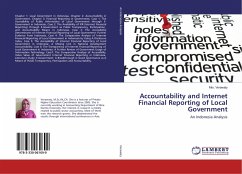
 Accountability and Internet Financial Reporting of Local Government30,99 €
 Central bank's Independence, Transparency and Accountability19,99 €
 Strengthening Institutions, Restoring Fiscal Governance53,99 €
 Institutional Mechanisms of Enhancing Accountability in Uganda's LGs47,99 €
 Integration of health saving technologies in the system of nature management46,99 €






How do multilateral financial institutions address the conservation of biodiversity - or for that matter - the environment and local natural-resource based livelihoods more broadly? This study examines the policies of the World Bank, the world's pre- eminent development institution, and the role of the Global Environment Facility, a financial mechanism established to serve the United Nations Conventions on Biodiversity and Climate Change. It seeks to provide insights into the conditions that are necessary to render public international financial institutions more accountable to their constituencies ranging from international donors to local villagers and indigenous peoples.