
Andere Kunden interessierten sich auch für
 Science and the Indian Tradition177,99 €
 Science and the Indian Tradition58,99 €
 Modern South Asia39,99 €
 Nehru46,99 €
 Refugees and the Politics of the Everyday State in Pakistan167,99 €
 The International History of East Asia, 1900-196841,99 €
 The Asia Pacific War55,99 €
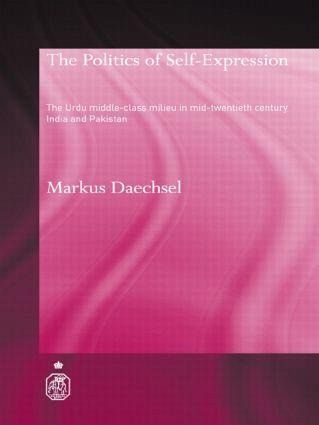
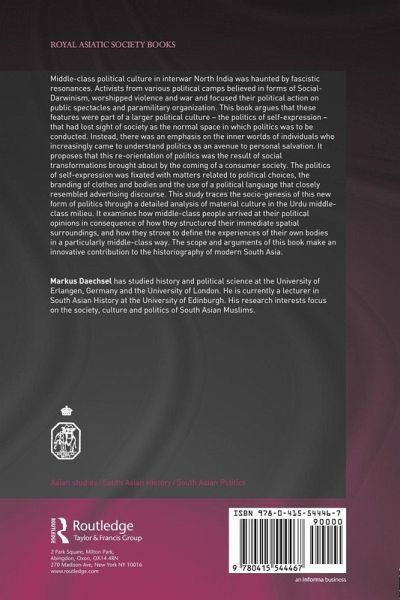
The 1930s to 1950s witnessed the rise and dominance of a political culture across much of North India which combined unprecedented levels of mobilization and organization with an effective de-politicization of politics. On the one hand obsessed with world events, people also came to understand politics as a question of personal morality and achievement. In other words, politics was about expressing the self in new ways and about finding and securing an imaginary home in a fast-moving and often terrifying universe. The scope and arguments of this book make an innovative contribution to the historiography of modern South Asia, by focusing on the middle-class milieu which was the epicentre of this new political culture.
'Daechsel's study is a deeply thoughtful and rich one, with interesting readings of Urdu sources, and a sophisticated, intriguing argument. His book is an important intervention in the growing work on the politics of selfhood in South Asia, in an interdisciplinary style which admirably suits the complexity of its subject matter and themes' - Javed Majeed, Queen Mary, University of London