
Andere Kunden interessierten sich auch für
 Liturgy in the Twenty-First Century35,99 €
 Personhood and Presence44,99 €
 Biblia Anagrammatica, or, The Anagrammatic Bible: a Literary Curiosity Gathered From Unexplored Sources and From Books of the Greatest Rarity20,99 €
 The Word for Every Season14,99 €
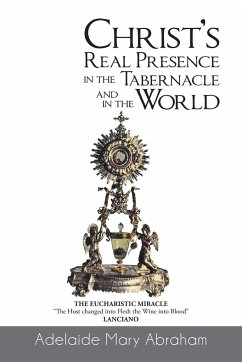
 CHRIST's REAL PRESENCE IN THE TABERNACLE and in the WORLD17,99 €
 Barefoot in the Dust24,99 €
 Sensing the Inner Presence of Christ8,99 €



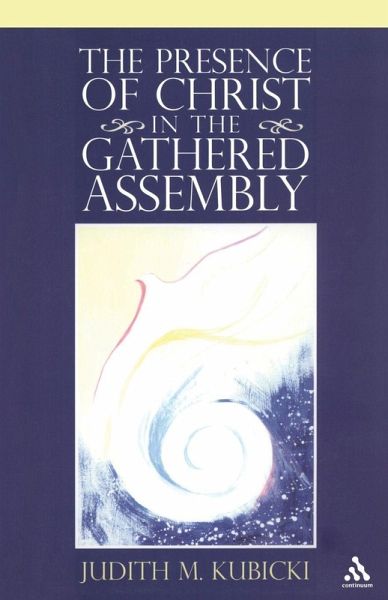
Using the resources of several contemporary philosophical approaches, including semiotics, phenomenology, personalism, and existentialism, the book draws attention to the forgotten or less understood aspects of the belief in the presence of Christ in the gathered assembly and explores the implications of this belief for participating in the liturgy and living the Christian life.
- Sheds light on traditional beliefs with insights from contemporary culture
- Challenges recent liturgical documents from Rome that place inordinate emphasis on the role of the priest to the neglect of the gathered assembly as primary symbol and subject of the liturgical action and overemphasize the role of text to the detriment of non-verbal symbols
- Offers a compelling description of how liturgical symbols work
- Provides a strong theological argument for the role and significance of the gathered assembly of believers in the worship event.
- Offers a broad theological basis for ecumenical discussion of the sacramental presence of Christ.
The Dogmatic Constitution on the Sacred Liturgy of Vatican II reiterates the church's traditional teaching on the manifold presence of Christ in his church, especially in liturgical celebrations: in the priest, the consecrated bread and wine, the sacraments, and when the gathered church prays and sings. Nevertheless, there continues to exist in both scholarly writing and popular piety an almost exclusive focus on the presence of Christ in the eucharistic species. The purpose of this book is to examine the most elusive mode of the manifold presence of Christ mentioned above, that is, as it is symbolized within the assembly that gathers for worship. Using the resources of several contemporary philosophical approaches, including semiotics, phenomenology, personalism, and existentialism, the book draws attention to the forgotten or less understood aspects of the belief in the presence of Christ in the gathered assembly and explores the implications of this belief for participating in the liturgy and living the Christian life. While the book is scholarly in tone, it has extremely practical ramifications for the ways in which the mass should be celebrated in millions of Catholic parishes around the world.
Review:
"At a time when there are both official and popular challenges to the Vatican II affirmation that the assembly is the primary subject of the liturgical action, Judith Kubicki's carefully researched and written book corrects the frequent but mistaken notion that the ordained priest is the only celebrant of the liturgy. This is an important book to offset the contemporary backsliding in matters of liturgical theology."
R. Kevin Seasoltz, OSB, editor of Worship and author of A Sense of the Sacred
Table of contents:
Introduction
1. Perception, Presence, and Sacramentality in a Postmodern Context
2. The Sacramentality of the Gathered Assembly
3. Worship as Symbolizing Activity
4. The Sacramentality of Time
5. Gathered Up into the One Cosmic Dance
- Sheds light on traditional beliefs with insights from contemporary culture
- Challenges recent liturgical documents from Rome that place inordinate emphasis on the role of the priest to the neglect of the gathered assembly as primary symbol and subject of the liturgical action and overemphasize the role of text to the detriment of non-verbal symbols
- Offers a compelling description of how liturgical symbols work
- Provides a strong theological argument for the role and significance of the gathered assembly of believers in the worship event.
- Offers a broad theological basis for ecumenical discussion of the sacramental presence of Christ.
The Dogmatic Constitution on the Sacred Liturgy of Vatican II reiterates the church's traditional teaching on the manifold presence of Christ in his church, especially in liturgical celebrations: in the priest, the consecrated bread and wine, the sacraments, and when the gathered church prays and sings. Nevertheless, there continues to exist in both scholarly writing and popular piety an almost exclusive focus on the presence of Christ in the eucharistic species. The purpose of this book is to examine the most elusive mode of the manifold presence of Christ mentioned above, that is, as it is symbolized within the assembly that gathers for worship. Using the resources of several contemporary philosophical approaches, including semiotics, phenomenology, personalism, and existentialism, the book draws attention to the forgotten or less understood aspects of the belief in the presence of Christ in the gathered assembly and explores the implications of this belief for participating in the liturgy and living the Christian life. While the book is scholarly in tone, it has extremely practical ramifications for the ways in which the mass should be celebrated in millions of Catholic parishes around the world.
Review:
"At a time when there are both official and popular challenges to the Vatican II affirmation that the assembly is the primary subject of the liturgical action, Judith Kubicki's carefully researched and written book corrects the frequent but mistaken notion that the ordained priest is the only celebrant of the liturgy. This is an important book to offset the contemporary backsliding in matters of liturgical theology."
R. Kevin Seasoltz, OSB, editor of Worship and author of A Sense of the Sacred
Table of contents:
Introduction
1. Perception, Presence, and Sacramentality in a Postmodern Context
2. The Sacramentality of the Gathered Assembly
3. Worship as Symbolizing Activity
4. The Sacramentality of Time
5. Gathered Up into the One Cosmic Dance