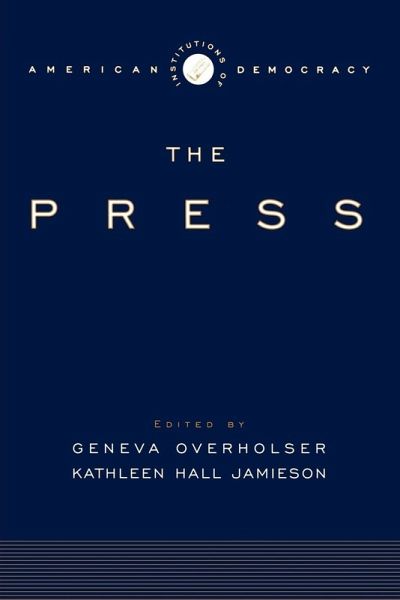
American democracy is built on its institutions. The Congress, the presidency, and the judiciary, in particular, undergird the rights and responsibilities of every citizen. The free press, for example, protected by the First Amendment, allows for the dissent so necessary in a democracy. How has this institution changed since the nation's founding? And what can we, as leaders, policymakers, and citizens, do to keep it vital? The freedom of the press is an essential element of American democracy. With the guidance of editors Geneva Overholser and Kathleen Hall Jamieson, this volume examines the…mehr
American democracy is built on its institutions. The Congress, the presidency, and the judiciary, in particular, undergird the rights and responsibilities of every citizen. The free press, for example, protected by the First Amendment, allows for the dissent so necessary in a democracy. How has this institution changed since the nation's founding? And what can we, as leaders, policymakers, and citizens, do to keep it vital? The freedom of the press is an essential element of American democracy. With the guidance of editors Geneva Overholser and Kathleen Hall Jamieson, this volume examines the role of the press in a democracy, investigating alternative models used throughout world history to better understand how the American press has evolved into what it is today. The commission also examines ways to allow more voices to be heard and to improve the institution of the American free press. The Press, a collection of essays by the nation's leading journalism scholars and professionals will examine the history, identity, roles, and future of the American press, with an emphasis on topics of concern to both practitioners and consumers of American media.
Geneva Overholser is the Curtis B. Hurley Chair in Public Affairs Reporting, Missouri School of Journalism Washington Bureau. Kathleen Hall Jamieson, Ph.D., is the Elizabeth Ware Packard Professor of Communication, Annenberg School for Communication at the University of Pennsylvania; Director, Annenberg Public Policy Center. Series edited by Jaroslav Pelikan, Yale University and University of Pennsylvania.
Inhaltsangabe
* DIRECTORY OF CONTRIBUTORS * GENERAL INTRODUCTION: The Press as an Institution of American Constitutional Democracy * INTRODUCTION * SECTION I: ORIENTATIONS: THE PRESS AND DEMOCRACY IN TIME AND SPACE * 1: Daniel C. Hallin and Robert Giles: Presses and Democracies * 2: Michael Schudson and Susan E. Tifft: American Journalism in Historical Perspective * 3: Robert M. Entman: The Nature and Sources of News * 4: Barbie Zelizer: Definitions of Journalism * 5: Pamela Newkirk: The Minority Press: Pleading Our Own Cause * 6: John Keane : Journalism and Democracy across Borders * SECTION II: THE FUNCTIONS OF THE PRESS IN A DEMOCRACY * 7: James Curran: What Democracy Requires of the Media * 8: Robert Schmuhl and Robert G. Picard: The Marketplace of Ideas * 9: Maxwell McCombs: The Agenda-Setting Function of the Press * 10: W. Lance Bennett and William Serrin: The Watchdog Role * 11: Thomas Patterson and Philip Seib: Informing the Public * 12: Esther Thorson : Mobilizing Citizen Participation * SECTION III: GOVERNMENT AND THE PRESS: AN AMBIVALENT RELATIONSHIP * 13: Martha Joynt Kumar and Alex Jones: Government and the Press: Issues and Trends * 14: Timothy E. Cook: Public Policy toward the Press: What Government Does For the News Media * 15: Bruce W. Sanford and Jane E. Kirtley: The First Amendment Tradition and Its Critics * 16: Jane E. Kirtley: Legal Evolution of the Government-News Media Relationship * 17: Robert B. Horwitz: Communications Regulation in Protecting the Public Interest * 18: Daniel Schorr: Journalism and the Public Interest * 19: William Prochnau : The Military and the Media * SECTION IV: STRUCTURE AND NATURE OF THE AMERICAN PRESS * 20: Robert G. Picard: Money, Media, and the Public Interest * 21: James T. Hamilton: The Market and the Media * 22: Mitchell Stephens and David T. Z. Mindich: The Press and the Politics of Representation * 23: Theodore L. Glasser and Marc Gunther: The Legacy of Autonomy in American Journalism * 24: Carolyn Marvin and Philip Meyer : What Kind of Journalism Does the Public Need? * SECTION V * 25 The Future of News, The Future of Journalism: John Carey and Nancy Hicks Maynard * AFTERWORD * INDEX
* DIRECTORY OF CONTRIBUTORS * GENERAL INTRODUCTION: The Press as an Institution of American Constitutional Democracy * INTRODUCTION * SECTION I: ORIENTATIONS: THE PRESS AND DEMOCRACY IN TIME AND SPACE * 1: Daniel C. Hallin and Robert Giles: Presses and Democracies * 2: Michael Schudson and Susan E. Tifft: American Journalism in Historical Perspective * 3: Robert M. Entman: The Nature and Sources of News * 4: Barbie Zelizer: Definitions of Journalism * 5: Pamela Newkirk: The Minority Press: Pleading Our Own Cause * 6: John Keane : Journalism and Democracy across Borders * SECTION II: THE FUNCTIONS OF THE PRESS IN A DEMOCRACY * 7: James Curran: What Democracy Requires of the Media * 8: Robert Schmuhl and Robert G. Picard: The Marketplace of Ideas * 9: Maxwell McCombs: The Agenda-Setting Function of the Press * 10: W. Lance Bennett and William Serrin: The Watchdog Role * 11: Thomas Patterson and Philip Seib: Informing the Public * 12: Esther Thorson : Mobilizing Citizen Participation * SECTION III: GOVERNMENT AND THE PRESS: AN AMBIVALENT RELATIONSHIP * 13: Martha Joynt Kumar and Alex Jones: Government and the Press: Issues and Trends * 14: Timothy E. Cook: Public Policy toward the Press: What Government Does For the News Media * 15: Bruce W. Sanford and Jane E. Kirtley: The First Amendment Tradition and Its Critics * 16: Jane E. Kirtley: Legal Evolution of the Government-News Media Relationship * 17: Robert B. Horwitz: Communications Regulation in Protecting the Public Interest * 18: Daniel Schorr: Journalism and the Public Interest * 19: William Prochnau : The Military and the Media * SECTION IV: STRUCTURE AND NATURE OF THE AMERICAN PRESS * 20: Robert G. Picard: Money, Media, and the Public Interest * 21: James T. Hamilton: The Market and the Media * 22: Mitchell Stephens and David T. Z. Mindich: The Press and the Politics of Representation * 23: Theodore L. Glasser and Marc Gunther: The Legacy of Autonomy in American Journalism * 24: Carolyn Marvin and Philip Meyer : What Kind of Journalism Does the Public Need? * SECTION V * 25 The Future of News, The Future of Journalism: John Carey and Nancy Hicks Maynard * AFTERWORD * INDEX
Es gelten unsere Allgemeinen Geschäftsbedingungen: www.buecher.de/agb
Impressum
www.buecher.de ist ein Internetauftritt der buecher.de internetstores GmbH
Geschäftsführung: Monica Sawhney | Roland Kölbl | Günter Hilger
Sitz der Gesellschaft: Batheyer Straße 115 - 117, 58099 Hagen
Postanschrift: Bürgermeister-Wegele-Str. 12, 86167 Augsburg
Amtsgericht Hagen HRB 13257
Steuernummer: 321/5800/1497
USt-IdNr: DE450055826