Andere Kunden interessierten sich auch für
 The Complete Works of Nietzsche56,99 €
 Nihilism and Nietzsche34,99 €
 Cambridge Described & Illustrated: Being a Short History of the Town and University40,99 €
 Luna and the Six Evil Witches26,99 €
 Writings of Nietzsche42,99 €
![]() "Zu allem Handeln gehört vergessen": Friedrich Nietzsche und das Problem der historischen Bildung17,95 €
"Zu allem Handeln gehört vergessen": Friedrich Nietzsche und das Problem der historischen Bildung17,95 € Trinidad & Tobago the Jaws of Evil19,99 €




This collection includes the following writings of the German philosopher Friedrich Nietzsche - 'Thus Spoke Zarathustra: A Book for Everyone and No One', 'The Anti-Christ: A Criticism of Christianity', and 'European Nihilism'. This collection brings together works by Nietzsche that explore his identification of the problem of evil. Nietzsche's writings present his idea of abandoning evil due to its lack of presence as a moral reality and instead being used as a means to terrorize humans. It also explores the reasons why the concept of evil arose to be seen as a powerful force capable of great ruin. Regarded as one of the most profound German philosophers, Friedrich Nietzsche (1844-1900) is popularly considered a cultural critic and philologist whose work exerted a scholarly influence on modern intellectual history. His intellectual works focus on widespread themes such as religion, morality, philosophy, and science. Prominent elements of his philosophy include his radical critique of truth, a genealogical criticism of religion, and Christian morality. His body of work touched a wide range of topics, including art, philology, history, music, tragedy, and culture, most of which drew inspiration from Greek tragedy.
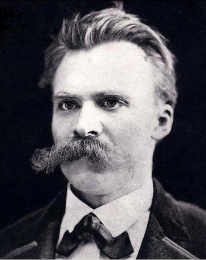
Friedrich Wilhelm Nietzsche, born on October 15, 1844, in Röcken, Prussia, was a German philosopher and classical philologist whose ideas profoundly influenced modern intellectual history. At 24, he became the youngest individual to hold the Chair of Classical Philology at the University of Basel in Switzerland. However, due to persistent health issues, he resigned in 1879 and dedicated the next decade to his philosophical writings.Nietzsche's work is characterized by a radical critique of traditional values and a deep exploration of human existence. He introduced influential concepts such as the "will to power," the "Übermensch," and the proclamation that "God is dead," challenging the foundations of religion, morality, and culture. His distinctive style, marked by aphorisms and irony, set his writings apart from those of his contemporaries.In 1889, Nietzsche suffered a mental collapse, leading to a complete loss of his cognitive faculties, likely due to vascular dementia. He spent his remaining years under the care of his mother and later his sister, Elisabeth Förster-Nietzsche, until his death on August 25, 1900, in Weimar, Germany. Posthumously, his sister edited and published his works, sometimes controversially, influencing the interpretation and reception of his philosophy.