There is growing awareness about how social media circulate extreme viewpoints and turn up the temperature of public debate. Posts that exhibit agitation garner disproportionate engagement. Within this clamour, fringe sources and viewpoints are mainstreaming, and mainstream media are marginalized. This book takes up the mainstreaming of the fringe and the marginalization of the mainstream. In a cross-platform analysis of Google Web Search, Facebook, YouTube, Reddit, Twitter, Instagram, 4chan and TikTok, the authors found that hyperpartisan web operators, alternative influencers and ambivalent…mehr
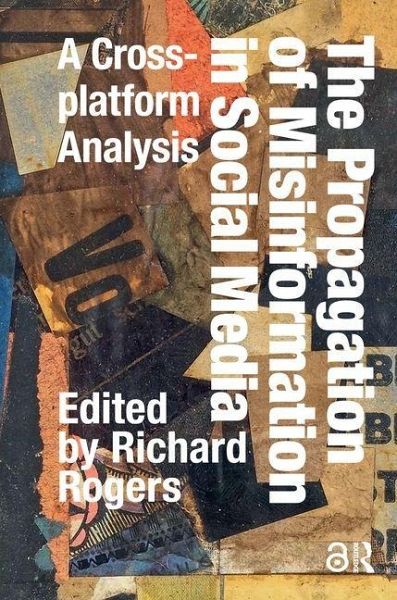
There is growing awareness about how social media circulate extreme viewpoints and turn up the temperature of public debate. Posts that exhibit agitation garner disproportionate engagement. Within this clamour, fringe sources and viewpoints are mainstreaming, and mainstream media are marginalized. This book takes up the mainstreaming of the fringe and the marginalization of the mainstream. In a cross-platform analysis of Google Web Search, Facebook, YouTube, Reddit, Twitter, Instagram, 4chan and TikTok, the authors found that hyperpartisan web operators, alternative influencers and ambivalent commentators are in ascendency. The book can be read as a form of platform criticism. It puts on display the current state of information online, noting how social media platforms have taken on the mantle of accidental authorities, privileging their own on-platform performers and at the same time adjudicating between claims of what is considered acceptable discourse.
Richard Rogers, PhD, is Professor of New Media and Digital Culture, Media Studies, University of Amsterdam, and Director of the Digital Methods Initiative. He is author of Information Politics on the Web and Digital Methods (both MIT Press) and Doing Digital Methods (SAGE).
Inhaltsangabe
Preface 1. Serious queries and editorial epistemologies: How social media are contending with misinformation Richard Rogers 2. Problematic information in Google Web Search? Scrutinizing the results from U.S. election-related queries Guillen Torres 3. The scale of Facebook's problem depends upon how fake news is classified Richard Rogers 4. When misinformation migrates: Cross-platform posting YouTube and the deep vernacular web Anthony Glyn Burton 5. Fringe players on political Twitter: Source-sharing dynamics partisanship and problematic actors Maarten Groen and Marloes Geboers 6. Twitter as accidental authority: How a platform assumed an adjudicative role during the COVID-19 pandemic Emillie de Keulenaar Ivan Kisjes Rory Smith Carina Albrecht and Eleonora Cappuccio 7. The earnest platform: Coverage of the U.S. presidential candidates COVID-19 and social issues on Instagram Sabine Niederer and Gabriele Colombo 8. A fringe mainstreamed or tracing antagonistic slang between 4chan and Breitbart before and after Trump Stijn Peeters Tom Willaert Marc Tuters Katrien Beuls Paul Van Eecke and Jeroen Van Soest 9. Political TikTok: Playful performance ambivalent critique and event-commentary Natalia Sánchez-Querubín Shuaishuai Wang Briar Dickey and Andrea Benedetti Afterword: The misinformation problem and the deplatforming debates Index.
Es gelten unsere Allgemeinen Geschäftsbedingungen: www.buecher.de/agb
Impressum
www.buecher.de ist ein Internetauftritt der buecher.de internetstores GmbH
Geschäftsführung: Monica Sawhney | Roland Kölbl | Günter Hilger
Sitz der Gesellschaft: Batheyer Straße 115 - 117, 58099 Hagen
Postanschrift: Bürgermeister-Wegele-Str. 12, 86167 Augsburg
Amtsgericht Hagen HRB 13257
Steuernummer: 321/5800/1497
USt-IdNr: DE450055826