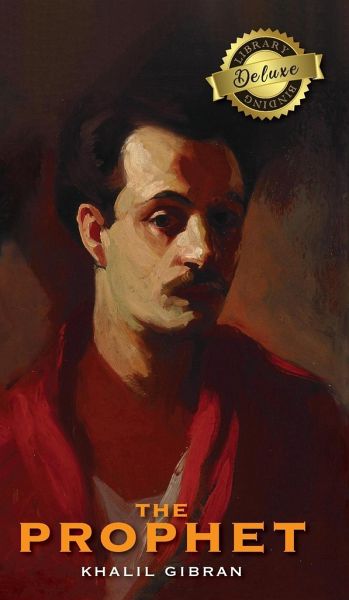
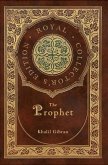
The prophet has lived in the city of Orphalese for 12 years and is about to board a ship which will carry him home. He is stopped by a group of people, with whom he discusses topics such as life and the human condition. The prophet advises on many topics including love, marriage, children, giving, work, laws, freedom, prayer, pleasure, religion, and death. The prophet leaves the people of Orphalese with knowledge that they can use to achieve fulfillment in everyday life. The Prophet is a book of 26 prose poetry fables written in English by the Lebanese-American poet and writer Kahlil Gibran.…mehr
The prophet has lived in the city of Orphalese for 12 years and is about to board a ship which will carry him home. He is stopped by a group of people, with whom he discusses topics such as life and the human condition. The prophet advises on many topics including love, marriage, children, giving, work, laws, freedom, prayer, pleasure, religion, and death. The prophet leaves the people of Orphalese with knowledge that they can use to achieve fulfillment in everyday life. The Prophet is a book of 26 prose poetry fables written in English by the Lebanese-American poet and writer Kahlil Gibran. It is Gibran's best known work. The Prophet has been translated into more than 108 different languages, making it one of the most translated books in history, and it has never been out of print.
Gibran Khalil Gibran, known in English as Kahlil Gibran, was born on January 6, 1883, in Bsharri, Lebanon, to Kamila Gibran and Khalil Gibran. He immigrated with his family to the United States in the late 19th century, settling in Boston, where his early experiences shaped his multicultural identity. He explored both Arabic and English literary traditions and developed a distinct voice blending Eastern mysticism with Western romanticism. Gibran studied art in Paris and maintained a lifelong commitment to visual expression alongside his writing. His creative output included poetry, essays, parables, and philosophical reflections, characterized by lyrical language and spiritual overtones. He was particularly drawn to themes of love, freedom, sorrow, and the soul s journey, often addressing them through allegorical and symbolic forms. Though often labeled a philosopher, he preferred to be seen as an artist of the heart and spirit. His works gained broad appeal, especially among those seeking emotional and spiritual insight. He died in New York on April 10, 1931, at age 48, and was later buried in his hometown. His legacy continues through his enduring influence on both Middle Eastern and Western literary landscapes.
Es gelten unsere Allgemeinen Geschäftsbedingungen: www.buecher.de/agb
Impressum
www.buecher.de ist ein Internetauftritt der buecher.de internetstores GmbH
Geschäftsführung: Monica Sawhney | Roland Kölbl | Günter Hilger
Sitz der Gesellschaft: Batheyer Straße 115 - 117, 58099 Hagen
Postanschrift: Bürgermeister-Wegele-Str. 12, 86167 Augsburg
Amtsgericht Hagen HRB 13257
Steuernummer: 321/5800/1497
USt-IdNr: DE450055826