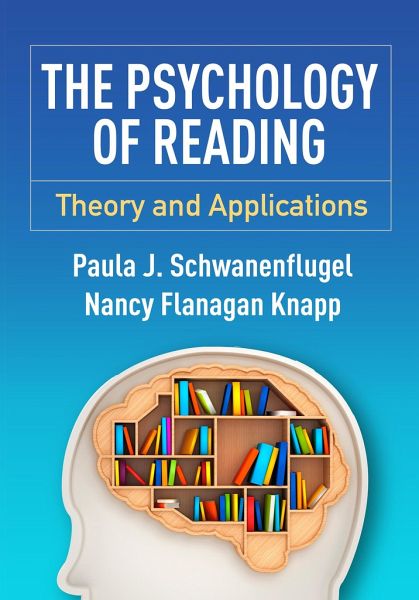
Incorporating cognitive, neuropsychological, and sociocultural perspectives, this authoritative text explains the psychological processes involved in reading and describes applications for educational practice.
Incorporating cognitive, neuropsychological, and sociocultural perspectives, this authoritative text explains the psychological processes involved in reading and describes applications for educational practice.
Paula J. Schwanenflugel, PhD, is Professor of Educational Psychology at the University of Georgia, where she researches and teaches courses on the psychology of reading, psycholinguistics, and child development. She is also affiliated with the Linguistics and Cognitive Science programs. Dr. Schwanenflugel has carried out both basic and applied research on the topics of reading fluency, lexical processing, semantic development, and vocabulary knowledge, as well as large-scale school-based interventions related to literacy. She has published numerous articles in both psychology and education journals, many book chapters related to reading, and two recent books that describe effective research-based classroom literacy practices related to the development of literacy. Nancy Flanagan Knapp, PhD, is Associate Professor of Learning, Design, and Technology at the University of Georgia, where she teaches courses in literacy and learning theory. She is also affiliated with the Department of Educational Psychology, for which she taught the Psychology of Reading course for 17 years. Dr. Knapp's current research focuses on helping struggling readers and improving instruction at the K-12 and postsecondary levels. She offers professional development courses and seminars and is the developer of the Reading Apprenticeship Program, a Tier 2 intervention for delayed elementary school readers. She has published numerous articles on literacy and teaching and is a founding editor of the journal Teaching Educational Psychology.
Inhaltsangabe
1. Families and Reading 2. Emergent Literacy 3. Learning to Read Words 4. Skilled Word Reading 5. Reading Fluency 6. Vocabulary 7. Theoretical Models of Reading Comprehension 8. Components of Reading Comprehension 9. Motivation to Read 10. Linguistic Variation and Reading 11. Why Reading?: The Psychosocial Benefits of Reading
1. Families and Reading 2. Emergent Literacy 3. Learning to Read Words 4. Skilled Word Reading 5. Reading Fluency 6. Vocabulary 7. Theoretical Models of Reading Comprehension 8. Components of Reading Comprehension 9. Motivation to Read 10. Linguistic Variation and Reading 11. Why Reading?: The Psychosocial Benefits of Reading
Es gelten unsere Allgemeinen Geschäftsbedingungen: www.buecher.de/agb
Impressum
www.buecher.de ist ein Internetauftritt der buecher.de internetstores GmbH
Geschäftsführung: Monica Sawhney | Roland Kölbl | Günter Hilger
Sitz der Gesellschaft: Batheyer Straße 115 - 117, 58099 Hagen
Postanschrift: Bürgermeister-Wegele-Str. 12, 86167 Augsburg
Amtsgericht Hagen HRB 13257
Steuernummer: 321/5800/1497
USt-IdNr: DE450055826