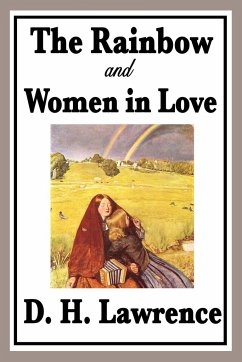
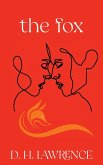
The Rainbow by D. H. Lawrence follows three generations of the Brangwen family, focusing on the sexual dynamics of, and relations between, the characters. Lawrence's frank treatment of sexual desire and the power plays within relationships as a natural and even spiritual force of life caused The Rainbow to be prosecuted in an obscenity trial in late 1915, as a result of which all copies were seized and burnt. After this ban it was unavailable in Britain for 11 years.Women in Love is a sequel to The Rainbow. Ursula and Gudrun Brangwen are two sisters living in the Midlands of England in the…mehr
The Rainbow by D. H. Lawrence follows three generations of the Brangwen family, focusing on the sexual dynamics of, and relations between, the characters. Lawrence's frank treatment of sexual desire and the power plays within relationships as a natural and even spiritual force of life caused The Rainbow to be prosecuted in an obscenity trial in late 1915, as a result of which all copies were seized and burnt. After this ban it was unavailable in Britain for 11 years.Women in Love is a sequel to The Rainbow. Ursula and Gudrun Brangwen are two sisters living in the Midlands of England in the 1910s. Ursula is a teacher, Gudrun an artist. They meet two men who live nearby, Rupert Birkin and Gerald Crich. The four become friends. Ursula and Birkin become involved and Gudrun eventually begins a love affair with Gerald. All four are deeply concerned with questions of society, politics, and the relationship between men and women. Birkin asks Ursula to marry him, and she agrees. Gerald and Gudrun's relationship, however, becomes stormy.
David Herbert Richards "D. H." Lawrence (1885 - 1930) was an English novelist, poet, playwright, essayist, literary critic and painter. His collected works represent, among other things, an extended reflection upon the dehumanizing effects of modernity and industrialization. Some of the issues Lawrence explores are emotional health, vitality, spontaneity and instinct. Lawrence's opinions earned him many enemies and he endured official persecution, censorship, and misrepresentation of his creative work throughout the second half of his life, much of which he spent in a voluntary exile which he called his "savage pilgrimage". At the time of his death, his public reputation was that of a pornographer who had wasted his considerable talents. E. M. Forster, in an obituary notice, challenged this widely held view, describing him as, "The greatest imaginative novelist of our generation." Later, the Cambridge critic F. R. Leavis championed both his artistic integrity and his moral seriousness, placing much of Lawrence's fiction within the canonical "great tradition" of the English novel.
Es gelten unsere Allgemeinen Geschäftsbedingungen: www.buecher.de/agb
Impressum
www.buecher.de ist ein Internetauftritt der buecher.de internetstores GmbH
Geschäftsführung: Monica Sawhney | Roland Kölbl | Günter Hilger
Sitz der Gesellschaft: Batheyer Straße 115 - 117, 58099 Hagen
Postanschrift: Bürgermeister-Wegele-Str. 12, 86167 Augsburg
Amtsgericht Hagen HRB 13257
Steuernummer: 321/5800/1497
USt-IdNr: DE450055826