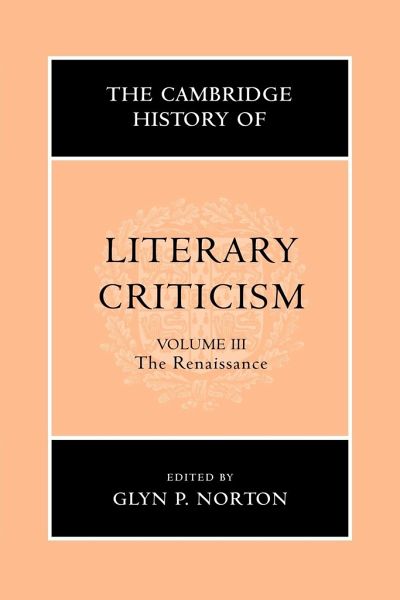
This 1999 volume was the first to explore as part of an unbroken continuum the critical legacy both of the humanist rediscovery of ancient learning and of its neoclassical reformulation. Focused on what is arguably the most complex phase in the transmission of the Western literary-critical heritage, the book encompasses those issues that helped shape the way European writers thought about literature from the late Middle Ages to the late seventeenth century. These issues touched almost every facet of Western intellectual endeavour, as well as the historical, cultural, social, scientific, and…mehr
This 1999 volume was the first to explore as part of an unbroken continuum the critical legacy both of the humanist rediscovery of ancient learning and of its neoclassical reformulation. Focused on what is arguably the most complex phase in the transmission of the Western literary-critical heritage, the book encompasses those issues that helped shape the way European writers thought about literature from the late Middle Ages to the late seventeenth century. These issues touched almost every facet of Western intellectual endeavour, as well as the historical, cultural, social, scientific, and technological contexts in which that activity evolved. From the interpretative reassessment of the major ancient poetic texts, this volume addresses the emergence of the literary critic in Europe by exploring poetics, prose fiction, contexts of criticism, neoclassicism, and national developments. Sixty-one chapters by internationally respected scholars are supported by an introduction, detailed bibliographies for further investigation and a full index.
Introduction Part I. Reading and Interpretation: An Emerging Discourse of Poetics: 1. Theories of language 2. Renaissance exegesis 3. Evangelism and Erasmus 4. The assimilation of Aristotle's Poetics in sixteenth-century Italy 5. Horace in the sixteenth century: commentators into critics 6. Cicero and Quintilian Part II. Poetics: 7. Humanist classifications of poetry among the arts and sciences 8. Theories of poetry: Latin writers 9. Literary imitation in the sixteenth century: writers and readers, Latin and French 10. Petrarchan poetics 11. Translatio and translation in the Renaissance: from France to Italy 12. Invention 13. Humanist education 14. Second rhetoric and the grands rhetoriqueurs 15. The rhetoric of presence: art, literature, and illusion 16. The paradoxical sisterhood: 'ut pictura poesis' 17. Conceptions of style 18. Sir Philip Sidney's An apology for poetry 19. Aristotle, Horace, and Longinus: the conception of reader response 20. Italian epic theory 21. The lyric 22. Renaissance theatre and the theory of tragedy 23. Elizabethan theatrical genres and literary theory 24. Defining comedy in the seventeenth century: moral sense and theatrical sensibility 25. Dialogue and discussion in the Renaissance 26. The essay as criticism 27. The genres of epigram and emblem 28. Humour and satire in the Renaissance Part III. Theories of Prose Fiction: 29. Theories of prose fiction in England: 1558-1700 30. Theories of prose fiction in sixteenth-century France 31. Seventeenth-century theories of the novel in France: writing and reading the truth 32. Theories of prose fiction and poetics in Italy: novella and romanzo (1525-96) Part IV. Contexts of Criticism: 33. Criticism and the metropolis: Tudor-Stuart London 34. Criticism in the city: Lyons and Paris 35. Culture, imperialism, and humanist criticism in the Italian city-states 36. German-speaking centres and institutions 37. Courts and patronage 38. Rooms of their own: literary salons in seventeenth-century France 39. Renaissance printing and the book trade Part V. Voices of Dissent: 40. The Ciceronian controversy 41. Reorganizing the encyclopedia: Vives and Ramus on Aristotle and the scholastics 42. The rise of the vernaculars 43. Ancients and Moderns: France 44. Women as auctores in early modern Europe Part VI. Structures of Thought: 45. Renaissance Neoplatonism 46. Cosmography and poetics 47. Natural philosophy and the 'new science' 48. Stoicism and Epicureanism: philosophical revival and literary repercussions 49. Calvinism and post-Tridentine developments 50. Port-Royal and Jansenism Part VII. Neoclassical Issues - Beauty, Judgement, Persuasion, Polemics: 51. Combative criticism: Jonson, Milton, and classical literary criticism in England 52. The rhetorical ideal in seventeenth-century France 53. Cartesian aesthetics 54. Principles of judgement: probability, decorum, taste, and the je ne sais quoi 55. Longinus and the Sublime Part VIII. Survey of National Developments: 56. Seventeenth-century English literary criticism: classical values, Engish texts and contents 57. French criticism in the seventeenth century 58. Literary critical developments in sixteenth- and seventeenth-century Italy 59. Cultural commentary in seventeenth-century Spain: literary theory and textual practice 60. The German-speaking countries 61. The Low Countries Bibliography Index.
Introduction Part I. Reading and Interpretation: An Emerging Discourse of Poetics: 1. Theories of language 2. Renaissance exegesis 3. Evangelism and Erasmus 4. The assimilation of Aristotle's Poetics in sixteenth-century Italy 5. Horace in the sixteenth century: commentators into critics 6. Cicero and Quintilian Part II. Poetics: 7. Humanist classifications of poetry among the arts and sciences 8. Theories of poetry: Latin writers 9. Literary imitation in the sixteenth century: writers and readers, Latin and French 10. Petrarchan poetics 11. Translatio and translation in the Renaissance: from France to Italy 12. Invention 13. Humanist education 14. Second rhetoric and the grands rhetoriqueurs 15. The rhetoric of presence: art, literature, and illusion 16. The paradoxical sisterhood: 'ut pictura poesis' 17. Conceptions of style 18. Sir Philip Sidney's An apology for poetry 19. Aristotle, Horace, and Longinus: the conception of reader response 20. Italian epic theory 21. The lyric 22. Renaissance theatre and the theory of tragedy 23. Elizabethan theatrical genres and literary theory 24. Defining comedy in the seventeenth century: moral sense and theatrical sensibility 25. Dialogue and discussion in the Renaissance 26. The essay as criticism 27. The genres of epigram and emblem 28. Humour and satire in the Renaissance Part III. Theories of Prose Fiction: 29. Theories of prose fiction in England: 1558-1700 30. Theories of prose fiction in sixteenth-century France 31. Seventeenth-century theories of the novel in France: writing and reading the truth 32. Theories of prose fiction and poetics in Italy: novella and romanzo (1525-96) Part IV. Contexts of Criticism: 33. Criticism and the metropolis: Tudor-Stuart London 34. Criticism in the city: Lyons and Paris 35. Culture, imperialism, and humanist criticism in the Italian city-states 36. German-speaking centres and institutions 37. Courts and patronage 38. Rooms of their own: literary salons in seventeenth-century France 39. Renaissance printing and the book trade Part V. Voices of Dissent: 40. The Ciceronian controversy 41. Reorganizing the encyclopedia: Vives and Ramus on Aristotle and the scholastics 42. The rise of the vernaculars 43. Ancients and Moderns: France 44. Women as auctores in early modern Europe Part VI. Structures of Thought: 45. Renaissance Neoplatonism 46. Cosmography and poetics 47. Natural philosophy and the 'new science' 48. Stoicism and Epicureanism: philosophical revival and literary repercussions 49. Calvinism and post-Tridentine developments 50. Port-Royal and Jansenism Part VII. Neoclassical Issues - Beauty, Judgement, Persuasion, Polemics: 51. Combative criticism: Jonson, Milton, and classical literary criticism in England 52. The rhetorical ideal in seventeenth-century France 53. Cartesian aesthetics 54. Principles of judgement: probability, decorum, taste, and the je ne sais quoi 55. Longinus and the Sublime Part VIII. Survey of National Developments: 56. Seventeenth-century English literary criticism: classical values, Engish texts and contents 57. French criticism in the seventeenth century 58. Literary critical developments in sixteenth- and seventeenth-century Italy 59. Cultural commentary in seventeenth-century Spain: literary theory and textual practice 60. The German-speaking countries 61. The Low Countries Bibliography Index.
Es gelten unsere Allgemeinen Geschäftsbedingungen: www.buecher.de/agb
Impressum
www.buecher.de ist ein Internetauftritt der buecher.de internetstores GmbH
Geschäftsführung: Monica Sawhney | Roland Kölbl | Günter Hilger
Sitz der Gesellschaft: Batheyer Straße 115 - 117, 58099 Hagen
Postanschrift: Bürgermeister-Wegele-Str. 12, 86167 Augsburg
Amtsgericht Hagen HRB 13257
Steuernummer: 321/5800/1497
USt-IdNr: DE450055826