27,99 €
inkl. MwSt.
Versandkostenfrei*Erscheint vorauss. 16. April 2026
Melden Sie sich
hier
hier
für den Produktalarm an, um über die Verfügbarkeit des Produkts informiert zu werden.

14 °P sammeln
Andere Kunden interessierten sich auch für
 The Republic36,99 €
 The Republic34,99 €
 (Laminated Hardback with Jacket)") The Republic (Collector's Edition) (Laminated Hardback with Jacket)45,99 €
The Republic (Collector's Edition) (Laminated Hardback with Jacket)45,99 € Eco-Republic40,80 €
 The Transformation of the American Democratic Republic169,99 €
 Plato's the Republic36,99 €
 The Republic and Meditations51,99 €


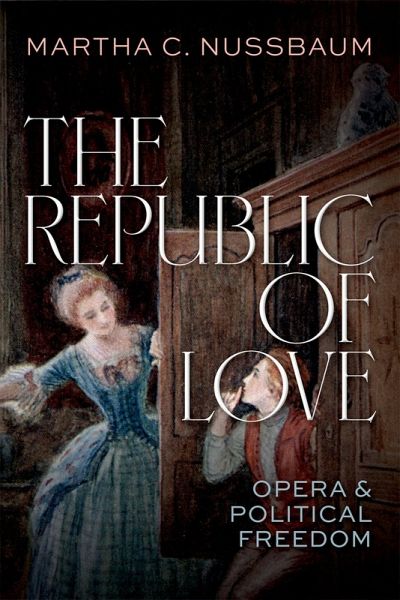
A major work of scholarship by world-renowned, prize-winning philosopher Martha C. Nussbaum, The Republic of Love reveals opera as a profound form of political thought--and an often-overlooked force behind the political reforms of the Enlightenment. In The Republic of Love, world-renowned philosopher Martha C. Nussbaum offers a bold and original vision of opera's contribution to political thought. Drawing on her deep knowledge of classical and contemporary opera, she reveals how composers such as Mozart, Verdi, Strauss, Beethoven, and others used their music to explore the emotional and ethical dimensions of human life. These works, she argues, illuminate our fundamental need for dignity, love, and freedom in the face of oppressive institutions--and they gesture toward new possibilities for how we might live together. Nussbaum devotes the first half of her book to Mozart, who embraced a new vision of freedom, writing male characters singing in a new emotional landscape, one that elevated the freedom of others. Her readings of The Marriage of Figaro, Idomeneo, The Magic Flute, Don Giovanni and Così Fan Tutte show an artist who recognized the capacity for love in everyone, and advanced fertile ideas about how we might cultivate it in a new kind of republic. The second half of her book follows this line of thought in operas by Beethoven, Verdi, Benjamin Britten, John Adams, and Jake Heggie, and their greatest antagonist, Richard Wagner, suggesting that they all, in a variety of ways, engage in conversation with Mozart and his themes of love and freedom. Throughout, Nussbaum identifies a recurring operatic metaphor for the impulse toward freedom: the act of breathing itself. A major work of scholarship by a prize-winning thinker, The Republic of Love redefines opera as a vital, if often overlooked, engine of Enlightenment ideals--and a powerful resource for imagining the emotional foundations of political life.