
Nicht lieferbar
Andere Kunden interessierten sich auch für
 Buddhism in the Modern World38,99 €
 Goddess on the Rise58,99 €
 Out of the Ashes We Rise27,99 €
") Taoist Teachings From The Book Of Lieh Tzu (1912)22,99 €
Taoist Teachings From The Book Of Lieh Tzu (1912)22,99 € Mohammed and the Rise of Islam40,99 €
 Lao Tzu12,99 €
 An Account of the Rise and Progress of Mahometanism - With the Life of Mahomet28,99 €







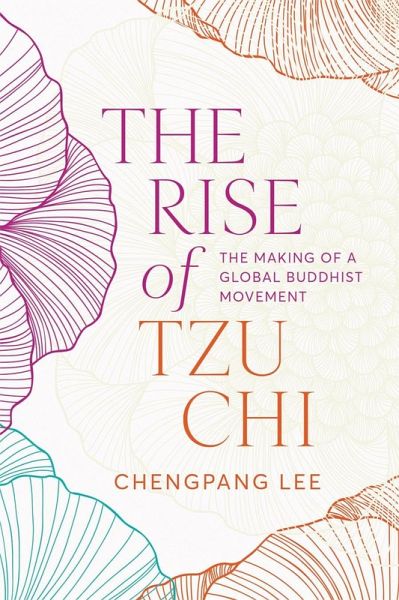
With ten million members worldwide, Tzu Chi has influence unmatched by most East Asian religious and non-profit organizations. The Buddhist foundation was established in Taiwan in 1966 by nun Cheng Yen and a group of laywomen. As with most religious movements, its success is often attributed to a charismatic leader, but The Rise of Tzu Chi offers a strikingly new analysis. Chengpang Lee traces Tzu Chi's apparently contradictory trajectory. Although authority is centralized, it is not authoritarian. Each unit has significant autonomy, resulting in an exceptional array of charitable initiatives: the world's first crowdfunded hospital, a Taiwan-wide recycling system, Asia's most effective bone marrow bank, a new university, and a global medical humanitarian team. Lee convincingly demonstrates that its unique capacity to synthesize religious and lay leadership has allowed Tzu Chi to continuously integrate heterogeneous elements. The Rise of Tzu Chi shows us a dynamic Asian religious movement with diversity at the root of its success.