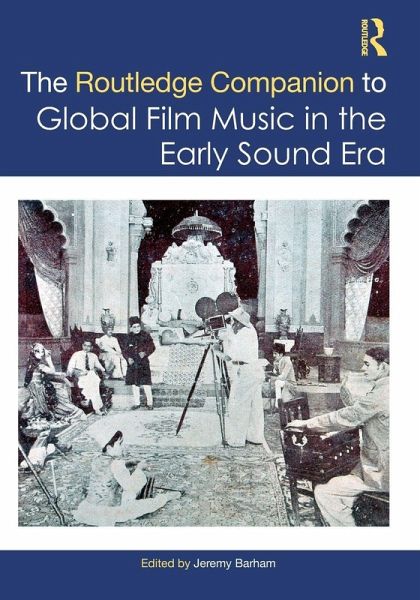
In a major expansion of the conversation on music and film history, The Routledge Companion to Global Film Music in the Early Sound Era draws together a wide-ranging collection of scholarship on music in global cinema during the transition from silent to sound films (the late 1920s to the 1940s). Moving beyond the traditional focus on Hollywood, this Companion considers the vast range of cinema and music created in often-overlooked regions throughout the rest of the world, providing crucial global context to film music history. An extensive editorial Introduction and 50 chapters from an…mehr
In a major expansion of the conversation on music and film history, The Routledge Companion to Global Film Music in the Early Sound Era draws together a wide-ranging collection of scholarship on music in global cinema during the transition from silent to sound films (the late 1920s to the 1940s).
Moving beyond the traditional focus on Hollywood, this Companion considers the vast range of cinema and music created in often-overlooked regions throughout the rest of the world, providing crucial global context to film music history. An extensive editorial Introduction and 50 chapters from an array of international experts connect the music and sound of these films to regional and transnational issues-culturally, historically, and aesthetically-across five parts: Western Europe and ScandinaviaCentral and Eastern EuropeNorth Africa, The Middle East, Asia, and AustralasiaLatin AmericaSoviet Russia Filling a major gap in the literature, The Routledge Companion to Global Film Music in the Early Sound Era offers an essential reference for scholars of music, film studies, and cultural history.
Jeremy Barham is Professor of Music at the University of Surrey, where he is also Director of the Institute of Austrian and German Music Research. He researches screen music, the music and culture of Gustav Mahler, and jazz. He was supported by the British Academy and DAAD in an archival investigation into the music of early German sound film, from which this edited volume grew. In screen music, he has published on experimental film, pre-existent music, the sci-fi genre, the aesthetics of live-score screenings, and jazz in film.
Inhaltsangabe
Acknowledgments List of music examples, figures, and tables Notes on contributors Introduction. Jeremy Barham PART 1. Western Europe and Scandinavia 1. "A very great error of judgment": Caution and Timidity in the Musical Provision of Britain's Early Talkie Features. 2. A Man Saying "Mooh" and an Actress Bursting into an Aria about Red and White Radishes. Early Sound Film in The Netherlands: Developments & Debates. 3. The Use of Non-Diegetic Music in Early Swedish Talkies 1930-1931. 4. The Kinotheken and Giuseppe Becce's Scoring Practices in Early German Sound Cinema. 5. Eternally Feminine: Das blaue Licht (1932), Anna und Elisabeth (1933), Elisabeth und der Narr (1933), and Cultural Representations of Womanhood in the Scoring of Early Sound Films from Weimar-Republic Germany. 6. Film Music in France, 1928-1940'. 7. Silent Film, Music, and Fantasy During the Transition to Sound. 8. Coming to Terms with Music as Narrative Architecture: Jean Grémillon's Maldone (1928), La Petite Lise (1930), and Daïnah la Métisse (1932). 9. Readymade Soundtracks: Musical Accompaniment for Dada and Surrealist Film. 10. Exotic Music, Colonial Others, and French Cultural Identity in Poetic Realist Cinema. 11. The Advent of Sound Film in Italy and the First Approaches to the New Audio-Visual Genre by Italian Composers during the Years 1930-1940. 12. "Oh ... Modern Music!" Hollywood, Satire, and "Modernism" in Giuseppe Piazzi's Score for I fratelli dinamite (1949). 13. The Folkloric Film Musical in the Spanish Second Republic (1931-1939): Imperio Argentina, Florián Rey and their Morena Clara. 14. Composing the Nation: the Role of fado in A Severa, the First Portuguese Sound Film (1931). 15. Music and Dance in the Service of Modern Poland in Polish Films of the 1930s. 16. Battle of Songs: Music and Language in Left-wing Yiddish Films Made in Poland During the 1930s and 1940s. 17. Film Song as a Synergistic Commodity in the Acoustic Media Culture of 1930s Czechoslovakia. 18. Charms and Whispers: Musical Comedy and Vocal Performance in Old¿ich Nový's Star Image 1936-1945. 19. The Metamusical Qualities of the Viennese Film, Cine-Operetta, and the Music Film in Austrian Sound Film of the 1930s. 20. Composing for the Screen, Composing for the Stage: Hungarian Film Composers in the Interwar Period. 21. A Theme Runs Through It: Early Hungarian Sound Films and the Music of Tibor Weygand. 22. Who is Singing Over There? The Potpourri of Multiple Voices in Early Sound Cinema of the Balkans. 23. Early Greek Talkies (1930-1940): Struggling Between Technological Innovation and Theatrical Tradition. 24. Intercultural Synergies in Early Mediterranean Sound Cinema: Togo Mizrahi's Greek-Speaking Film The Girl Refugee (1938). 25. From Alafranga to Alaturca, from Operettas to Melodramas: Music in Early Turkish Talkies. 26. "The Dream of a Fatty:" the First Lithuanian Sound Film in the Context of Early Puppet-Animation Films. 27. Essentially Egyptian: the Development of a Syncretic Film Song Style. 28. The Singing Cinema: Synchronized Sound and the Reception by Press and Audiences of Singing Films in Egypt, 1907-1934. 30. The Indian Origins of the Iranian Sound Film. 31. Sound and Music in the Early Indian Talkie: 1931-1936. 32. The Musical Language of Indian Film Song of the 1940s. 33. Mental Hearing of Sound: the Evocation and Mediation of Acoustic Experience in Two Stars in the Milky Way (1931). 34. Film Songwriting Practices in Pre-war Hong Kong Cinema: a Case Study of Director Chan Pei. 35. Charitable or Traitorous? The Ethics and Aesthetics of Performance in Myriad of Colors (1943). 36. Singing Japanese Modernity: a Genealogy of Performance Scenes in Early Talkies in Japan and their Heterogeneous Representation. 37. Emerging from Silence: Shochiku, Ito, and Ozu's Early Sound Films. 38. Tarzan Meets Hiawatha: Musical Representation in Australian Indigenous Films of the 1930s. 39. Imaginaries from Buenos Aires. From Tango Poetics of the 1920s Toward Sound Films in the 1930s. 40. Film and Tango: the Contribution of Luis César Amadori to the Argentine Film Industry in the Late 1930s. 41. Songs Beyond "el Rancho Grande": Trans/national and Cross-Media Dimensions in the Mexican Comedia Ranchera. 42. Dance, Desire, and Cosmopolitanism: Early Danzón Performances in the 1930s Mexican Prostitute Melodrama. 43. Beyond the Musical Numbers: the Brazilian Film Coisas Nossas and its Arrangements with the Local Record Industry. 44. Between Cinearte and Phono-arte: on the Arrival of Brazilian Sound Film in Two Magazines. 45. Villa-Lobos's Music for the Feature O descobrimento do Brasil [The Discovery of Brazil] (1937): Nationalism in the Early Sound Era. 46. When 'Early' Sound Cinema was 'Late:' Differential Chronologies in Chile, Uruguay, Cuba and Colombia. 47. The Sound of Socialist Realism: Excess and Ideology in Stalinist Film. 48. "New Means of Enormous Power": Music in Early Soviet Sound Film. 49. Experimentalism and the 'Mainstream' in the Early Film Scores of Gavril Popov and Vladimir Shcherbachyov. 50. Accordions as 'Sluts,' Guitars as Gypsies, and Pianos as Noble Fops: the Images of Russian Musical Instruments in Soviet Sound Movies of the 1930s. Index
Acknowledgments List of music examples, figures, and tables Notes on contributors Introduction. Jeremy Barham PART 1. Western Europe and Scandinavia 1. "A very great error of judgment": Caution and Timidity in the Musical Provision of Britain's Early Talkie Features. 2. A Man Saying "Mooh" and an Actress Bursting into an Aria about Red and White Radishes. Early Sound Film in The Netherlands: Developments & Debates. 3. The Use of Non-Diegetic Music in Early Swedish Talkies 1930-1931. 4. The Kinotheken and Giuseppe Becce's Scoring Practices in Early German Sound Cinema. 5. Eternally Feminine: Das blaue Licht (1932), Anna und Elisabeth (1933), Elisabeth und der Narr (1933), and Cultural Representations of Womanhood in the Scoring of Early Sound Films from Weimar-Republic Germany. 6. Film Music in France, 1928-1940'. 7. Silent Film, Music, and Fantasy During the Transition to Sound. 8. Coming to Terms with Music as Narrative Architecture: Jean Grémillon's Maldone (1928), La Petite Lise (1930), and Daïnah la Métisse (1932). 9. Readymade Soundtracks: Musical Accompaniment for Dada and Surrealist Film. 10. Exotic Music, Colonial Others, and French Cultural Identity in Poetic Realist Cinema. 11. The Advent of Sound Film in Italy and the First Approaches to the New Audio-Visual Genre by Italian Composers during the Years 1930-1940. 12. "Oh ... Modern Music!" Hollywood, Satire, and "Modernism" in Giuseppe Piazzi's Score for I fratelli dinamite (1949). 13. The Folkloric Film Musical in the Spanish Second Republic (1931-1939): Imperio Argentina, Florián Rey and their Morena Clara. 14. Composing the Nation: the Role of fado in A Severa, the First Portuguese Sound Film (1931). 15. Music and Dance in the Service of Modern Poland in Polish Films of the 1930s. 16. Battle of Songs: Music and Language in Left-wing Yiddish Films Made in Poland During the 1930s and 1940s. 17. Film Song as a Synergistic Commodity in the Acoustic Media Culture of 1930s Czechoslovakia. 18. Charms and Whispers: Musical Comedy and Vocal Performance in Old¿ich Nový's Star Image 1936-1945. 19. The Metamusical Qualities of the Viennese Film, Cine-Operetta, and the Music Film in Austrian Sound Film of the 1930s. 20. Composing for the Screen, Composing for the Stage: Hungarian Film Composers in the Interwar Period. 21. A Theme Runs Through It: Early Hungarian Sound Films and the Music of Tibor Weygand. 22. Who is Singing Over There? The Potpourri of Multiple Voices in Early Sound Cinema of the Balkans. 23. Early Greek Talkies (1930-1940): Struggling Between Technological Innovation and Theatrical Tradition. 24. Intercultural Synergies in Early Mediterranean Sound Cinema: Togo Mizrahi's Greek-Speaking Film The Girl Refugee (1938). 25. From Alafranga to Alaturca, from Operettas to Melodramas: Music in Early Turkish Talkies. 26. "The Dream of a Fatty:" the First Lithuanian Sound Film in the Context of Early Puppet-Animation Films. 27. Essentially Egyptian: the Development of a Syncretic Film Song Style. 28. The Singing Cinema: Synchronized Sound and the Reception by Press and Audiences of Singing Films in Egypt, 1907-1934. 30. The Indian Origins of the Iranian Sound Film. 31. Sound and Music in the Early Indian Talkie: 1931-1936. 32. The Musical Language of Indian Film Song of the 1940s. 33. Mental Hearing of Sound: the Evocation and Mediation of Acoustic Experience in Two Stars in the Milky Way (1931). 34. Film Songwriting Practices in Pre-war Hong Kong Cinema: a Case Study of Director Chan Pei. 35. Charitable or Traitorous? The Ethics and Aesthetics of Performance in Myriad of Colors (1943). 36. Singing Japanese Modernity: a Genealogy of Performance Scenes in Early Talkies in Japan and their Heterogeneous Representation. 37. Emerging from Silence: Shochiku, Ito, and Ozu's Early Sound Films. 38. Tarzan Meets Hiawatha: Musical Representation in Australian Indigenous Films of the 1930s. 39. Imaginaries from Buenos Aires. From Tango Poetics of the 1920s Toward Sound Films in the 1930s. 40. Film and Tango: the Contribution of Luis César Amadori to the Argentine Film Industry in the Late 1930s. 41. Songs Beyond "el Rancho Grande": Trans/national and Cross-Media Dimensions in the Mexican Comedia Ranchera. 42. Dance, Desire, and Cosmopolitanism: Early Danzón Performances in the 1930s Mexican Prostitute Melodrama. 43. Beyond the Musical Numbers: the Brazilian Film Coisas Nossas and its Arrangements with the Local Record Industry. 44. Between Cinearte and Phono-arte: on the Arrival of Brazilian Sound Film in Two Magazines. 45. Villa-Lobos's Music for the Feature O descobrimento do Brasil [The Discovery of Brazil] (1937): Nationalism in the Early Sound Era. 46. When 'Early' Sound Cinema was 'Late:' Differential Chronologies in Chile, Uruguay, Cuba and Colombia. 47. The Sound of Socialist Realism: Excess and Ideology in Stalinist Film. 48. "New Means of Enormous Power": Music in Early Soviet Sound Film. 49. Experimentalism and the 'Mainstream' in the Early Film Scores of Gavril Popov and Vladimir Shcherbachyov. 50. Accordions as 'Sluts,' Guitars as Gypsies, and Pianos as Noble Fops: the Images of Russian Musical Instruments in Soviet Sound Movies of the 1930s. Index
Es gelten unsere Allgemeinen Geschäftsbedingungen: www.buecher.de/agb
Impressum
www.buecher.de ist ein Internetauftritt der buecher.de internetstores GmbH
Geschäftsführung: Monica Sawhney | Roland Kölbl | Günter Hilger
Sitz der Gesellschaft: Batheyer Straße 115 - 117, 58099 Hagen
Postanschrift: Bürgermeister-Wegele-Str. 12, 86167 Augsburg
Amtsgericht Hagen HRB 13257
Steuernummer: 321/5800/1497
USt-IdNr: DE450055826