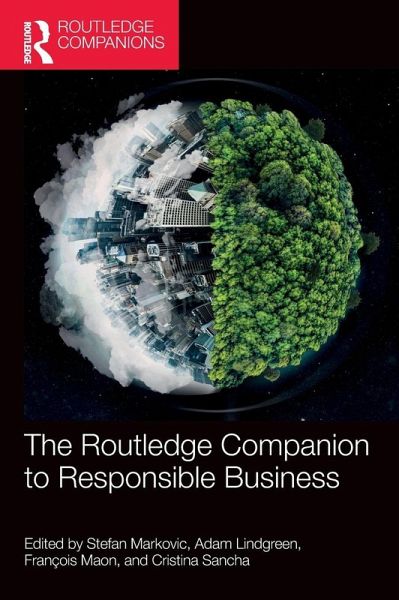
This volume sheds light on different crucial themes and approaches spanning historical, conceptual, practical, and prospective considerations that have animated the field of business and society in the last decades, and that are instrumental or have the potential to drive constructive research discussions and business efforts.
This volume sheds light on different crucial themes and approaches spanning historical, conceptual, practical, and prospective considerations that have animated the field of business and society in the last decades, and that are instrumental or have the potential to drive constructive research discussions and business efforts.
Stefan Markovic is Full Professor of Marketing and the Head of Department of Marketing at NEOMA Business School, France. Adam Lindgreen is Professor of Marketing at Copenhagen Business School, where he led the Department of Marketing from 2016 to 2024. François Maon is Full Professor at IESEG School of Management in France, where he teaches courses on business ethics, sustainability strategy, change management, and hybrid organizations. Cristina Sancha holds a Ph.D. in Management Sciences (cum laude), a Master of Research in Management Sciences, and a Bachelor and Master in Business Administration from ESADE Business School, Universitat Ramon Llull, Spain.
Inhaltsangabe
Part 1. Genealogizing: Past and Future 1.1 From Good Government to Responsible Business: A History of Corporate Social Responsibility 1.2 The Intergenerational Responsibility of Organizations Part 2. Delineating: Maps and Plans 2.1 Prioritizing Sustainability: Balancing Ethics and Business Profit in a Changing World 2.2 Social by Name, Corporate by Nature: The Myopic Business Case Narrative of Responsibility 2.3. Sustainable Development Goals and the Responsible Business Part 3. Governing: Designs and Alternatives 3.1 Responsible Leadership and Sustainability: The Interplay of Modes and Models of Corporate Governance 3.2 Alternative Ways of Organizing a Responsible Business 3.3 Corporate Sustainability and Quality of Financial Reporting: The Moderating Effect of Sustainability Committees 3.4 Governance of Business Responsibility in Areas of Limited Statehood 3.5 Corporate Governance in a Sustainable World Part 4. Renovating: Functions and Systems 4.1 How Management Accounting and Control Practices Can Contribute to Solving Sustainability-related Grand Challenges 4.2 Sustainable Supply Chain Management: Linking International Law to National through Human Rights Due Diligence 4.3 Fostering a Socially Responsible Marketing 4.4 Shareholder Complicity Part 5. Innovating: Shifts and Transformations 5.1 Managing Circular Business Model Innovation 5.2 Stakeholder Engagement in Environmental Innovation 5.3 Responsible Business in the Context of Industry 5.0, Workplace Innovation, and Social Innovation 5.4 Rationalizations and Institutional Deflection on the Ground: Combatting Modern Slavery in Supply Chains Part 6. Partnering: Engagement and Collaboration 6.1 Opportunity Creation with Nonhuman Stakeholders in Ecological Entrepreneurship 6.2 Deliberation and Contestation in Multi-Stakeholder Initiatives: A Multi-Level Perspective 6.3 Fostering Sustainable Business Models: Public Policies, Strategies, Barriers, and Enablers 6.4 Micro-CSR: Everyday Managerial Practice on the Inside Part 7. Envisaging: Path and Openings 7.1 Responsible Business and the AI Challenge 7.2 Responsible and Sustainable Use of AI: Human Dignity in Business Strategy 7.3 Responsible Business Practices for a Degrowth Transition
Part 1. Genealogizing: Past and Future 1.1 From Good Government to Responsible Business: A History of Corporate Social Responsibility 1.2 The Intergenerational Responsibility of Organizations Part 2. Delineating: Maps and Plans 2.1 Prioritizing Sustainability: Balancing Ethics and Business Profit in a Changing World 2.2 Social by Name, Corporate by Nature: The Myopic Business Case Narrative of Responsibility 2.3. Sustainable Development Goals and the Responsible Business Part 3. Governing: Designs and Alternatives 3.1 Responsible Leadership and Sustainability: The Interplay of Modes and Models of Corporate Governance 3.2 Alternative Ways of Organizing a Responsible Business 3.3 Corporate Sustainability and Quality of Financial Reporting: The Moderating Effect of Sustainability Committees 3.4 Governance of Business Responsibility in Areas of Limited Statehood 3.5 Corporate Governance in a Sustainable World Part 4. Renovating: Functions and Systems 4.1 How Management Accounting and Control Practices Can Contribute to Solving Sustainability-related Grand Challenges 4.2 Sustainable Supply Chain Management: Linking International Law to National through Human Rights Due Diligence 4.3 Fostering a Socially Responsible Marketing 4.4 Shareholder Complicity Part 5. Innovating: Shifts and Transformations 5.1 Managing Circular Business Model Innovation 5.2 Stakeholder Engagement in Environmental Innovation 5.3 Responsible Business in the Context of Industry 5.0, Workplace Innovation, and Social Innovation 5.4 Rationalizations and Institutional Deflection on the Ground: Combatting Modern Slavery in Supply Chains Part 6. Partnering: Engagement and Collaboration 6.1 Opportunity Creation with Nonhuman Stakeholders in Ecological Entrepreneurship 6.2 Deliberation and Contestation in Multi-Stakeholder Initiatives: A Multi-Level Perspective 6.3 Fostering Sustainable Business Models: Public Policies, Strategies, Barriers, and Enablers 6.4 Micro-CSR: Everyday Managerial Practice on the Inside Part 7. Envisaging: Path and Openings 7.1 Responsible Business and the AI Challenge 7.2 Responsible and Sustainable Use of AI: Human Dignity in Business Strategy 7.3 Responsible Business Practices for a Degrowth Transition
Es gelten unsere Allgemeinen Geschäftsbedingungen: www.buecher.de/agb
Impressum
www.buecher.de ist ein Internetauftritt der buecher.de internetstores GmbH
Geschäftsführung: Monica Sawhney | Roland Kölbl | Günter Hilger
Sitz der Gesellschaft: Batheyer Straße 115 - 117, 58099 Hagen
Postanschrift: Bürgermeister-Wegele-Str. 12, 86167 Augsburg
Amtsgericht Hagen HRB 13257
Steuernummer: 321/5800/1497
USt-IdNr: DE450055826