

Andere Kunden interessierten sich auch für
 The Russian Dilemma35,99 €
 The Polish Dilemma41,99 €
 The Democratic Dilemma of American Education51,99 €
 Ethnic Violence and the Societal Security Dilemma72,99 €
 Lula, the Workers' Party and the Governability Dilemma in Brazil55,99 €
 The Dilemma of American Social Welfare20,99 €
 The Presidential Dilemma59,99 €
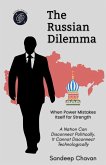





The Russian Dilemma by Sandeep Chavan is a bold, sweeping examination of the most misunderstood power shift of the 21st century: the collapse of old sovereignty and the rise of architectural sovereignty-where nations rise not by land, armies, or ideology, but by compute, talent, and intelligent integration with the world's technological fabric. This book argues that Russia's fall from technological relevance did not begin with sanctions, nor with war, nor even with politics. It began the moment the country clung to an outdated definition of sovereignty-one built on borders, bravado, and the illusion of self-reliance-while the world quietly transitioned into an era where power lives in silicon, clouds, hyperscale networks, and global interoperability. Through a cinematic, novel-like narrative, the book traces Russia's long romance with isolation, its belief that political independence guaranteed technological strength, and the slow unraveling of an ecosystem that could not keep pace with global acceleration. It reveals how sanctions did not break Russia; they merely exposed its pre-existing architectural fragility. From the architecture of American compute dominance to China's fear of falling into the same trap, from Europe's brilliance without infrastructure to India's crossroads between dependence and ambition, the book uses Russia as a mirror to show every nation the stakes of our interdependent age. This is not a book about Russia alone-it is a global field guide for the century ahead. It introduces new concepts such as Architectural Sovereignty, the Compute-Talent-Integration Triad, and the Sovereignty Equation, offering a powerful model to understand why some nations accelerate while others stagnate. With narrative depth and analytical clarity, The Russian Dilemma delivers one unforgettable message: A nation can disconnect politically. It cannot disconnect technologically- and still remain in the race. This book is essential reading for leaders, policymakers, technologists, strategists, students, and anyone trying to understand how power truly works in a world no longer defined by geography, but by architecture.