
Andere Kunden interessierten sich auch für
 Theory of the Universe18,99 €
 Ahnungen Ãœber Die Schöpfung17,99 €
 Eureka15,99 €
 The New Heavens15,99 €
 The Universe No Desert, the Earth No Monopoly24,99 €
 The Mystery of Space22,99 €
 The Book of the Damned23,99 €

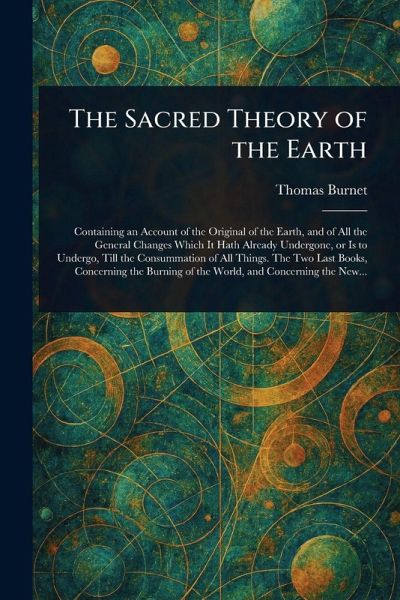
Delve into a monumental work of 17th-century thought with Thomas Burnet's 'The sacred theory of the Earth, Volume 2 (of 2)'. This influential treatise offers a profound exploration of cosmology, natural philosophy, and creation theory, presenting a comprehensive account of Earth's past, present, and ultimate future. Burnet's "sacred theory" meticulously details the original formation of our planet and traces the grand sweep of its history through a series of general changes it has already undergone. Crucially, Volume 2 extends this ambitious narrative to contemplate the eschatological trajectory of the Earth, forecasting the transformations it is destined to undergo until the consummation of all things. This classic text stands as a pivotal example of early scientific and philosophical inquiry, intertwining theological perspectives on creation with emerging concepts of geology and planetary science. It invites readers to engage with an enduring intellectual endeavor to reconcile scriptural accounts with observational reasoning. Thomas Burnet's 'The sacred theory of the Earth' remains an essential work for anyone interested in the historical development of cosmology, metaphysics, and the early understanding of our planet's profound journey. This work has been selected by scholars as being culturally important, and is part of the knowledge base of civilization as we know it. This work is in the public domain in the United States of America, and possibly other nations. Within the United States, you may freely copy and distribute this work, as no entity (individual or corporate) has a copyright on the body of the work. Scholars believe, and we concur, that this work is important enough to be preserved, reproduced, and made generally available to the public. We appreciate your support of the preservation process, and thank you for being an important part of keeping this knowledge alive and relevant.