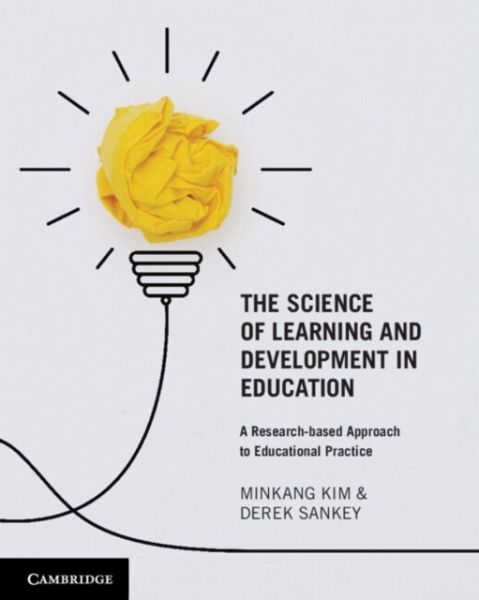
Minkang Kim (University of Sydney), Derek Sankey (University of Sydney)
The Science of Learning and Development in Education
A Research-Based Approach to Educational Practice
Versandkostenfrei innerhalb Deutschlands
89,99 €
inkl. MwSt.
Versandkostenfrei*
Liefertermin unbestimmt
Melden Sie sich
hier
hier
für den Produktalarm an, um über die Verfügbarkeit des Produkts informiert zu werden.
oder sofort lesen als eBook

45 °P sammeln
Minkang Kim (University of Sydney), Derek Sankey (University of Sydney)
The Science of Learning and Development in Education
A Research-Based Approach to Educational Practice
- Broschiertes Buch
This text explores brain science and the science of complex systems as it applies to human development. Section 1 examines the science of learning and development in the 21st century; Section 2 explores the emotional, cultural, moral and empathetic brain; and Section 3 focuses on learning, wellbeing and the ecology of learning environments.
Andere Kunden interessierten sich auch für
Sherwin T. Love (Purdue University)The Role of Symmetry in the Development of the Standard Model69,99 €
Sherwin T. Love (Purdue University)The Role of Symmetry in the Development of the Standard Model22,99 €
The Science of Violent Behavior Development and Prevention123,99 €
The Science of Violent Behavior Development and Prevention32,99 €
Annette Mahoney (Ohio Bowling Green State University)The Science of Children's Religious and Spiritual Development23,99 €
Ronald G. MustoThe Attack on Higher Education26,99 €
Peter D. Clift (Louisiana State University)Monsoon Rains, Great Rivers and the Development of Farming Civilisations in Asia97,99 €-
-
-
This text explores brain science and the science of complex systems as it applies to human development. Section 1 examines the science of learning and development in the 21st century; Section 2 explores the emotional, cultural, moral and empathetic brain; and Section 3 focuses on learning, wellbeing and the ecology of learning environments.
Produktdetails
- Produktdetails
- Verlag: Cambridge University Press
- Seitenzahl: 400
- Erscheinungstermin: 26. Mai 2022
- Englisch
- Abmessung: 251mm x 202mm x 19mm
- Gewicht: 886g
- ISBN-13: 9781108999786
- ISBN-10: 1108999786
- Artikelnr.: 63403569
- Herstellerkennzeichnung
- Libri GmbH
- Europaallee 1
- 36244 Bad Hersfeld
- gpsr@libri.de
- Verlag: Cambridge University Press
- Seitenzahl: 400
- Erscheinungstermin: 26. Mai 2022
- Englisch
- Abmessung: 251mm x 202mm x 19mm
- Gewicht: 886g
- ISBN-13: 9781108999786
- ISBN-10: 1108999786
- Artikelnr.: 63403569
- Herstellerkennzeichnung
- Libri GmbH
- Europaallee 1
- 36244 Bad Hersfeld
- gpsr@libri.de
Minkang Kim is Senior Lecturer in Human Development and Education, in the School of Education and Social Work, The University of Sydney. Over the past decade, she has worked within the field of human development and neuroscience, particularly as these disciplines apply to educational theory and practice. She is especially interested in the role of emotion, empathy and value in human development, learning and wellbeing, as evidenced in social/educational contexts and the functioning brain. In line with developmental science, generally, over the past decade her research has progressively been underpinned by Dynamic Systems Theory (DST). Her empirical research methods include Electroencephalogram (EEG), eye-tracking, micro- genetic observation and State Space Grids (SSGs) together with more traditional research methods.
Part I. The Science of Learning and Development in the Twenty-First
Century: 1. Introducing the science of learning and development in
education; 2. Hebb's Postulate and the learning brain; 3. The dynamics of
learning and development; 4. The active learner: working memory,
metacognition and brain research; 5. The dynamics of literacy and numeracy
learning and development; Part II. The Emotional, Cultural, Moral and
Empathic Brain: 6. The emotional brain, learning and development; 7. The
social and cultural brain, learning and development; 8. The dynamic, moral,
empathetic brain; Part III. Learning, Wellbeing and the Ecology of Learning
Environments: 9. The learner, embodied cognition and the affordance of
learning environments; 10. Science of Learning, assessment and feedback;
11. Student wellbeing and the science of learning and development.
Century: 1. Introducing the science of learning and development in
education; 2. Hebb's Postulate and the learning brain; 3. The dynamics of
learning and development; 4. The active learner: working memory,
metacognition and brain research; 5. The dynamics of literacy and numeracy
learning and development; Part II. The Emotional, Cultural, Moral and
Empathic Brain: 6. The emotional brain, learning and development; 7. The
social and cultural brain, learning and development; 8. The dynamic, moral,
empathetic brain; Part III. Learning, Wellbeing and the Ecology of Learning
Environments: 9. The learner, embodied cognition and the affordance of
learning environments; 10. Science of Learning, assessment and feedback;
11. Student wellbeing and the science of learning and development.
Part I. The Science of Learning and Development in the Twenty-First
Century: 1. Introducing the science of learning and development in
education; 2. Hebb's Postulate and the learning brain; 3. The dynamics of
learning and development; 4. The active learner: working memory,
metacognition and brain research; 5. The dynamics of literacy and numeracy
learning and development; Part II. The Emotional, Cultural, Moral and
Empathic Brain: 6. The emotional brain, learning and development; 7. The
social and cultural brain, learning and development; 8. The dynamic, moral,
empathetic brain; Part III. Learning, Wellbeing and the Ecology of Learning
Environments: 9. The learner, embodied cognition and the affordance of
learning environments; 10. Science of Learning, assessment and feedback;
11. Student wellbeing and the science of learning and development.
Century: 1. Introducing the science of learning and development in
education; 2. Hebb's Postulate and the learning brain; 3. The dynamics of
learning and development; 4. The active learner: working memory,
metacognition and brain research; 5. The dynamics of literacy and numeracy
learning and development; Part II. The Emotional, Cultural, Moral and
Empathic Brain: 6. The emotional brain, learning and development; 7. The
social and cultural brain, learning and development; 8. The dynamic, moral,
empathetic brain; Part III. Learning, Wellbeing and the Ecology of Learning
Environments: 9. The learner, embodied cognition and the affordance of
learning environments; 10. Science of Learning, assessment and feedback;
11. Student wellbeing and the science of learning and development.