91,99 €
inkl. MwSt.
Versandkostenfrei*Erscheint vorauss. März 2026
Melden Sie sich
hier
hier
für den Produktalarm an, um über die Verfügbarkeit des Produkts informiert zu werden.

46 °P sammeln
Andere Kunden interessierten sich auch für
 The Seeds of Speech29,99 €
 Las preocupaciones de la diáspora en Half a Life y Magic Seeds de V. S. Naipaul26,99 €
 The Forms of Public Address37,99 €
 Additional Latin Exercises to North and Hillard's Latin Prose Composition for the Middle Forms of Schools30,99 €
 The Human Speech Sounds, Tracing the Evolution of the Forty-three Speech Sounds in the Human Voice Through All Their Series, Classes, Kinds and Forms to the Limit of Audible Distinction; Describing Their Organic Formations; Together With the Positions...29,99 €
 The Institutes of English Grammar, Methodically Arranged: With Forms of Parsing and Correcting, Examples for Parsing, Questions of Examination, False34,99 €
 The historical development of the forms of the future tense in middle high German109,95 €




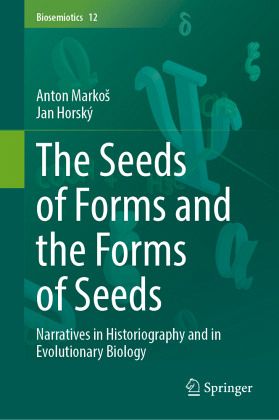
This monograph intertwines the two themes of historiography and evolutionary biology and shows that both activities are analogous in their practices; they are spinning stories about the past and thus constructing the world to suit the present of a given community as well as, if necessary, the construction of its tilting into the future. This book presents the history and methodology of both branches of historical narrative and demonstrates them through case studies. Alongside the activity of historiographers and evolutionary biologists, this text questions whether individual lineages also constitute their world in analogous ways. This book provides a brief characterization of the biosemiotics that seeks to answer the question. It appeals to students and researchers in these cross disciplinary fields.