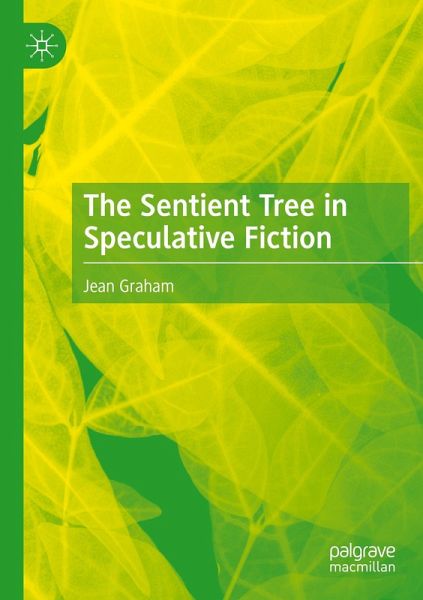
This book interrogates the theme of vegetal sentience and consciousness in the form of trees that move purposefully and/or speak, a theme which appears in everything from classical mythology to twentieth -century and contemporary literature, which draws on this earlier work. Graham's research includes literary and scientific works on vegetal consciousness and sentience, and applies this ecocritical lens in her analysis of various works of literature, television, and film. This book aims to illustrate how sentient trees in speculative fiction help readers better understand that other beings on…mehr
This book interrogates the theme of vegetal sentience and consciousness in the form of trees that move purposefully and/or speak, a theme which appears in everything from classical mythology to twentieth -century and contemporary literature, which draws on this earlier work. Graham's research includes literary and scientific works on vegetal consciousness and sentience, and applies this ecocritical lens in her analysis of various works of literature, television, and film. This book aims to illustrate how sentient trees in speculative fiction help readers better understand that other beings on Earth and/or the Universe are motivated and able to act on goals and desires, even when those goals may not coincide with those of humans.
Jean Graham is Professor of English at The College of New Jersey, USA, where she teaches teaching early modern British literature, dystopian literature, and speculative fiction. In addition to scholarly work on early modern literature, she has published about Star Trek: Next Generation in Journal of Popular Culture. She has also published on C. S. Lewis in Children's Literature Association Quarterly, Mythlore, and Children's Literature.
Inhaltsangabe
Chapter One: Introduction. Into the Woods: Metaphor, Mythology, Science. Chapter Two: Metaphor, Monster, and/or Tree?. Chapter Three: Mythology and Desire. Chapter Four: Trans Corporeality, Pain, and Movement. Chapter Five: Communication and Community. Chapter Six: Cooperation and Agency. Chapter Seven: Competition and Revenge. Conclusion: Intelligent Trees and Alien Trees.
Chapter One: Introduction. Into the Woods: Metaphor, Mythology, Science.- Chapter Two: Metaphor, Monster, and/or Tree?.- Chapter Three: Mythology and Desire.- Chapter Four: Trans-Corporeality, Pain, and Movement.- Chapter Five: Communication and Community.- Chapter Six: Cooperation and Agency.- Chapter Seven: Competition and Revenge.- Conclusion: Intelligent Trees and Alien Trees.
Chapter One: Introduction. Into the Woods: Metaphor, Mythology, Science. Chapter Two: Metaphor, Monster, and/or Tree?. Chapter Three: Mythology and Desire. Chapter Four: Trans Corporeality, Pain, and Movement. Chapter Five: Communication and Community. Chapter Six: Cooperation and Agency. Chapter Seven: Competition and Revenge. Conclusion: Intelligent Trees and Alien Trees.
Chapter One: Introduction. Into the Woods: Metaphor, Mythology, Science.- Chapter Two: Metaphor, Monster, and/or Tree?.- Chapter Three: Mythology and Desire.- Chapter Four: Trans-Corporeality, Pain, and Movement.- Chapter Five: Communication and Community.- Chapter Six: Cooperation and Agency.- Chapter Seven: Competition and Revenge.- Conclusion: Intelligent Trees and Alien Trees.
Es gelten unsere Allgemeinen Geschäftsbedingungen: www.buecher.de/agb
Impressum
www.buecher.de ist ein Internetauftritt der buecher.de internetstores GmbH
Geschäftsführung: Monica Sawhney | Roland Kölbl | Günter Hilger
Sitz der Gesellschaft: Batheyer Straße 115 - 117, 58099 Hagen
Postanschrift: Bürgermeister-Wegele-Str. 12, 86167 Augsburg
Amtsgericht Hagen HRB 13257
Steuernummer: 321/5800/1497
USt-IdNr: DE450055826