
Andere Kunden interessierten sich auch für
 Geology And Revelation Or The Ancient History Of The Earth32,99 €
 The Revelation of law in Scripture, Considered With Respect Both to its own Nature36,99 €
 The Apocalypse, an Introductory Study of the Revelation of St. John the Divine, Being a Presentment of the Structure of the Book and of the Fundamental Principles of its Interpretation30,99 €
 The Messages To The Seven Churches Of Asia Minor: An Exposition Of The Three First Chapters Of The Book Of The Revelation36,99 €
 The Divine Key to the Revelation of Jesus Christ37,99 €
 Revelation Of Genesis. "the Lost Ages." From Ethiopian Manuscripts Of An Anonymous, In Eight Volumes27,99 €
![The Revelation of Life and Immortality: A Discourse [By T.C. Thompson]. by a Yorkshire Incumbent]( "The Revelation of Life and Immortality: A Discourse [By T.C. Thompson]. by a Yorkshire Incumbent") The Revelation of Life and Immortality: A Discourse [By T.C. Thompson]. by a Yorkshire Incumbent28,99 €
The Revelation of Life and Immortality: A Discourse [By T.C. Thompson]. by a Yorkshire Incumbent28,99 €



![The Revelation of Life and Immortality: A Discourse [By T.C. Thompson]. by a Yorkshire Incumbent](https://bilder.buecher.de/produkte/68/68663/68663791m.jpg "The Revelation of Life and Immortality: A Discourse [By T.C. Thompson]. by a Yorkshire Incumbent")
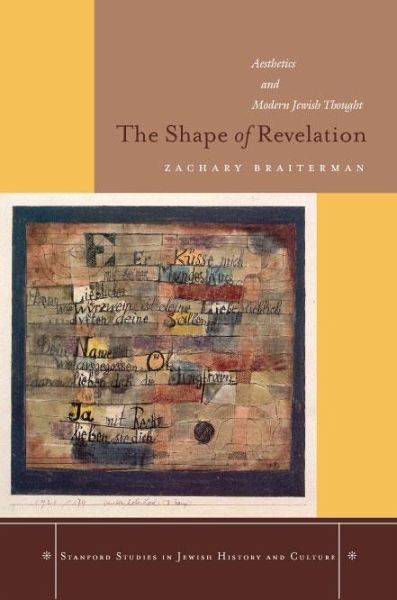
The Shape of Revelation explores the overlap between revelation and aesthetic form from the perspective of Judaism. It does so by setting the Jewish philosophy of Martin Buber and Franz Rosenzweig alongside its immediate visual environment in the aesthetics of early German modernism, most notably alongside "the spiritual in art" as it appears in the art and art theories of Wassily Kandinsky, Paul Klee, and Franz Marc. The modern shape of revelation-and "the spiritual in art" that emerges from this conversation-builds upon a vocabulary of form-creation, sheer presence, lyric pathos, rhythmic repetition, open spatial dynamism, and erotic pulse that was unique to Germany in the first quarter of the twentieth century. This study works to identify and critically assess the sensual root that is brought to bear upon the modern image of revelation and "the spiritual in art."