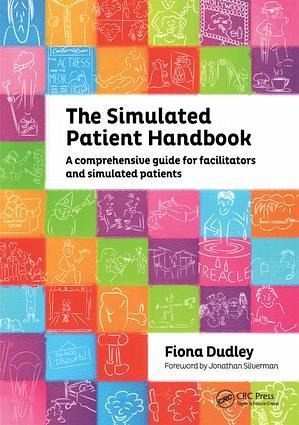
A simulated patient is an individual who, by pretending to be a patient in a consultation, offers health professionals an opportunity to learn, explore and develop their expertise
A simulated patient is an individual who, by pretending to be a patient in a consultation, offers health professionals an opportunity to learn, explore and develop their expertise
Foreword. About the author. Acknowledgements. Part One: Background. So you want to join the world of the simulated patient? Consultation skills training: how important is it? Part Two: Preparation. Recruiting simulated patients. Training simulated patients. Writing scenarios and briefs. Part Three: Managing the session. Immediate preparation. Dynamic groups or group dynamics. Communication with your simulated patient. The consultation. The simulated patient as teacher. Managing feedback. Any other business! Part Four: Assessment and other uses of simulated patients. Standardised patients in examinations and recruitment interviews. Other simulated patient challenges and new developments. Appendix 1: Consultation skills advanced jargon buster. Appendix 2: Sample scenario briefs. Appendix 3: Resources for role development. Appendix 4: A list of mood indicators. Appendix 5: Communication skills. Appendix 6: Suggested further reading. Index.
Foreword. About the author. Acknowledgements. Part One: Background. So you want to join the world of the simulated patient? Consultation skills training: how important is it? Part Two: Preparation. Recruiting simulated patients. Training simulated patients. Writing scenarios and briefs. Part Three: Managing the session. Immediate preparation. Dynamic groups or group dynamics. Communication with your simulated patient. The consultation. The simulated patient as teacher. Managing feedback. Any other business! Part Four: Assessment and other uses of simulated patients. Standardised patients in examinations and recruitment interviews. Other simulated patient challenges and new developments. Appendix 1: Consultation skills advanced jargon buster. Appendix 2: Sample scenario briefs. Appendix 3: Resources for role development. Appendix 4: A list of mood indicators. Appendix 5: Communication skills. Appendix 6: Suggested further reading. Index.
Es gelten unsere Allgemeinen Geschäftsbedingungen: www.buecher.de/agb
Impressum
www.buecher.de ist ein Internetauftritt der buecher.de internetstores GmbH
Geschäftsführung: Monica Sawhney | Roland Kölbl | Günter Hilger
Sitz der Gesellschaft: Batheyer Straße 115 - 117, 58099 Hagen
Postanschrift: Bürgermeister-Wegele-Str. 12, 86167 Augsburg
Amtsgericht Hagen HRB 13257
Steuernummer: 321/5800/1497
USt-IdNr: DE450055826