
Andere Kunden interessierten sich auch für
 The British Prime Minister in the Core Executive38,99 €
 The British Prime Minister in the Core Executive38,99 €
 Global Discontents45,99 €
 Die Währung der Politik40,00 €
 Practical Economics23,99 €
 Monnaie et citoyenneté106,90 €
 Neue deutsche Europapolitik48,00 €
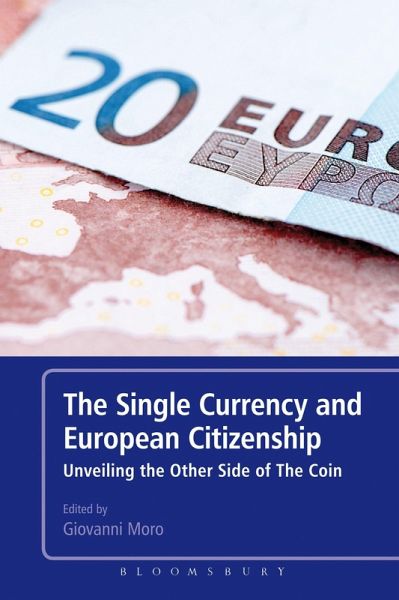
Established in 2002, the Euro is now the currency of 17 countries used by over 335 million people daily. Although the single currency is much discussed in terms of macroeconomics and global finances, policymakers rarely address its impact on European citizenship in social, cultural, political, and everyday life economics terms. This hidden side of the single currency is the focus of the essays, which use various approaches, from economic history and political sociology to citizenship and legitimacy, to reveal the connections between the Euro and European citizenship.
This timely contribution by renowned experts provides a greater understanding of the Euro at a time when it is not clear whether it should be celebrated or commemorated, and looks into aspects of the single currency that are the base of the social trust that supports it and that is at stake in the present crisis. It will be an essential tool to anyone studying the political, social, and economic development of the E.U.
This timely contribution by renowned experts provides a greater understanding of the Euro at a time when it is not clear whether it should be celebrated or commemorated, and looks into aspects of the single currency that are the base of the social trust that supports it and that is at stake in the present crisis. It will be an essential tool to anyone studying the political, social, and economic development of the E.U.
Giovanni Moro's innovative volume examines the crucial but neglected relationship between currency space and political identities in Europe. Its contributors explore very effectively how the project to create "one money" in Europe was linked to the emergence of not just "one market" but also "one people". The eurozone crisis has only reinforced the importance of their message that the study of money must never be left just to economists. Eric Helleiner, Faculty of Arts Chair in International Political Economy , Department of Political Science, University of Waterloo, UK