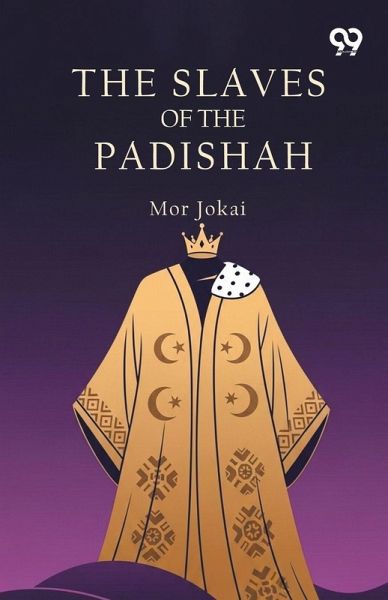
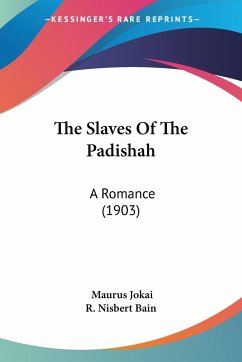
The slaves of the Padishah unfolds in a landscape shaped by political change and cultural conflict, weaving together the destinies of individuals caught between ambition, loyalty, and the shifting power of empires. At its heart is the story of a young man whose quiet life as a future priest is upended when unexpected inheritance thrusts him into wealth and influence. His transformation from modest scholar to reluctant magnate introduces him to a world of grandeur and deception, symbolized by the extravagant palace he builds and the golden gifts that mark his rising status. Yet beneath the…mehr
The slaves of the Padishah unfolds in a landscape shaped by political change and cultural conflict, weaving together the destinies of individuals caught between ambition, loyalty, and the shifting power of empires. At its heart is the story of a young man whose quiet life as a future priest is upended when unexpected inheritance thrusts him into wealth and influence. His transformation from modest scholar to reluctant magnate introduces him to a world of grandeur and deception, symbolized by the extravagant palace he builds and the golden gifts that mark his rising status. Yet beneath the richness of his new existence lies unease, as the currents of desire, power, and identity begin to reshape his world. Set against the backdrop of Transylvania's uneasy balance between Hungarian and Ottoman rule, the novel interlaces romantic and political intrigue, revealing how fortune and fate intermingle in a time of uncertainty and splendor. It captures both the beauty and instability of a world defined by ambition and transformation.
Mor Jokai, also known as Maurice Jokai, Maurus Jokai, or Mauritius Jokai, was a Hungarian novelist, dramatist, and revolutionary leader. Born on February 18, 1825, in Komarom, Hungary, Jokai is considered one of the most influential writers in Hungarian literature. His literary work includes historical novels, adventure stories, and plays, often reflecting the political upheavals of his time. He played a significant role in the Hungarian Revolution of 1848, which deeply influenced his worldview on freedom and national identity. Jokai's works, such as The Green Book and Timar's Two Worlds, delve into complex social and political themes, often set against rich and imaginative backdrops. Alongside his writing, Jokai was actively involved in the Hungarian political scene, particularly during the 1848 revolution. He was married twice, first to the actress Roza Laborfalvi, and later to Bella Nagy. He had one daughter, Roza Jokai. Jokai passed away on May 5, 1904, in Budapest, leaving behind a legacy that endures both through his literary contributions and his impact on Hungary's history.
Es gelten unsere Allgemeinen Geschäftsbedingungen: www.buecher.de/agb
Impressum
www.buecher.de ist ein Internetauftritt der buecher.de internetstores GmbH
Geschäftsführung: Monica Sawhney | Roland Kölbl | Günter Hilger
Sitz der Gesellschaft: Batheyer Straße 115 - 117, 58099 Hagen
Postanschrift: Bürgermeister-Wegele-Str. 12, 86167 Augsburg
Amtsgericht Hagen HRB 13257
Steuernummer: 321/5800/1497
USt-IdNr: DE450055826