
Andere Kunden interessierten sich auch für
 Le spectacle de la foule46,99 €
 Dictate of the collective subconsciousness18,99 €
 Beyond the Spectacle of Terrorism270,99 €
 Zombie Politics and Culture in the Age of Casino Capitalism27,95 €
 The Crowd13,99 €
 The Crowd15,99 €
 Visual Research Methods in the Social Sciences168,99 €



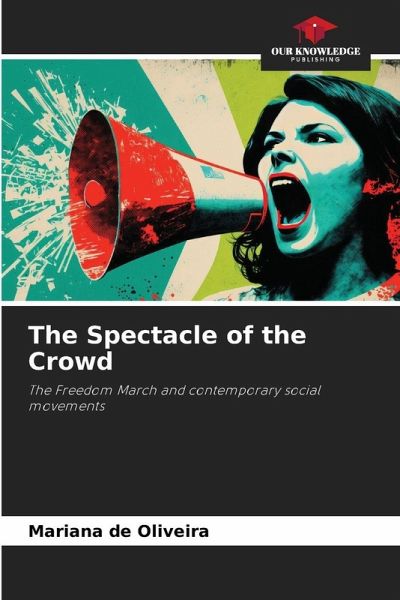
The Freedom March in Cuiabá was part of a wave of coordinated protests held in 48 cities across the country on June 18, 2011. It was sparked by police repression of the Marijuana March in São Paulo in May of that year. It is part of a cycle of international protests marked by movements such as Occupy Wall Street, the Indignados in Spain, the Arab Spring, and others. This cycle somehow anticipated the mobilizations in Brazil in June 2013. In this work, I analyze the experience of the participants in the Freedom March in Cuiabá to understand how the political event, as a collective action of confrontation, is constructed and manifested in subjectivity and cements the feeling of belonging to the collective. I also analyze the use of digital networks for mobilization, the dynamics of leadership, the spontaneity of the mobilization, and the diversity of the causes presented by the protesters. I revisit the historical debate on previous cycles of movements to answer the research question and conclude that the Freedom March has specific characteristics that make it an emblematic collective action of the contemporary world.