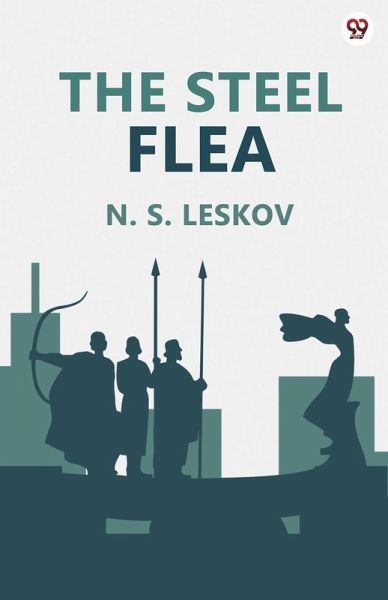
The steel flea is a tale of craftsmanship, ingenuity, and cultural pride, illustrating the competitive spirit between nations. It centers on a challenge between Russian and English artisans, each striving to outdo the other in skill and creativity. The story highlights the importance of cultural identity, particularly through the lens of craftsmanship, as characters work to prove their nation s superior abilities. Personal integrity and dedication to one s craft are also explored, as artisans labor with great care and secrecy to create a masterpiece that symbolizes both technical prowess and…mehr
The steel flea is a tale of craftsmanship, ingenuity, and cultural pride, illustrating the competitive spirit between nations. It centers on a challenge between Russian and English artisans, each striving to outdo the other in skill and creativity. The story highlights the importance of cultural identity, particularly through the lens of craftsmanship, as characters work to prove their nation s superior abilities. Personal integrity and dedication to one s craft are also explored, as artisans labor with great care and secrecy to create a masterpiece that symbolizes both technical prowess and national pride. The narrative underscores the lengths to which individuals will go to uphold their heritage and prove their worth on the international stage. With a focus on the artistry of craftsmanship, the tale reveals the power of small, intricate details to symbolize larger concepts of excellence and national honor. This story portrays not only the competition between two nations but also the spirit of innovation and the desire to leave a lasting legacy.
Nikolai Semyonovich Leskov was a prominent Russian writer born on February 16, 1831, in Staroe Gorokhovo, Russia. Known for his distinctive voice in Russian literature, he was a novelist, short-story writer, playwright, and journalist. Leskov often wrote under the pseudonym M. Stebnitsky and is regarded for his rich storytelling and deep exploration of Russian society. He was married to Olga Vasilievna Smirnova in 1853, and the couple had three children: Andrei, Dmitry, and Vera. Leskov's work includes a mix of satire, historical fiction, and social commentary, which captured the essence of Russian life during his time. He passed away on March 5, 1895, at the age of 64 in Saint Petersburg, Russia. His literary legacy includes works that continue to be appreciated for their sharp insight into the human condition, the complexities of Russian identity, and the intricate relationships between individuals and their cultures. Leskov's contributions to literature remain influential, even beyond his era. His parents were Semyon Dmitrievich Leskov and Maria Petrovna Leskova.
Es gelten unsere Allgemeinen Geschäftsbedingungen: www.buecher.de/agb
Impressum
www.buecher.de ist ein Internetauftritt der buecher.de internetstores GmbH
Geschäftsführung: Monica Sawhney | Roland Kölbl | Günter Hilger
Sitz der Gesellschaft: Batheyer Straße 115 - 117, 58099 Hagen
Postanschrift: Bürgermeister-Wegele-Str. 12, 86167 Augsburg
Amtsgericht Hagen HRB 13257
Steuernummer: 321/5800/1497
USt-IdNr: DE450055826