22,99 €
inkl. MwSt.
Versandkostenfrei*Erscheint vorauss. 5. Mai 2026
Melden Sie sich
hier
hier
für den Produktalarm an, um über die Verfügbarkeit des Produkts informiert zu werden.

11 °P sammeln
Andere Kunden interessierten sich auch für
 Journalism and the Russo-Japanese War114,99 €
 Where Three Empires Meet: A Narrative of Recent Travel in Kashmir, Western Tibet, Gilgit, and the Adjoining Countries36,99 €
![The Ottoman and the Spanish Empires in the Sixteenth and Seventeenth Centuries, Tr. [From Fürsten Und Völker, Vol.1] by W.K. Kelly]( "The Ottoman and the Spanish Empires in the Sixteenth and Seventeenth Centuries, Tr. [From Fürsten Und Völker, Vol.1] by W.K. Kelly") The Ottoman and the Spanish Empires in the Sixteenth and Seventeenth Centuries, Tr. [From Fürsten Und Völker, Vol.1] by W.K. Kelly28,99 €
The Ottoman and the Spanish Empires in the Sixteenth and Seventeenth Centuries, Tr. [From Fürsten Und Völker, Vol.1] by W.K. Kelly28,99 € The Rise of the Russian Empire97,99 €
 An Uncensored Diary From the Central Empires30,99 €
 At the Crossroads of Empires68,99 €
 Empires of the Senses58,99 €

![The Ottoman and the Spanish Empires in the Sixteenth and Seventeenth Centuries, Tr. [From Fürsten Und Völker, Vol.1] by W.K. Kelly](https://bilder.buecher.de/produkte/66/66964/66964234m.jpg "The Ottoman and the Spanish Empires in the Sixteenth and Seventeenth Centuries, Tr. [From Fürsten Und Völker, Vol.1] by W.K. Kelly")
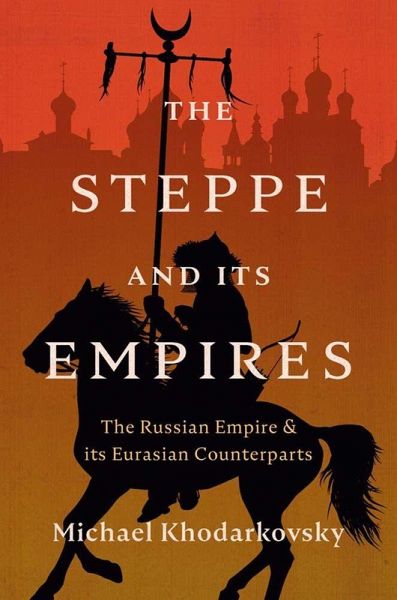
A broad comparative study that highlights the importance of the Eurasian steppe and its impact on the arc of Russian history Throughout its existence, Russia has been a hybrid empire shaped by both Europe and Asia. Focusing on the formation of the Russian state between the sixteenth and the mid-nineteenth centuries, renowned historian Michael Khodarkovsky examines Russia's structural similarities with its neighbors in Asia-the Ottoman, Persian, Mughal, and Chinese empires. While most historians have noted the transformations that brought Russia closer to modern European societies, the Russian empire's shared characteristics with its non-European counterparts remain poorly understood. Khodarkovsky reveals the critical role of the Eurasian steppe in the formation of the empires, whose military-social institutions and political culture were distinctly different from those of the West. Ultimately, he argues that Russia is best understood as a hybrid Eurasian empire whose steppe origins and fluid frontiers propelled its relentless expansion, producing a vastly diverse society with a blurred sense of national identity.