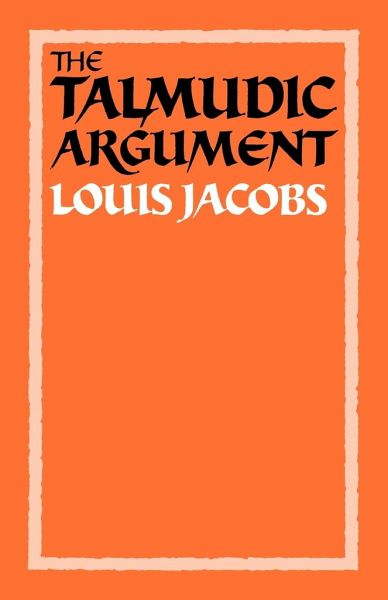
This book, the only one in English that can serve as a textbook for beginners and more advanced students of the Babylonian Talmud, examines in detail a number of typical lengthy passages with a view to showing how Talmudic reasoning operates and how the Talmud was compiled by its final editors.
This book, the only one in English that can serve as a textbook for beginners and more advanced students of the Babylonian Talmud, examines in detail a number of typical lengthy passages with a view to showing how Talmudic reasoning operates and how the Talmud was compiled by its final editors.
1. The Talmudic argument; 2. The literary form of the Babylonian Talmud; 3. Ber¿rah: retrospective specification; 4. Yeush she-lo mi-da`at: unconscious abandonment of property; 5. Rubba: probability; 6. Davar she-lo ba le-'olam: conveyance of a thing not yet in existence; 7. Kol she-eyno be-zeh ahar zeh afilu be-vat ahat eyno: whatever cannot be established in a consecutive sequence cannot be established even in a simultaneous sequence; 8. Yesh horesh telem ehad: a single act of ploughing can result in a number of penalties; 9. Simanin de-oraita o de-rabbanan: whether reliance on distinguishing marks for the purpose of identification is Biblical or Rabbinic; 10. Devarim she-be-lev e nam devarim: mental reservations in contracts are disregarded; 11. Hazakah: presumptive state; 12. Gadol kevod ha-beriot: the law and regard for human dignity; 13. Hazmanah milts: whether the designation of an object for a particular use is effective; 14. Mitzvat laseh she-ha-zeman geramah: positive precepts dependent on time from which women are exempt; 15. Heyzek she-eyno nikar: indiscernible damage to property; 16. Kinyan hatzer: acquisition by means of a domain; 17. Palginan be-dibbura: admission of part of a testimony even though another part of the same testimony is rejected; 18. Tadir u-mekuddash: which takes precedence: the more constant or the more sacred?; 19. Palga nizka: the nature of the payment of half-damages to which the owner of a goring ox is liable; 20. Patur mi-diney adam ve-hayyav be-diney shamayim: cases where there is liability in the eyes of God even though the human courts cannot enforce payment; 21. Mahal 'al kevodo kevodo mahul: renunciation of honour by one to whom it is due; 22. Conclusions.
1. The Talmudic argument; 2. The literary form of the Babylonian Talmud; 3. Ber¿rah: retrospective specification; 4. Yeush she-lo mi-da`at: unconscious abandonment of property; 5. Rubba: probability; 6. Davar she-lo ba le-'olam: conveyance of a thing not yet in existence; 7. Kol she-eyno be-zeh ahar zeh afilu be-vat ahat eyno: whatever cannot be established in a consecutive sequence cannot be established even in a simultaneous sequence; 8. Yesh horesh telem ehad: a single act of ploughing can result in a number of penalties; 9. Simanin de-oraita o de-rabbanan: whether reliance on distinguishing marks for the purpose of identification is Biblical or Rabbinic; 10. Devarim she-be-lev e nam devarim: mental reservations in contracts are disregarded; 11. Hazakah: presumptive state; 12. Gadol kevod ha-beriot: the law and regard for human dignity; 13. Hazmanah milts: whether the designation of an object for a particular use is effective; 14. Mitzvat laseh she-ha-zeman geramah: positive precepts dependent on time from which women are exempt; 15. Heyzek she-eyno nikar: indiscernible damage to property; 16. Kinyan hatzer: acquisition by means of a domain; 17. Palginan be-dibbura: admission of part of a testimony even though another part of the same testimony is rejected; 18. Tadir u-mekuddash: which takes precedence: the more constant or the more sacred?; 19. Palga nizka: the nature of the payment of half-damages to which the owner of a goring ox is liable; 20. Patur mi-diney adam ve-hayyav be-diney shamayim: cases where there is liability in the eyes of God even though the human courts cannot enforce payment; 21. Mahal 'al kevodo kevodo mahul: renunciation of honour by one to whom it is due; 22. Conclusions.
Es gelten unsere Allgemeinen Geschäftsbedingungen: www.buecher.de/agb
Impressum
www.buecher.de ist ein Internetauftritt der buecher.de internetstores GmbH
Geschäftsführung: Monica Sawhney | Roland Kölbl | Günter Hilger
Sitz der Gesellschaft: Batheyer Straße 115 - 117, 58099 Hagen
Postanschrift: Bürgermeister-Wegele-Str. 12, 86167 Augsburg
Amtsgericht Hagen HRB 13257
Steuernummer: 321/5800/1497
USt-IdNr: DE450055826