
Andere Kunden interessierten sich auch für
 The Life Of Thomas Paine23,99 €
 Thomas Paine14,99 €
 Life of Thomas Paine14,99 €
 An Oration on the Life and Services of Thomas Paine14,99 €
 The Writings Of Thomas Paine, Volume III. / 1791-180424,99 €
 The Life Of Thomas Paine24,99 €
 The Works Of Thomas Carlyle24,99 €

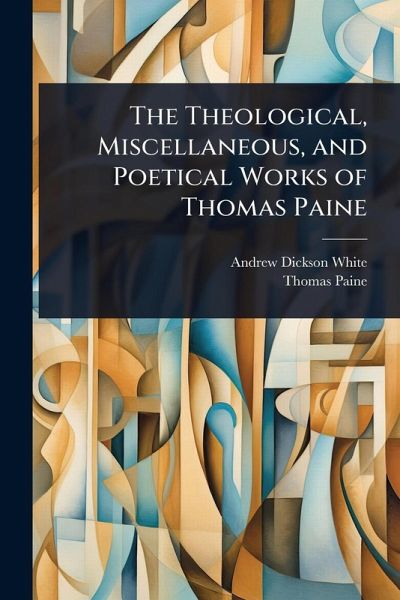
This collection, "The Theological, Miscellaneous, and Poetical Works of Thomas Paine," offers a comprehensive look into the mind of one of the most influential figures of the American Revolution. Best known for his powerful pamphlet "Common Sense," Paine was a prolific writer whose works spanned political theory, religious criticism, and poetry. This volume includes his theological writings, showcasing his deistic beliefs and critiques of organized religion. Also featured is Paine's pointed "Letter to George Washington," along with correspondence to the citizens of the United States after a fifteen-year absence, providing insight into his evolving perspectives on American politics and society. Completing the collection is the will of Thomas Paine, offering a final glimpse into the personal affairs of this complex and controversial figure. This work remains relevant for those interested in the history of political thought, the American Revolution, and the ongoing debate between reason and faith. This work has been selected by scholars as being culturally important, and is part of the knowledge base of civilization as we know it. This work was reproduced from the original artifact, and remains as true to the original work as possible. Therefore, you will see the original copyright references, library stamps (as most of these works have been housed in our most important libraries around the world), and other notations in the work. This work is in the public domain in the United States of America, and possibly other nations. Within the United States, you may freely copy and distribute this work, as no entity (individual or corporate) has a copyright on the body of the work. As a reproduction of a historical artifact, this work may contain missing or blurred pages, poor pictures, errant marks, etc. Scholars believe, and we concur, that this work is important enough to be preserved, reproduced, and made generally available to the public. We appreciate your support of the preservation process, and thank you for being an important part of keeping this knowledge alive and relevant.