
Andere Kunden interessierten sich auch für
 Przemys¿ drzewny w Anita Garibaldi - SC32,99 €
 L'industrie du bois à Anita Garibaldi - SC32,99 €
 Die Holzwirtschaft in Anita Garibaldi - SC49,90 €
 A Indústria Madeireira em Anita Garibaldi - SC32,99 €
 History of the Iguaçu River53,99 €
 Anita Garibaldi23,99 €
 The Campaign of Garibaldi in the Two Sicilies27,90 €



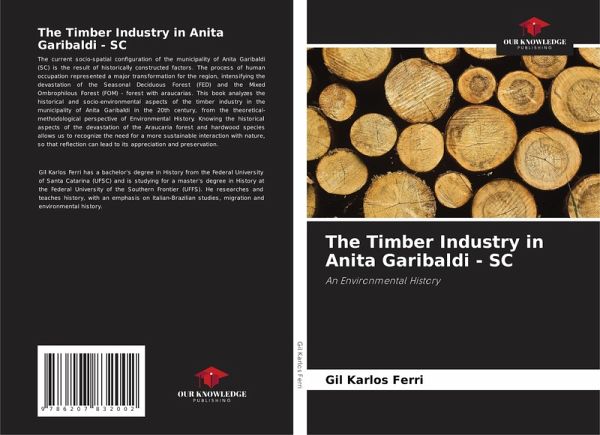
The current socio-spatial configuration of the municipality of Anita Garibaldi (SC) is the result of historically constructed factors. The process of human occupation represented a major transformation for the region, intensifying the devastation of the Seasonal Deciduous Forest (FED) and the Mixed Ombrophilous Forest (FOM) - forest with araucarias. This book analyzes the historical and socio-environmental aspects of the timber industry in the municipality of Anita Garibaldi in the 20th century, from the theoretical-methodological perspective of Environmental History. Knowing the historical aspects of the devastation of the Araucaria forest and hardwood species allows us to recognize the need for a more sustainable interaction with nature, so that reflection can lead to its appreciation and preservation.