Robert Bedeski
The Transformation of South Korea
Reform and Reconstitution in the Sixth Republic Under Roh Tae Woo, 1987-1992
Robert Bedeski
The Transformation of South Korea
Reform and Reconstitution in the Sixth Republic Under Roh Tae Woo, 1987-1992
- Gebundenes Buch
- Merkliste
- Auf die Merkliste
- Bewerten Bewerten
- Teilen
- Produkt teilen
- Produkterinnerung
- Produkterinnerung
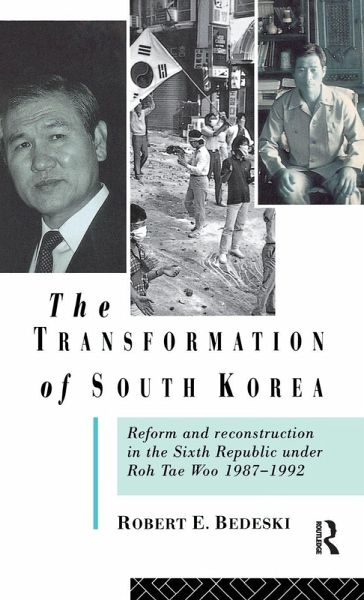
This volume offers a thorough analysis of the institutions of government in South Korea, their transformation by the introduction of political pluralism, and the impact of that on the country's economy.
Andere Kunden interessierten sich auch für
Tat Yan KongThe Politics of Economic Reform in South Korea169,99 €
Sustainable Development Goals in the Republic of Korea167,99 €
Kyungja JungPracticing Feminism in South Korea176,99 €
The Future of North Korea176,99 €
Truth and Reconciliation in South Korea199,99 €
Ki-Sung KwakMedia and Democratic Transition in South Korea177,99 €
Seung Ho KwonThe Cheabol and Labour in Korea175,99 €-
-
-
This volume offers a thorough analysis of the institutions of government in South Korea, their transformation by the introduction of political pluralism, and the impact of that on the country's economy.
Produktdetails
- Produktdetails
- Verlag: Routledge
- Seitenzahl: 208
- Erscheinungstermin: 18. Dezember 2020
- Englisch
- Abmessung: 222mm x 145mm x 15mm
- Gewicht: 399g
- ISBN-13: 9781138416932
- ISBN-10: 1138416932
- Artikelnr.: 75424942
- Herstellerkennzeichnung
- Libri GmbH
- Europaallee 1
- 36244 Bad Hersfeld
- gpsr@libri.de
- Verlag: Routledge
- Seitenzahl: 208
- Erscheinungstermin: 18. Dezember 2020
- Englisch
- Abmessung: 222mm x 145mm x 15mm
- Gewicht: 399g
- ISBN-13: 9781138416932
- ISBN-10: 1138416932
- Artikelnr.: 75424942
- Herstellerkennzeichnung
- Libri GmbH
- Europaallee 1
- 36244 Bad Hersfeld
- gpsr@libri.de
Bedeski, Robert
Preface
List of abbreviations
1 State reform in South Korea
Introduction
Background of the modem Korean state
Conflict and political reform
The first five Republics: background to democratization
The Third and Fourth Republics: economic and social transformation under Park Chung Hee
Transition to the Fifth Republic
The Sixth Republic and the Roh presidency
Summary
2 The institutions of government
Foundations of the modem Korean state
Government structure
weak v. strong institutions
Liquidation of the legacy of the Fifth Republic
Constitutional reform in the Sixth Republic: the presidency and local government
The 1992 presidential elections
The election results
3 Political parties and South Korean politics
The character of political parties in South Korea
The institutionalization of political parties
The development of political parties in South Korea
The authority crisis of 1985
Creating a new ruling party
Political parties and liberalization
Conclusions
4 The economic context of reform
Introduction
Towards balanced growth: maturing of a developing economy
Labour
Capital
the chaebol and the state
Agriculture reform
The economic dimensions of social conflict
5 The social context of Korean politics
Divisions and unity in South Korean society
Factors of social change
Pluralism and equality
Education and Korean society
Social conflict
catalyst for democracy?
Conclusion
6 State reform in a comparative context
State
building and social engineering in South Korea
What is state reform?
Taiwan
another 'piecemeal experiment'
The People's Republic of China
North Korean politics
the Kim fl Song dictatorship
The USSR and its successor, Russia
Implications
Conclusions
7 South Korea's international environment and foreign policy
South Korea as a rising middle power
South Korea foreign policy: Nordpolitik
An assessment of Nordpolitik
8 Conclusions
Appendix: Roh Tae Woo's declaration of 29 June 1987
Notes
Selective bibliography
Index.
List of abbreviations
1 State reform in South Korea
Introduction
Background of the modem Korean state
Conflict and political reform
The first five Republics: background to democratization
The Third and Fourth Republics: economic and social transformation under Park Chung Hee
Transition to the Fifth Republic
The Sixth Republic and the Roh presidency
Summary
2 The institutions of government
Foundations of the modem Korean state
Government structure
weak v. strong institutions
Liquidation of the legacy of the Fifth Republic
Constitutional reform in the Sixth Republic: the presidency and local government
The 1992 presidential elections
The election results
3 Political parties and South Korean politics
The character of political parties in South Korea
The institutionalization of political parties
The development of political parties in South Korea
The authority crisis of 1985
Creating a new ruling party
Political parties and liberalization
Conclusions
4 The economic context of reform
Introduction
Towards balanced growth: maturing of a developing economy
Labour
Capital
the chaebol and the state
Agriculture reform
The economic dimensions of social conflict
5 The social context of Korean politics
Divisions and unity in South Korean society
Factors of social change
Pluralism and equality
Education and Korean society
Social conflict
catalyst for democracy?
Conclusion
6 State reform in a comparative context
State
building and social engineering in South Korea
What is state reform?
Taiwan
another 'piecemeal experiment'
The People's Republic of China
North Korean politics
the Kim fl Song dictatorship
The USSR and its successor, Russia
Implications
Conclusions
7 South Korea's international environment and foreign policy
South Korea as a rising middle power
South Korea foreign policy: Nordpolitik
An assessment of Nordpolitik
8 Conclusions
Appendix: Roh Tae Woo's declaration of 29 June 1987
Notes
Selective bibliography
Index.
Preface
List of abbreviations
1 State reform in South Korea
Introduction
Background of the modem Korean state
Conflict and political reform
The first five Republics: background to democratization
The Third and Fourth Republics: economic and social transformation under Park Chung Hee
Transition to the Fifth Republic
The Sixth Republic and the Roh presidency
Summary
2 The institutions of government
Foundations of the modem Korean state
Government structure
weak v. strong institutions
Liquidation of the legacy of the Fifth Republic
Constitutional reform in the Sixth Republic: the presidency and local government
The 1992 presidential elections
The election results
3 Political parties and South Korean politics
The character of political parties in South Korea
The institutionalization of political parties
The development of political parties in South Korea
The authority crisis of 1985
Creating a new ruling party
Political parties and liberalization
Conclusions
4 The economic context of reform
Introduction
Towards balanced growth: maturing of a developing economy
Labour
Capital
the chaebol and the state
Agriculture reform
The economic dimensions of social conflict
5 The social context of Korean politics
Divisions and unity in South Korean society
Factors of social change
Pluralism and equality
Education and Korean society
Social conflict
catalyst for democracy?
Conclusion
6 State reform in a comparative context
State
building and social engineering in South Korea
What is state reform?
Taiwan
another 'piecemeal experiment'
The People's Republic of China
North Korean politics
the Kim fl Song dictatorship
The USSR and its successor, Russia
Implications
Conclusions
7 South Korea's international environment and foreign policy
South Korea as a rising middle power
South Korea foreign policy: Nordpolitik
An assessment of Nordpolitik
8 Conclusions
Appendix: Roh Tae Woo's declaration of 29 June 1987
Notes
Selective bibliography
Index.
List of abbreviations
1 State reform in South Korea
Introduction
Background of the modem Korean state
Conflict and political reform
The first five Republics: background to democratization
The Third and Fourth Republics: economic and social transformation under Park Chung Hee
Transition to the Fifth Republic
The Sixth Republic and the Roh presidency
Summary
2 The institutions of government
Foundations of the modem Korean state
Government structure
weak v. strong institutions
Liquidation of the legacy of the Fifth Republic
Constitutional reform in the Sixth Republic: the presidency and local government
The 1992 presidential elections
The election results
3 Political parties and South Korean politics
The character of political parties in South Korea
The institutionalization of political parties
The development of political parties in South Korea
The authority crisis of 1985
Creating a new ruling party
Political parties and liberalization
Conclusions
4 The economic context of reform
Introduction
Towards balanced growth: maturing of a developing economy
Labour
Capital
the chaebol and the state
Agriculture reform
The economic dimensions of social conflict
5 The social context of Korean politics
Divisions and unity in South Korean society
Factors of social change
Pluralism and equality
Education and Korean society
Social conflict
catalyst for democracy?
Conclusion
6 State reform in a comparative context
State
building and social engineering in South Korea
What is state reform?
Taiwan
another 'piecemeal experiment'
The People's Republic of China
North Korean politics
the Kim fl Song dictatorship
The USSR and its successor, Russia
Implications
Conclusions
7 South Korea's international environment and foreign policy
South Korea as a rising middle power
South Korea foreign policy: Nordpolitik
An assessment of Nordpolitik
8 Conclusions
Appendix: Roh Tae Woo's declaration of 29 June 1987
Notes
Selective bibliography
Index.