
Andere Kunden interessierten sich auch für
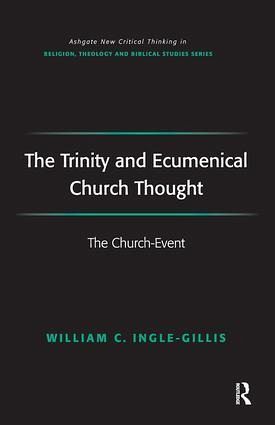
 What's Right with the Trinity?177,99 €
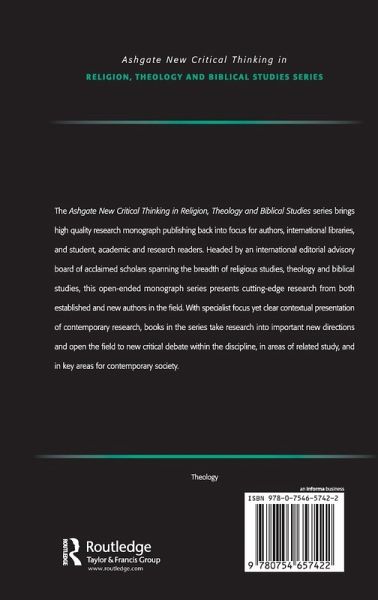
 The Ecumenical Edwards160,99 €
 Catholic and Ecumenical140,99 €
 Christianity Among the Religions112,99 €
 Eucharistic Sacramentality in an Ecumenical Context177,99 €
 The Ecumenical Edwards65,99 €
 God and Difference186,99 €
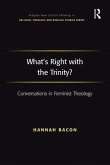
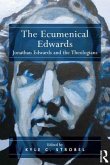
Some hundred years from inception, the ecumenical movement is stagnating. William C. Ingle-Gillis argues that the problem lies in modern ecumenism's treatment of denominational Churches as provisional entities requiring reunion to be more fully Christ's Body. In a work unique both to ecumenical studies and to trinitarian theology, the author redefines ecclesial life from the premise that God's essence is personhood-in-communion and that the ultimate calling of human persons is to share as fully in the divine life as Christ himself. Concluding that the Churches are, by the Spirit's action, a tangible, dynamic event, wherein God makes visible his on-going reconciliation of the world to himself, Ingle-Gillis argues that the Churches' true life lies in coming-together, rather than being-together. This conclusion places ecumenism at the heart of Church life and witness.
'This book is a challenge to the current climate in ecumenism, and perhaps also a stimulus to pursue Christian unity with renewed confidence and energy, recognising that the process of growing together is in itself significant.' Heythrop Journal '... what emerges from this book is the view that the process of becomingunity? is in itself a vitally significant challenge to modern ecumenism to reconsider its understanding of unity.' Religious Studies Review 'This book is a significant addition to the growing chorus of writings that are calling for a re-assessment of the ecumenical movement. Its strength lies in taking plurality seriously and asking about its value in the purposes of God.' Ecclesiology 'As an exploration of how a Trinitarian ecclesiology might be developed and play a part in ecumenical conversations, this book is to be welcomed.' Regent's Reviews '... this bold and constructive book is just what systematic theology needs, and its author should be congratulated ona book that moves theology in a helpful direction.' Journal of Reformed Theology