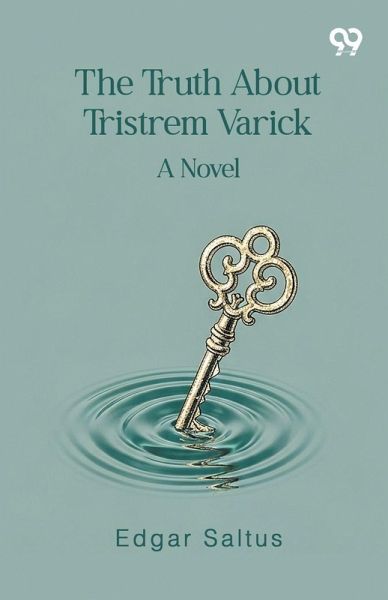
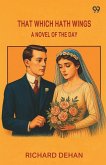
The truth about Tristrem Varick: A novel explores the intricate tension between personal desire and social duty in a world defined by legacy, appearance, and silent expectation. Through the life of a sensitive and introspective figure, the story reveals how wealth, reputation, and inheritance become burdens that distort identity and isolate affection. The narrative examines how individuals contort themselves to meet the quiet codes of a society that values image over authenticity, often at the expense of emotional clarity. Love, in this world, becomes both a refuge and a source of conflict,…mehr
The truth about Tristrem Varick: A novel explores the intricate tension between personal desire and social duty in a world defined by legacy, appearance, and silent expectation. Through the life of a sensitive and introspective figure, the story reveals how wealth, reputation, and inheritance become burdens that distort identity and isolate affection. The narrative examines how individuals contort themselves to meet the quiet codes of a society that values image over authenticity, often at the expense of emotional clarity. Love, in this world, becomes both a refuge and a source of conflict, shaped by rules that render honesty difficult and connection fragile. As the central figure moves through a landscape colored by emotional restraint and psychological uncertainty, the novel presents a delicate study of disillusionment and longing. It underscores the cost of generosity misunderstood and the painful awareness that integrity rarely finds easy recognition. In doing so, the novel becomes a meditation on the unspoken struggles of those caught between internal truth and inherited roles.
Edgar Evertson Saltus was born on October 8, 1855, in New York City to parents Francis Henry Saltus and Julia Ida Evertson Saltus. Known for his elaborate and elegant prose, he became a distinctive voice in American literature during the late 19th and early 20th centuries. His writing style was often compared to that of European decadent authors such as Joris-Karl Huysmans, Gabriele D'Annunzio, and Oscar Wilde, with whom he shared a fascination for aestheticism, moral ambiguity, and philosophical pessimism. Saltus began his career in law but turned to literature, where his refined diction and interest in metaphysical questions garnered both attention and controversy. His work spanned fiction, essays, and philosophical treatises, often exploring the limits of morality, beauty, and human desire. Among his notable writings are The Philosophy of Disenchantment and The Anatomy of Negation, which reflect his engagement with skepticism and nihilism. He lived much of his life in New York, where he was a known figure in intellectual and literary circles. He married Marie Saltus in 1911 and remained with her until his death on July 31, 1921, in Manhattan, at the age of 65.
Es gelten unsere Allgemeinen Geschäftsbedingungen: www.buecher.de/agb
Impressum
www.buecher.de ist ein Internetauftritt der buecher.de internetstores GmbH
Geschäftsführung: Monica Sawhney | Roland Kölbl | Günter Hilger
Sitz der Gesellschaft: Batheyer Straße 115 - 117, 58099 Hagen
Postanschrift: Bürgermeister-Wegele-Str. 12, 86167 Augsburg
Amtsgericht Hagen HRB 13257
Steuernummer: 321/5800/1497
USt-IdNr: DE450055826