
Andere Kunden interessierten sich auch für
 Innovating Societies53,99 €
 The Emerald Handbook of Blockchain for Business175,99 €
 The Social Media Guidebook and Calendar for Real Estate by OnJaLee LaShay23,99 €
 Decentralized Autonomous Organization The Book of DAO Business in the Next Generation Strategies of the Couch CEO The Healthcare and Insurance Industries Gone Blockchain 202218,99 €
 SAP Real Estate Management89,90 €
 The Legacy of Satoshi Nakamoto11,99 €
 Beyond the Ledger-Exploring the Revolutionary Technology Reshaping Our World11,99 €
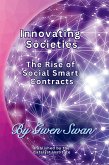






Title: The Twelfth Estate: Fintech, AI, Blockchain, and Cybersecurity as the Future of Global Economy and Governance In The Twelfth Estate, Gwen Swan illuminates the rise of a revolutionary sector that stands poised to reshape the global economy and redefine governance as we know it. This new sector-comprised of Fintech, Artificial Intelligence (AI), Blockchain, and Cybersecurity-emerges as a transformative force that challenges the traditional boundaries of finance, technology, and public policy, establishing what Swan aptly terms the "Twelfth Estate." The Securities Market Primer has long guided investors, businesses, and policymakers by organizing the global economy into eleven primary sectors, from Information Technology and Health Care to Financials, Consumer Discretionary, and beyond. Yet, as society becomes increasingly digitized and decentralized, Swan argues that a new foundational pillar is emerging. This Twelfth Estate does not merely add to the existing sectors but redefines economic, social, and regulatory paradigms, promoting an open, secure, and inclusive economic landscape that transcends conventional limitations. At the heart of the Twelfth Estate, Fintech brings new financial access and inclusivity, challenging traditional banking systems with digital solutions that reach across demographics and geographies. AI drives unprecedented efficiencies, personalization, and insights in everything from financial transactions to policy-making, while Blockchain offers a decentralized system of trust and transparency that minimizes corruption and empowers individuals and organizations with secure, verifiable transactions. Cybersecurity, the crucial gatekeeper of the digital age, safeguards this ecosystem from evolving threats, ensuring trust and data integrity for businesses, governments, and citizens alike. With data-driven analysis, compelling case studies, and expert insights, The Twelfth Estate provides readers with a thorough examination of how Fintech, AI, Blockchain, and Cybersecurity are converging to create a sustainable and equitable global economy. Swan highlights how emerging economies, often overlooked by traditional systems, are harnessing these technologies to catalyze growth, with examples from Kenya's embrace of mobile banking to El Salvador's adoption of Bitcoin as legal tender. She explores how these tools enable governments, businesses, and individuals worldwide to bypass traditional barriers, redefine governance, and engage in borderless commerce. The Twelfth Estate is not merely a roadmap for the next phase of economic growth; it is a vision for a future where technology and governance align to create a more connected, secure, and inclusive world. With her forward-thinking analysis, Gwen Swan offers a vital resource for policymakers, innovators, and leaders eager to understand and shape the economy of tomorrow. This book challenges us to look beyond legacy frameworks and embrace a new paradigm that promises not only economic transformation but also a reimagined society rooted in transparency, accountability, and empowerment.