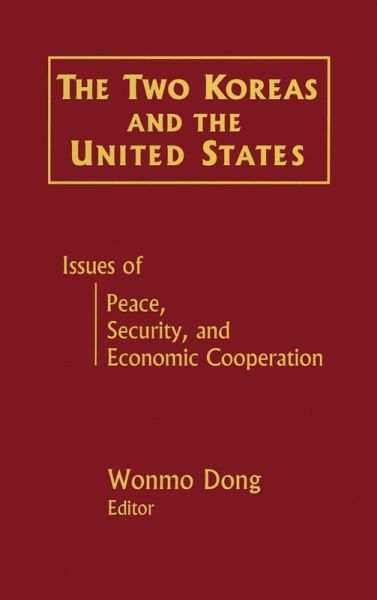
This title addresses the fragility of the political, economic, and military balance within the two Koreas and Northeast Asia. The chapters analyze the factors that gave rise to the persisting cold war on the Korean peninsula as well as the changing relationships with the US and other powers.
This title addresses the fragility of the political, economic, and military balance within the two Koreas and Northeast Asia. The chapters analyze the factors that gave rise to the persisting cold war on the Korean peninsula as well as the changing relationships with the US and other powers.
Wonmo Dong (Ph.D., Georgetown University) was the convener and executive-director of the SMU-Dallas Forum on Asian Affairs from 1996 to 1998. He is currently president of the Association of Korean Political Studies in North America
Inhaltsangabe
Part I. North Korea's Domestic Politics and Economy in the Post-Kim II Sung Era: Patterns of Change and Continuity 1. Crisis Management by New Leaders in North Korea 2. The Economic Situation in North Korea 3. The Future of the Post-Kim II Sung System in North Korea Part II. South Korea and Inter-Korea Relations: Domestic Political Economy and the U.S.-ROK Alliance System 4. Two Scales: Democratization and the North Korea Policy of the Kim Young Sam Government 5. Democracy and Unification: The Dilemma of the ROK Engagement 6. The Dichotomy of Pride and Vulnerability: South Korean Tensions in the U.S. Relationship Part III The Two Koreas and Their Asian Neighbors 7 The North Korean Crisis and Japan's Choice 8. China and the Two Koreas 9. Russia's Policies Toward the Two Koreas Part IV. The United States and the Two Koreas 10. The Two Koreas and Northeast Asia in the Post-Cold War Era 11. The U.S.-North Korea Agreed Framework and the Korea Policy of the United States 12. No Thanks Expected: America's Effort to Nurture a "Soft Landing" 13. The United States and the Future of Korea 14. The Korean Peninsula at the Crossroads: Which Way? 15. North Korean Crises and American Choices: Managing U.S. Policy Toward the Korean Peninsula Part V. Looking Toward the Next Century 16. Resolving the North Korean Crisis: What Should Be Done by the Business Community? 17. Korea and the United States: Looking to the Twenty-First Century
Part I. North Korea's Domestic Politics and Economy in the Post-Kim II Sung Era: Patterns of Change and Continuity 1. Crisis Management by New Leaders in North Korea 2. The Economic Situation in North Korea 3. The Future of the Post-Kim II Sung System in North Korea Part II. South Korea and Inter-Korea Relations: Domestic Political Economy and the U.S.-ROK Alliance System 4. Two Scales: Democratization and the North Korea Policy of the Kim Young Sam Government 5. Democracy and Unification: The Dilemma of the ROK Engagement 6. The Dichotomy of Pride and Vulnerability: South Korean Tensions in the U.S. Relationship Part III The Two Koreas and Their Asian Neighbors 7 The North Korean Crisis and Japan's Choice 8. China and the Two Koreas 9. Russia's Policies Toward the Two Koreas Part IV. The United States and the Two Koreas 10. The Two Koreas and Northeast Asia in the Post-Cold War Era 11. The U.S.-North Korea Agreed Framework and the Korea Policy of the United States 12. No Thanks Expected: America's Effort to Nurture a "Soft Landing" 13. The United States and the Future of Korea 14. The Korean Peninsula at the Crossroads: Which Way? 15. North Korean Crises and American Choices: Managing U.S. Policy Toward the Korean Peninsula Part V. Looking Toward the Next Century 16. Resolving the North Korean Crisis: What Should Be Done by the Business Community? 17. Korea and the United States: Looking to the Twenty-First Century
Es gelten unsere Allgemeinen Geschäftsbedingungen: www.buecher.de/agb
Impressum
www.buecher.de ist ein Internetauftritt der buecher.de internetstores GmbH
Geschäftsführung: Monica Sawhney | Roland Kölbl | Günter Hilger
Sitz der Gesellschaft: Batheyer Straße 115 - 117, 58099 Hagen
Postanschrift: Bürgermeister-Wegele-Str. 12, 86167 Augsburg
Amtsgericht Hagen HRB 13257
Steuernummer: 321/5800/1497
USt-IdNr: DE450055826