

Andere Kunden interessierten sich auch für
 Five Thousand Miles Underground18,99 €
 The Desert of ice; or, The Further Adventures of Captain Hatteras23,99 €
 The Consolidator; or, Memoirs of Sundry Transactions From the World in the Moon17,99 €
 The Sunken Isthmus; or, Frank Reade, Jr., in the Yucatan Channel.15,99 €
 The Galleon's Gold; or, Frank Reade, Jr.'s Deep Sea Search.15,99 €
 The Smoky God; Or, A Voyage to the Inner World15,99 €
 The Transient Lake; or, Frank Reade, Jr.'s Adventures in a Mysterious Country15,99 €







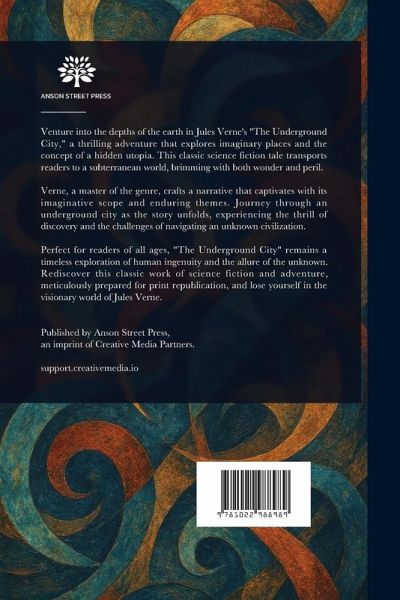
Venture into the depths of the earth in Jules Verne's "The Underground City," a thrilling adventure that explores imaginary places and the concept of a hidden utopia. This classic science fiction tale transports readers to a subterranean world, brimming with both wonder and peril. Verne, a master of the genre, crafts a narrative that captivates with its imaginative scope and enduring themes. Journey through an underground city as the story unfolds, experiencing the thrill of discovery and the challenges of navigating an unknown civilization. Perfect for readers of all ages, "The Underground City" remains a timeless exploration of human ingenuity and the allure of the unknown. Rediscover this classic work of science fiction and adventure, meticulously prepared for print republication, and lose yourself in the visionary world of Jules Verne. This work has been selected by scholars as being culturally important, and is part of the knowledge base of civilization as we know it. This work is in the public domain in the United States of America, and possibly other nations. Within the United States, you may freely copy and distribute this work, as no entity (individual or corporate) has a copyright on the body of the work. Scholars believe, and we concur, that this work is important enough to be preserved, reproduced, and made generally available to the public. We appreciate your support of the preservation process, and thank you for being an important part of keeping this knowledge alive and relevant.
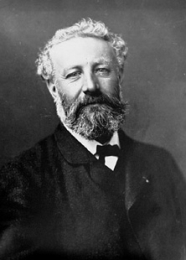
Jules Verne, born in 1828 in Nantes, France, displayed a passion for literature and science from a young age. Initially expected to follow his father into law, Verne instead pursued writing and found success through his extraordinary adventure novels, often blending scientific knowledge with imaginative exploration. His works, such as Journey to the Center of the Earth and 20,000 Leagues Under the Sea, earned him recognition as a pioneer of science fiction.Verne's collaboration with publisher Pierre-Jules Hetzel significantly shaped his career. Together, they created the Voyages Extraordinaires, a series of meticulously researched adventure novels that captivated readers with their futuristic technology and exotic locales. Verne's writing often reflected the rapid technological advancements of the 19th century, exploring themes of discovery, innovation, and the human relationship with nature and progress.Throughout his life, Verne remained deeply engaged with scientific developments, using his novels to speculate on the possibilities of the future. He passed away in 1905, leaving a legacy as one of the most translated authors in history, with his works continuing to inspire science fiction and adventure enthusiasts around the world.
© privat