
Andere Kunden interessierten sich auch für
 Role Theory and the Cognitive Architecture of British Appeasement Decisions55,99 €
 Shaping Nations and Markets56,99 €
 The Changing Architecture of Politics72,99 €
 The Architecture Of Global Governance67,99 €
 The Architecture of Modern Empire17,99 €
 Imaging the Future109,99 €
 Establish a Unified Logistics Command (USLOGCOM)?") Should the Department of Defense (DoD) Establish a Unified Logistics Command (USLOGCOM)?15,99 €
Should the Department of Defense (DoD) Establish a Unified Logistics Command (USLOGCOM)?15,99 €





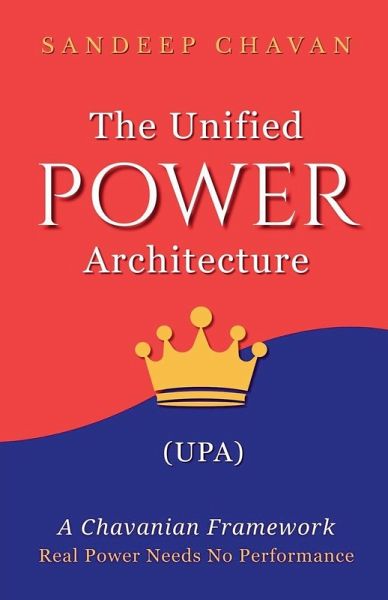
Power is no longer about force, wealth, population, or military strength. In the compute century, power is about architecture. The Unified Power Architecture (UPA) introduces a radical yet intuitive framework that redefines power across all scales - individuals, organizations, corporations, nations, and global systems. Moving beyond outdated theories rooted in domination, GDP, or coercion, UPA reveals how true power emerges through alignment, stability, and intelligent design rather than struggle or aggression. Drawing insights from geopolitics, artificial intelligence, systems science, human psychology, physics, evolution, and global strategy, this book explains why the most powerful entities today do not shout, force, or fight - they design environments where outcomes become inevitable. UPA introduces original concepts such as Consequence Geometry, Inevitability Architecture, Risk Routing, Silent Emergence, Stability Dominance, and Zero-Time Influence, offering a unified lens to understand:Why military and GDP-based power models are collapsing How compute, AI, and architecture now define sovereignty Why alignment outperforms domination in leadership and organizations How corporations like Apple exercise ecosystem power Why geopolitical influence flows through semiconductors and systems, not borders How nature, physics, and evolution validate effortless power At the heart of the book are the 12 Chavanian Laws of Power, a scale-invariant operating system that applies equally to atoms, humans, institutions, and civilizations. This is not a motivational book. This is not a political ideology. This is not manipulation psychology. The Unified Power Architecture is a structural framework for understanding how power actually works in the modern world - and how it will shape the future. If you want to see power clearly, design it intelligently, and operate without force in an increasingly complex world, this book provides the architecture.